
Staying Calm While Facing Social Pressure Around You
Gusti Ayu Tita P
8 September 2026
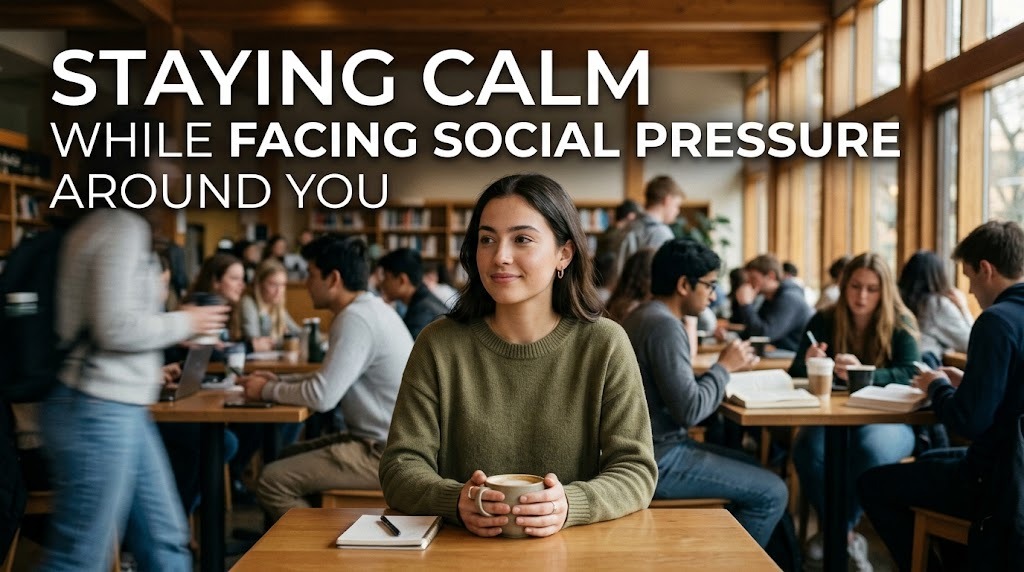
Social pressure is a normal part of everyday life. People may experience it from family, friends, classmates, coworkers, or the wider community. Sometimes the pressure is obvious, while at other times it appears through comparisons, expectations, criticism, or the desire to fit in. Learning to stay calm can help people respond thoughtfully instead of making decisions based only on fear or social approval.
Social pressure does not always have to be negative. Positive encouragement can motivate people to develop useful skills and make responsible choices. However, excessive pressure can create stress and make people question their own decisions. Maintaining emotional balance is important when external expectations begin to interfere with personal values and priorities.
RECOGNIZE THE SOURCE OF SOCIAL PRESSURE
The first step toward staying calm is identifying where the pressure comes from. It may come from family expectations, peer opinions, workplace culture, social media, or personal comparisons. Understanding the source makes the situation easier to evaluate instead of reacting automatically.
Pay attention to situations that make you feel anxious, guilty, insecure, or afraid of disappointing others. These emotional reactions can provide clues about the type of pressure you are experiencing. Not every uncomfortable feeling means that someone is treating you unfairly, but repeated discomfort deserves attention. Recognizing patterns can help you respond more consciously.
PAUSE BEFORE RESPONDING
Social pressure can encourage quick reactions. Someone may immediately agree with a request because they are afraid of rejection or criticism. Taking a short pause can create enough space to think clearly. A simple pause can prevent an emotional reaction from becoming a decision.
Before answering, consider what you actually want and whether the request fits your abilities and priorities. If you need more time, it is reasonable to say that you will think about it first. You do not have to provide an immediate answer to every demand or question. Giving yourself time is a practical way to maintain control over your choices.
CONTROL YOUR EMOTIONAL REACTION
Strong emotions can make social pressure feel more intense. Anxiety, anger, embarrassment, or fear may cause people to respond defensively. Simple calming techniques, such as slow breathing and taking a short break, can help reduce immediate emotional tension.
Once the emotional intensity decreases, it becomes easier to evaluate the situation logically. Ask yourself what actually happened rather than assuming what other people are thinking. Separating facts from assumptions can prevent unnecessary worry. A calmer mind usually provides a clearer view of available choices.
FOCUS ON WHAT YOU CAN CONTROL
People cannot control every opinion, expectation, or reaction from others. Trying to control how everyone sees you can create additional stress. A healthier approach is to focus on personal actions, decisions, communication, and boundaries.
You can control whether you communicate respectfully, whether you consider useful advice, and whether you make decisions according to your values. You cannot guarantee that everyone will agree with your choices. Accepting this reality can reduce the need for constant approval. Not being able to please everyone is a normal part of maintaining independence.
LEARN TO SAY NO WITHOUT GUILT
Saying no can be difficult when social acceptance feels important. People may worry that refusing a request will disappoint friends, relatives, or coworkers. However, saying no to something that exceeds your limits is not automatically selfish.
A clear and respectful response is often enough. You can explain that you are unable to participate without creating a long justification. If someone becomes upset, their reaction does not necessarily mean that your decision was wrong. Healthy boundaries allow people to protect their time, energy, and personal priorities.
AVOID EXCESSIVE SOCIAL COMPARISON
Comparison can make social pressure feel stronger. Seeing other people achieve goals may create the impression that you should be moving at the same speed. Remember that people have different opportunities, responsibilities, abilities, and timelines.
Instead of measuring your life against someone else's achievements, focus on personal progress. Think about skills you have developed, challenges you have overcome, and goals you are currently working toward. Other people's success can provide inspiration without becoming a standard for personal worth. Your progress does not become less valuable simply because someone else is ahead.
USE SOCIAL MEDIA WITH GREATER AWARENESS
Social media can increase pressure by constantly exposing users to other people's achievements and lifestyles. Photos and videos often show selected moments rather than the complete reality of someone's life. Comparing everyday experiences with carefully presented online content can create unrealistic expectations.
Consider limiting content that repeatedly causes insecurity or unhealthy comparison. Follow accounts that provide useful information, realistic perspectives, or positive inspiration. Taking regular breaks from social platforms can also create more mental space. Healthy digital habits can make it easier to maintain a balanced perspective.
REMEMBER YOUR PERSONAL VALUES
Personal values can act as a guide when social pressure makes decisions confusing. Values may include honesty, education, family, independence, creativity, responsibility, or personal growth. Knowing what matters most makes it easier to distinguish meaningful advice from unnecessary expectations.
Before making an important decision, ask whether it supports your values and long-term goals. A choice does not need universal approval to be meaningful. People may disagree with your priorities because their circumstances are different. Staying connected to personal values can strengthen confidence during difficult social situations.
SET HEALTHY BOUNDARIES
Boundaries help define what you are comfortable accepting from other people. They can involve personal time, privacy, communication, responsibilities, money, or major life decisions. Clear boundaries reduce confusion and make relationships more respectful.
Boundaries should be communicated calmly and consistently. If someone repeatedly ignores a reasonable boundary, consider reducing interaction or seeking support from someone you trust. You do not need to respond aggressively to protect yourself. Firmness and respect can exist together.
SURROUND YOURSELF WITH SUPPORTIVE PEOPLE
The social environment has a strong influence on how people experience pressure. Supportive friends, family members, teachers, and coworkers can provide advice without forcing their preferences on others. Healthy relationships allow people to disagree while maintaining mutual respect.
If certain relationships repeatedly cause fear, humiliation, or excessive pressure, consider how they affect your confidence and daily life. Spending more time with supportive people can provide a healthier perspective. A positive social environment makes it easier to remain calm and authentic.
DEVELOP CONFIDENCE THROUGH SMALL DECISIONS
Confidence does not appear instantly. It develops through repeated experiences of making choices, dealing with consequences, and learning from mistakes. Start by expressing your opinion in simple situations where you feel reasonably comfortable. Each successful experience can strengthen trust in your own judgment.
Mistakes should not automatically be treated as proof that you cannot make good decisions. Review what happened and identify what you can learn from it. Over time, these experiences can make difficult situations easier to manage. Confidence grows when people understand that they can handle both positive and negative outcomes.
KNOW WHEN TO STEP AWAY
Not every social situation needs to be confronted immediately. Sometimes the healthiest response is to create temporary distance and allow emotions to settle. Stepping away can prevent unnecessary arguments and provide time for clearer thinking.
If a situation repeatedly involves manipulation, intimidation, humiliation, or extreme pressure, additional support may be appropriate. Talk to a trusted person who can provide an objective perspective. When social pressure begins to significantly interfere with daily functioning or emotional well-being, professional support can also be considered. Asking for help is a responsible way to protect yourself.
CONCLUSION
Staying calm while facing social pressure requires awareness, emotional control, and confidence in personal choices. Pressure can come from expectations, comparison, social media, group behavior, or the fear of disappointing others. Recognizing these influences makes it easier to pause and decide how to respond.
A calm response does not mean ignoring other people. It means listening without automatically surrendering personal judgment. By practicing healthy boundaries, independent thinking, realistic self evaluation, and supportive relationships, people can handle social pressure more effectively. Staying true to personal values allows individuals to remain connected with others while protecting their own sense of direction.
About the Author
Gusti Ayu Tita P
Author — STEKOM University
An active author focused on academic issues, educational technology, and human resource development in the campus environment.















