Steps to Increase Public Awareness About the Dangers of Corruption
Gusti Ayu Tita P
20 Oktober 2026
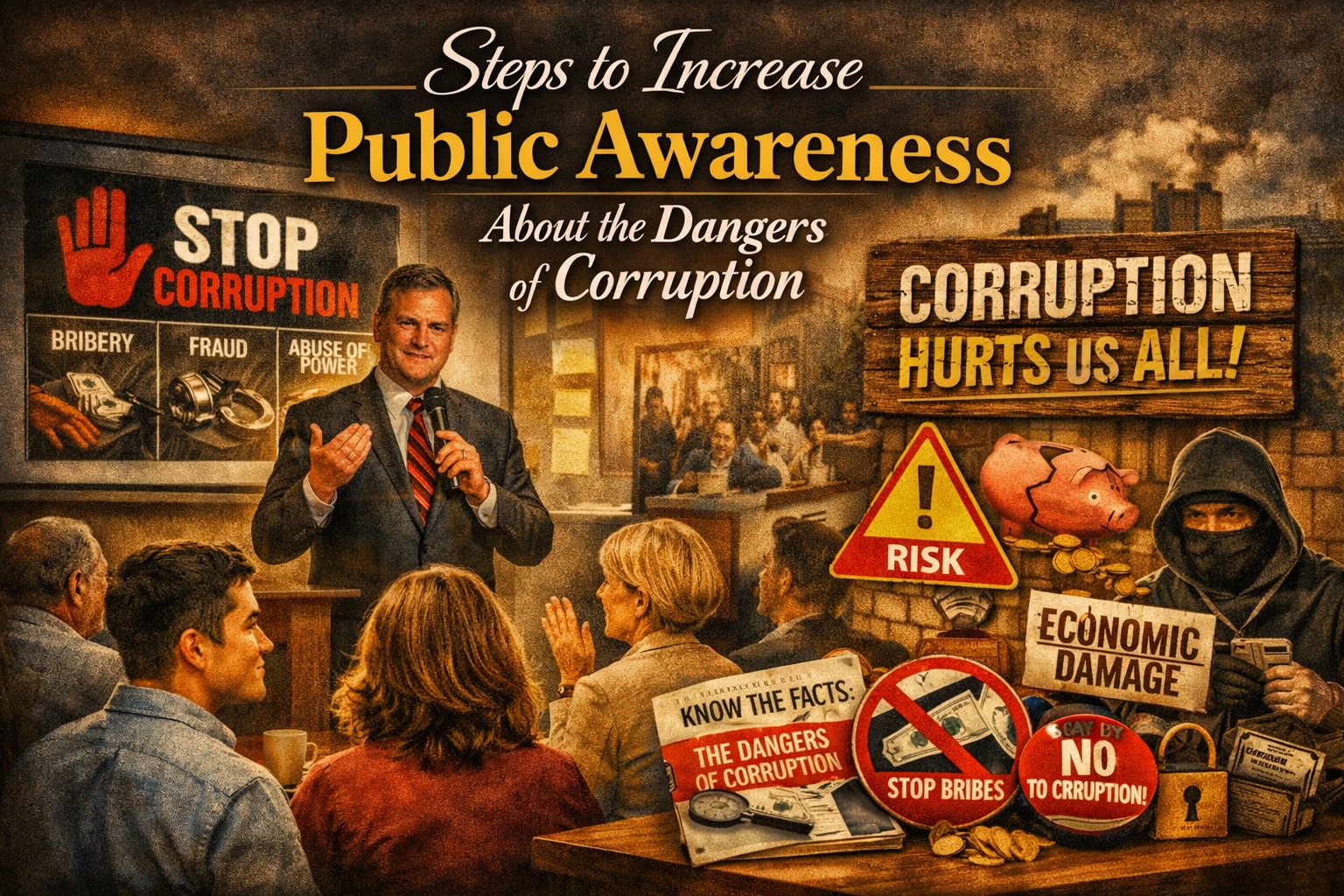
Corruption remains one of the biggest challenges faced by societies around the world. It affects economic growth, public services, social justice, and the overall quality of life. When corruption becomes common, people lose trust in governments and institutions, making it more difficult to achieve sustainable development.
Increasing public awareness is one of the most effective ways to fight corruption. When citizens understand how corruption harms individuals, businesses, and communities, they are more likely to reject unethical behavior and support transparency. Education, community participation, and access to accurate information all play important roles in creating an anti-corruption culture.
UNDERSTAND THE IMPACT OF CORRUPTION
The first step in increasing awareness is helping people understand what corruption is and why it is harmful. Corruption occurs when someone abuses their authority or position for personal gain, often through bribery, fraud, favoritism, or embezzlement. While some people view these actions as minor violations, they can have serious consequences for society.
Corruption reduces the quality of public infrastructure, limits access to healthcare and education, and discourages investment. It also increases poverty by directing public funds away from programs that benefit communities. When people recognize these real-life consequences, they become more motivated to support ethical practices and reject dishonest behavior.
PROMOTE ANTI-CORRUPTION EDUCATION
Education is one of the strongest tools for preventing corruption. Schools, universities, and training institutions should teach students about integrity, accountability, transparency, and ethical decision-making. These values help shape responsible citizens from an early age.
Learning about corruption should go beyond definitions. Students need practical examples that demonstrate how corruption affects daily life and how honest actions contribute to a better society. Interactive discussions, case studies, and community projects can make anti-corruption education more engaging and meaningful.
USE DIGITAL MEDIA TO SPREAD AWARENESS
Modern technology makes it easier than ever to reach large audiences. Governments, educational institutions, and non-profit organizations can use social media, websites, podcasts, and online videos to educate the public about corruption and its consequences. Digital campaigns can simplify complex topics into easy-to-understand content.
Sharing real stories, infographics, and educational videos helps people connect with the issue emotionally and intellectually. Regular online campaigns also encourage discussions about integrity and inspire more people to become involved in preventing corruption within their communities.
ENCOURAGE COMMUNITY PARTICIPATION
Public awareness grows stronger when communities actively participate in anti-corruption initiatives. Local organizations, youth groups, schools, and religious institutions can organize seminars, workshops, public discussions, and awareness campaigns. These activities create opportunities for people to exchange ideas and learn from one another.
Community involvement also builds a sense of shared responsibility. When citizens believe they have a role in protecting public resources, they become more willing to report suspicious activities and support transparent governance. Collective action creates stronger resistance against corrupt practices.
SUPPORT TRANSPARENCY AND OPEN GOVERNMENT
Transparency is essential for reducing opportunities for corruption. Governments should provide easy public access to information about budgets, procurement processes, development projects, and public spending. Open information allows citizens to monitor how public resources are managed.
When institutions operate transparently, public trust increases. Citizens are more confident that decisions are made fairly rather than for private interests. Transparency also strengthens accountability because officials know their actions can be monitored and evaluated by the public.
PROTECT WHISTLEBLOWERS AND REPORTING SYSTEMS
Many corruption cases are uncovered because brave individuals report unethical behavior. However, people are often afraid of retaliation or discrimination after reporting misconduct. Effective whistleblower protection encourages more people to come forward safely.
Governments and organizations should establish secure, confidential, and accessible reporting systems. Protecting those who report corruption demonstrates that honesty is valued and that ethical behavior will be supported rather than punished.
COLLABORATE WITH THE MEDIA
Independent media plays an important role in exposing corruption and educating society. Investigative journalism helps reveal hidden corruption cases and encourages public discussions about accountability. Responsible reporting also helps citizens understand the broader impact of unethical behavior.
Media organizations should provide accurate, balanced, and evidence-based information. Educational television programs, newspapers, podcasts, and online news platforms can continuously remind the public about the importance of integrity and responsible governance.
ENCOURAGE ETHICAL LEADERSHIP
Leaders influence the behavior of employees, students, and communities. Public officials, business executives, educators, and community leaders should demonstrate honesty, fairness, and responsibility through their actions. Ethical leadership creates positive examples for others to follow.
Organizations should also establish clear codes of conduct and reward ethical behavior. When leaders consistently practice transparency and accountability, they strengthen public confidence and help build a culture that rejects corruption.
CONCLUSION
Increasing public awareness about the dangers of corruption requires continuous cooperation between governments, educational institutions, businesses, media organizations, and citizens. Education, transparency, digital communication, community participation, ethical leadership, and whistleblower protection all contribute to building a society that values integrity and accountability.
Every individual has a role in preventing corruption. By promoting anti-corruption education, encouraging honest behavior, and supporting transparent institutions, communities can reduce corruption and create a future that is fair, trustworthy, and prosperous for everyone.
About the Author
Gusti Ayu Tita P
Author — STEKOM University
An active author focused on academic issues, educational technology, and human resource development in the campus environment.