
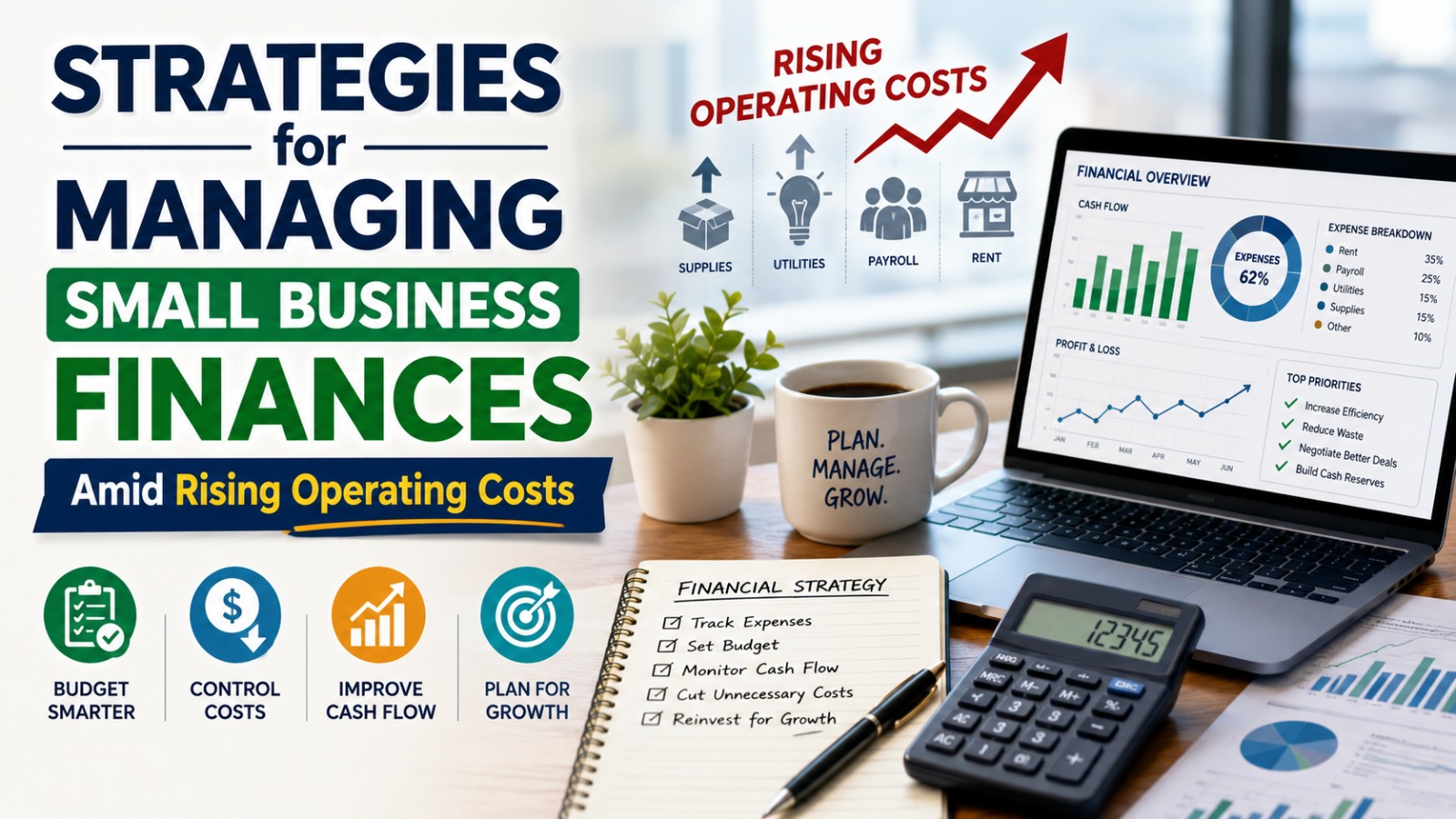
Rising operating costs have become one of the biggest challenges for small businesses worldwide. Increasing prices for raw materials, utilities, transportation, and employee wages can significantly reduce profit margins if not managed properly. For small business owners, maintaining financial stability during periods of economic pressure requires smart planning,
efficient budgeting, and careful cash flow management.
Businesses that adapt quickly to changing economic conditions are more likely to survive and continue growing. By implementing effective financial strategies, small businesses can reduce financial stress and improve long-term sustainability.
UNDERSTAND THE MAIN SOURCES OF RISING COSTS
Before developing a financial strategy, business owners must first identify which operating costs are increasing the most. Common areas affected by inflation and economic uncertainty include:
- Raw materials and inventory
- Transportation and logistics
- Employee salaries and benefits
- Utility expenses
- Rent and property costs
- Marketing and advertising budgets
Understanding where expenses are rising allows businesses to focus on the areas that need immediate financial adjustments.
CREATE A REALISTIC BUSINESS BUDGET
A well-planned budget is essential when operating costs increase. Business owners should review all income and expenses regularly to ensure spending remains under control.
An effective budget should include:
- Fixed monthly expenses
- Variable operational costs
- Emergency reserves
- Revenue projections
- Debt repayment plans
Businesses should also compare actual financial performance against budget targets each month. This helps identify overspending early and allows quick corrective action.
IMPROVE CASH FLOW MANAGEMENT
Cash flow is the lifeblood of every small business. Even profitable businesses can struggle if cash inflows and outflows are poorly managed.
To maintain healthy cash flow:
- Send invoices immediately
- Offer incentives for early customer payments
- Reduce unnecessary credit sales
- Negotiate longer payment terms with suppliers
- Monitor accounts receivable regularly
Maintaining strong cash flow ensures the business can continue covering operational expenses without relying heavily on loans.
REDUCE UNNECESSARY EXPENSES
One of the most effective strategies during periods of rising costs is reducing unnecessary spending. Small operational changes can create significant savings over time.
Businesses can cut costs by:
- Canceling unused software subscriptions
- Switching to energy-efficient equipment
- Reducing excessive inventory purchases
- Outsourcing non-essential tasks
- Automating repetitive administrative work
Regular expense audits help identify wasteful spending and improve overall efficiency.
ADJUST PRICING STRATEGICALLY
When operating costs rise, businesses may need to increase prices carefully to protect profit margins. However, sudden price increases can drive customers away if not handled properly.
Effective pricing strategies include:
- Gradual price adjustments
- Offering bundled products or services
- Highlighting product value and quality
- Introducing premium service options
Transparency with customers about rising costs can also help maintain trust and customer loyalty.
FOCUS ON HIGH-PROFIT PRODUCTS AND SERVICES
Not all products generate the same level of profit. During challenging financial periods, businesses should prioritize products or services with the highest profit margins.
Analyze sales performance to identify:
- Best-selling products
- High-margin services
- Slow-moving inventory
- Unprofitable business activities
Focusing resources on profitable areas can improve financial performance and reduce operational waste.
BUILD AN EMERGENCY FUND
Economic uncertainty can create unexpected financial pressure. Establishing an emergency fund helps businesses handle temporary cash shortages or sudden operational expenses.
Financial experts often recommend saving enough funds to cover at least three to six months of business expenses. This financial cushion reduces dependence on emergency loans and provides greater stability during difficult times.
INVEST IN DIGITAL TOOLS AND TECHNOLOGY
Technology can help small businesses operate more efficiently while reducing long-term costs. Digital solutions often improve productivity and minimize manual work.
Useful technologies for small businesses include:
- Accounting software
- Inventory management systems
- Customer relationship management tools
- Digital payment platforms
- Online marketing automation tools
Investing in technology may require upfront costs, but it can lead to significant operational savings over time.
STRENGTHEN CUSTOMER RETENTION
Acquiring new customers is often more expensive than retaining existing ones. During periods of rising costs, maintaining customer loyalty becomes increasingly important.
Businesses can improve customer retention by:
- Providing excellent customer service
- Offering loyalty programs
- Maintaining consistent product quality
- Engaging customers through social media and email marketing
Loyal customers are more likely to continue supporting the business even during economic uncertainty.
REVIEW FINANCIAL PERFORMANCE REGULARLY
Financial management should be an ongoing process. Business owners must regularly review financial reports to identify problems and opportunities early.
Key financial reports to monitor include:
- Cash flow statements
- Profit and loss reports
- Expense tracking reports
- Sales performance data
Frequent financial evaluations help businesses remain flexible and make informed decisions quickly.
CONCLUSION
Managing small business finances during periods of rising operating costs requires discipline, flexibility, and strategic planning. By improving cash flow management, reducing unnecessary expenses, adjusting pricing carefully, and investing in efficient systems, businesses can remain financially stable even in challenging economic conditions.
Small businesses that actively monitor their finances and adapt to economic changes are better positioned for long-term growth and sustainability. Strong financial management is not only about surviving difficult periods but also about building a stronger foundation for future success.
About the Author
Gusti Ayu Tita P
Author — STEKOM University
An active author focused on academic issues, educational technology, and human resource development in the campus environment.