
Strategies to Improve Port Operational Efficiency
Gusti Ayu Tita P
10 Agustus 2026
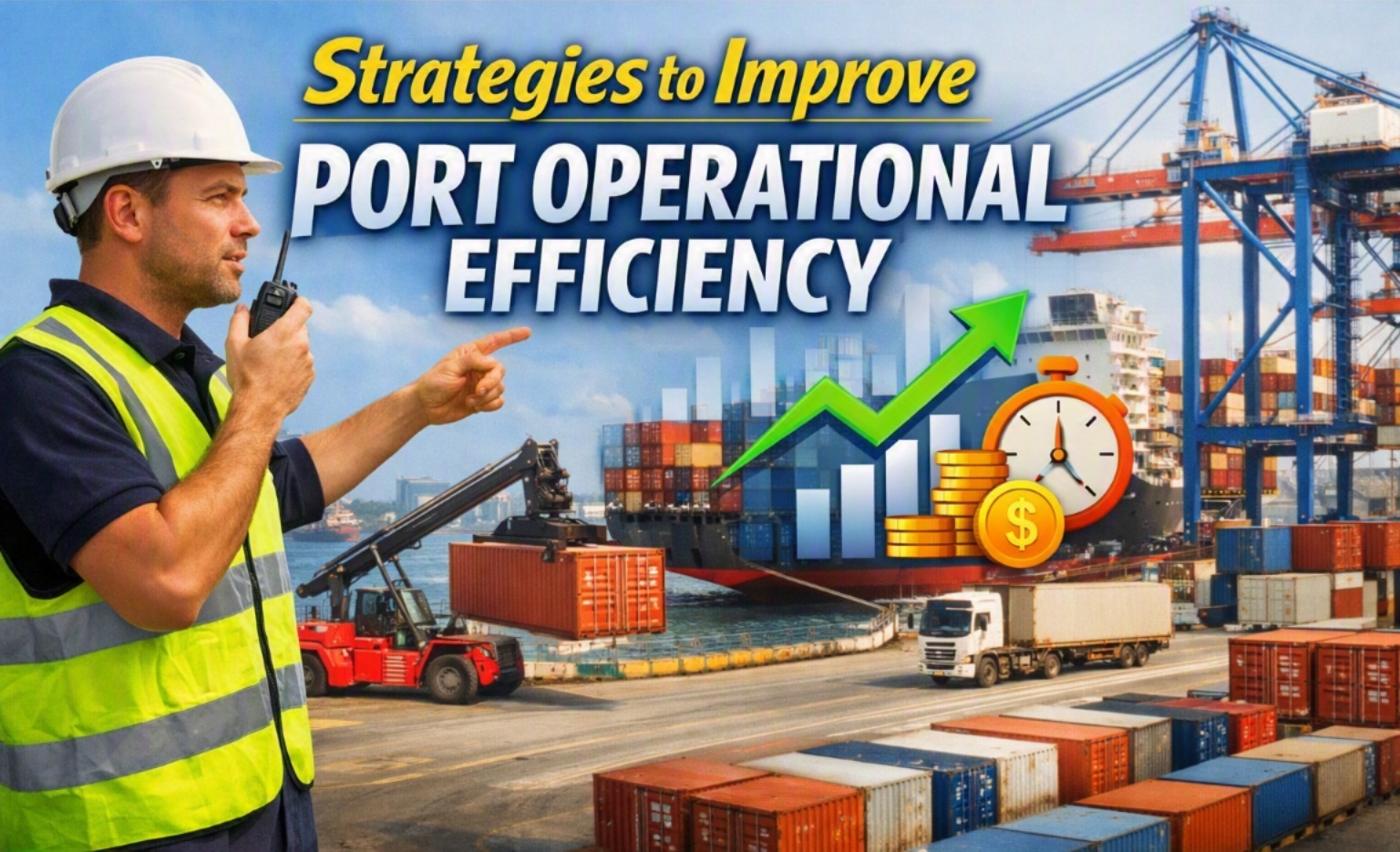
Ports are a critical part of the global supply chain because they connect sea transportation with land-based logistics. Efficient port operations help goods move faster, reduce unnecessary costs, and improve the reliability of national and international trade. However, ports can face challenges such as congestion, equipment delays, limited storage capacity, inefficient documentation, and poor coordination between stakeholders. Improving operational efficiency therefore requires a combination of better technology, workforce management, infrastructure, and well-organized processes.
OPTIMIZE CARGO HANDLING PROCESSES
One of the most effective ways to improve port operational efficiency is by optimizing cargo handling processes. Containers and other goods should move through loading, unloading, inspection, storage, and delivery with as few unnecessary delays as possible. Ports can improve this process by arranging equipment, workers, storage areas, and transportation routes according to actual cargo demand. Efficient cargo handling can reduce waiting times, improve equipment utilization, and increase the number of vessels that can be served.
Clear operating procedures are also important because every stage of cargo movement needs consistent coordination. Port operators can use performance data to identify bottlenecks and determine which activities require improvement. Regular evaluation helps ensure that cargo handling remains efficient even when cargo volumes increase. As a result, ports can provide faster and more predictable services to shipping companies and logistics providers.
USE DIGITAL TECHNOLOGY AND AUTOMATION
Digital technology can significantly improve the speed and accuracy of port operations. Port management systems can connect information about vessels, containers, equipment, cargo documents, and transportation schedules in one integrated environment. Digital platforms can also reduce manual data entry and make important information easier to access for authorized stakeholders. This can help minimize administrative errors and improve communication across different operational teams.
Automation can further improve efficiency in suitable port activities. Technologies such as automated gates, electronic documentation, smart sensors, and automated handling equipment can reduce repetitive manual tasks. Real-time tracking can also help operators monitor container locations and equipment conditions more effectively. Although automation requires investment and careful implementation, it can provide long-term benefits by improving productivity, accuracy, and operational visibility.
IMPROVE PORT EQUIPMENT MANAGEMENT
Port equipment plays a major role in determining how quickly cargo can be handled. Cranes, trucks, reach stackers, terminal tractors, and other equipment need to be available when required and operated efficiently. Poor equipment management can create bottlenecks, increase vessel turnaround time, and raise maintenance costs. Ports should therefore monitor equipment utilization and establish appropriate maintenance schedules.
Predictive maintenance can help operators identify potential equipment problems before major failures occur. Sensors and operational data can provide information about equipment performance, usage patterns, and possible maintenance needs. This approach can reduce unexpected downtime and extend equipment service life. Well-maintained equipment also supports safer working conditions and more reliable port operations.
STRENGTHEN WORKFORCE SKILLS AND COORDINATION
Technology and infrastructure cannot improve port efficiency without a capable workforce. Port employees need appropriate training in equipment operation, safety procedures, digital systems, cargo handling, and emergency response. Regular training helps workers adapt to new technologies and perform their responsibilities more consistently. Skilled employees can also identify operational problems and respond to unexpected situations more effectively.
Coordination between departments is equally important because port operations involve many activities that depend on one another. Vessel scheduling, cargo handling, customs procedures, storage, trucking, and security must work together to avoid unnecessary delays. Clear communication channels can reduce misunderstandings and improve decision-making. A strong workplace safety culture should also remain a priority because efficient operations must not compromise employee or cargo safety.
REDUCE CONGESTION THROUGH BETTER PLANNING
Port congestion can significantly reduce operational efficiency and create additional costs for shipping and logistics companies. One useful strategy is to improve vessel scheduling based on available berths, equipment, labor, and expected cargo volumes. Better planning allows port operators to distribute workloads more effectively instead of handling large volumes at the same time. Accurate forecasts can also help ports prepare for seasonal increases in demand.
Land-side congestion should receive similar attention because trucks and rail services are important connections between ports and inland areas. Appointment systems can help control truck arrivals and prevent excessive queues at terminal gates. Ports can also coordinate with logistics providers to improve the timing of cargo collection and delivery. Better synchronization between sea and land transportation can make the entire supply chain more efficient.
IMPROVE DATA MANAGEMENT AND PERFORMANCE MONITORING
Reliable data is essential for making better operational decisions. Ports should monitor key performance indicators such as vessel turnaround time, berth productivity, crane utilization, truck waiting time, container dwell time, and equipment availability. These indicators can show whether operations are improving and help managers identify areas that require attention. Consistent data collection also makes it easier to compare performance over time.
A centralized information system can support faster and more accurate decision-making. Managers can use operational dashboards to monitor activities and respond quickly when delays or capacity problems appear. Data analysis can also help predict demand and optimize resource allocation. By developing a data-driven management approach, ports can move from reacting to problems toward preventing them.
STRENGTHEN COLLABORATION BETWEEN STAKEHOLDERS
Port efficiency depends on cooperation among many stakeholders, including terminal operators, shipping companies, customs authorities, freight forwarders, trucking companies, rail operators, and government agencies. If one party operates inefficiently, it can affect the performance of the entire logistics chain. Sharing relevant information can help stakeholders coordinate schedules, documentation, cargo movement, and inspections more effectively.
Integrated planning is particularly important when ports experience high cargo volumes or operational disruptions. Stakeholders should establish clear communication procedures and use compatible digital systems where possible. Regular coordination meetings can also help identify recurring problems and develop practical solutions. Strong collaboration creates a more connected and predictable logistics network.
PRIORITIZE SAFETY AND SUSTAINABLE OPERATIONS
Operational efficiency should always be balanced with safety and environmental responsibility. Accidents, equipment damage, and environmental incidents can cause major operational disruptions and financial losses. Ports should maintain clear safety standards, conduct regular inspections, and provide appropriate protective equipment and training. Safe operations help protect workers while supporting consistent productivity.
Sustainable practices can also contribute to long-term efficiency. Ports can reduce fuel consumption through better equipment utilization, optimized vehicle routes, and the adoption of cleaner technologies. Energy-efficient equipment and improved waste management can reduce operating costs while lowering environmental impacts. These measures can make port operations more resilient and competitive over time.
CONCLUSION
Improving port operational efficiency requires more than simply increasing infrastructure capacity. Ports need to combine efficient cargo handling, digital technology, equipment management, skilled workers, accurate planning, reliable data, stakeholder collaboration, and strong safety practices. Each strategy can improve a specific part of the operation, but the greatest benefits come when these elements work together.
An efficient port can reduce delays, control operating costs, improve service reliability, and strengthen the overall supply chain. As international trade continues to depend on fast and reliable logistics, ports must continuously evaluate their processes and adopt practical innovations. With continuous improvement and data-based management, port operators can create safer, faster, and more competitive operations.
About the Author
Gusti Ayu Tita P
Author — STEKOM University
An active author focused on academic issues, educational technology, and human resource development in the campus environment.















