Strategies To Turn Rental Houses Into Long Term Investments
Gusti Ayu Tita P
21 Agustus 2026
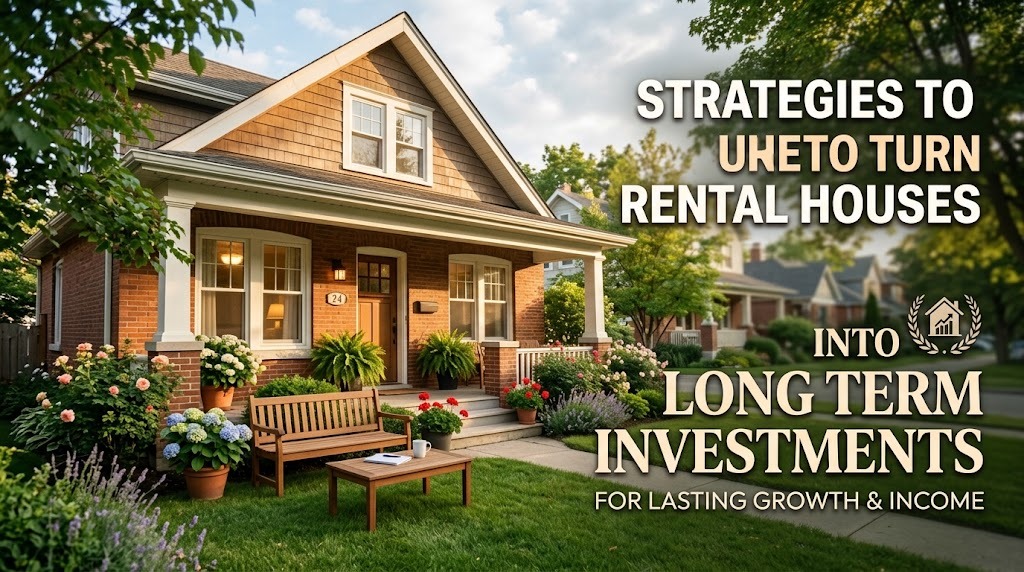
Rental houses can become a potential long term investment when they are selected, managed, and maintained carefully. Unlike investments that depend only on price appreciation, rental properties can generate regular rental income while potentially increasing in value over time. However, property ownership also involves expenses, vacancies, maintenance, taxes, and market risks. Investors therefore need a clear strategy rather than relying only on rising property prices. With proper planning, rental houses can become productive assets that support long term financial goals.
CHOOSE A LOCATION WITH LONG TERM POTENTIAL
Location is one of the most important factors in determining the long term potential of a rental property. Look for areas with access to employment centers, universities, schools, healthcare facilities, transportation, markets, and other essential services. Locations with consistent housing demand may have better opportunities to attract tenants over time. A property in a convenient area can also be easier to rent when tenants have many alternatives.
Investors should research the area's development prospects before purchasing a property. New transportation infrastructure, business centers, educational facilities, and population growth may influence future housing demand. However, future development should not be treated as a guarantee of property appreciation. Location quality and sustainable demand should remain the primary considerations.
CALCULATE THE TOTAL INVESTMENT COST
A profitable rental property requires more than a reasonable purchase price. Investors should calculate land or property costs, renovation expenses, furniture, taxes, insurance, financing costs, and other transaction expenses where applicable. These costs affect the amount of capital required and the potential return. A detailed calculation helps investors avoid unrealistic expectations.
It is also important to prepare a reserve for unexpected expenses. Roof damage, plumbing problems, appliance replacement, vacancies, and other costs can reduce rental income. Investors should avoid using every available fund to acquire the property. Adequate financial reserves can make the investment more resilient when unexpected situations occur.
SET A REALISTIC RENTAL PRICE
Rental pricing has a direct effect on both occupancy and income. Investors should compare similar properties in the same area and consider location, property size, facilities, condition, and tenant demand. A rent that is too high may increase vacancy periods, while a rent that is too low may reduce potential returns. The goal is to establish a price that is competitive and financially sustainable.
Rental prices can also change as local market conditions change. Owners should periodically review market information rather than keeping the same price indefinitely. Any changes should comply with the rental agreement and applicable regulations. Smart rental pricing can help balance tenant demand and investment returns.
FOCUS ON PROPERTY QUALITY AND MAINTENANCE
A well-maintained rental house is more likely to remain attractive to tenants. Regular inspections should cover plumbing, electrical systems, roofs, drainage, walls, floors, doors, windows, and appliances. Small problems should be addressed before they become major repairs. This approach can protect the physical condition of the property and potentially reduce long term maintenance costs.
Property improvements should be practical rather than purely decorative. Renovations should focus on features that tenants value and that can improve functionality. Spending excessively on unnecessary upgrades may not produce a corresponding increase in rental income. Preventive maintenance and useful improvements can help preserve the property's long term value.
PLAN FOR PROPERTY VALUE GROWTH
Rental income is only one potential source of long term property returns. Property values may increase when an area experiences improved infrastructure, economic growth, population growth, or stronger housing demand. However, property appreciation is not guaranteed and can vary significantly between locations and market cycles. Investors should therefore avoid relying entirely on future price increases.
Strategic improvements can potentially support property value by keeping the house functional and competitive. Maintaining the building, improving energy efficiency where practical, and upgrading important facilities may help preserve its appeal. Any investment in improvements should be evaluated against expected benefits. Long term value preservation is an important part of property investment.
PREPARE FOR MARKET AND FINANCIAL RISKS
Rental property investment involves several risks. These can include vacancies, falling rental demand, property damage, unexpected repairs, changing regulations, interest costs, and economic downturns. Investors should identify these risks before purchasing and develop strategies to manage them. No rental property investment is completely risk free.
Maintaining emergency funds and avoiding excessive debt can improve financial resilience. Diversifying investments may also reduce dependence on a single property or source of income. Investors should consider professional financial or legal advice when necessary, particularly for significant transactions. Risk management is essential for maintaining a long term investment strategy.
CONCLUSION
Turning rental houses into long term investments requires more than simply purchasing a property and collecting rent. Investors need to focus on strategic location, realistic costs, competitive rental pricing, property maintenance, tenant demand, occupancy, cash flow, and risk management. Regular evaluation can help owners respond to changes in the rental market and protect the property's condition. Long term success depends on disciplined management and realistic financial expectations. When carefully planned and responsibly managed, rental houses can become valuable assets that generate income while supporting long term wealth-building goals.
About the Author
Gusti Ayu Tita P
Author — STEKOM University
An active author focused on academic issues, educational technology, and human resource development in the campus environment.