
Strengthening Love For The Homeland Amid Technological Development
Gusti Ayu Tita P
5 Agustus 2026
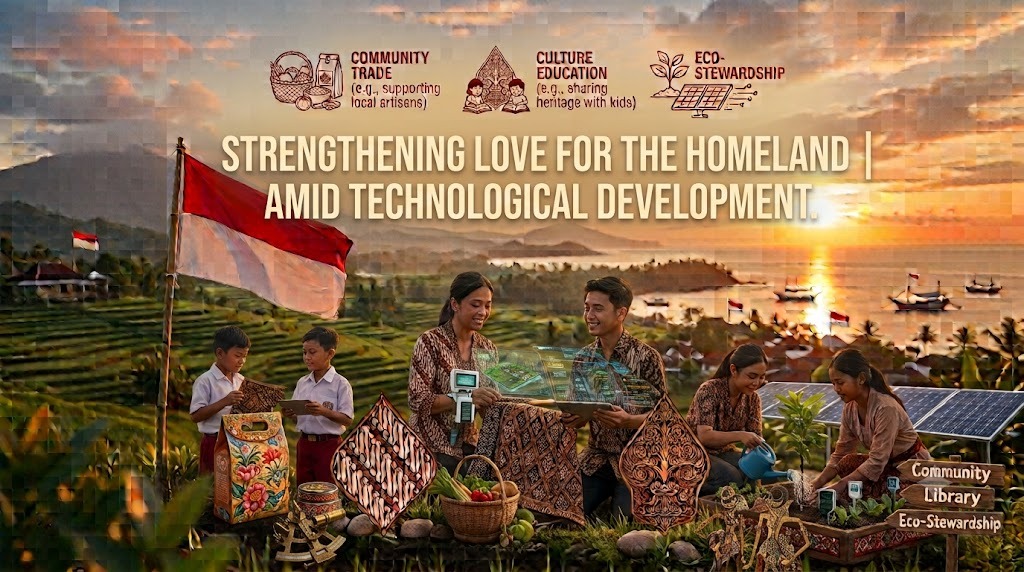
Strengthening love for the homeland amid technological development is an important challenge for modern society. Technology has changed the way people learn, communicate, work, and share information. Digital platforms provide many opportunities to introduce Indonesian culture and national achievements to wider audiences. However, technology should be used wisely so that modernization does not weaken national identity.
Love for the homeland can continue to grow when people combine digital skills with national values. Young people, in particular, can use technology to learn about Indonesian history, promote local culture, support local businesses, and spread positive information. National pride does not mean rejecting global developments. Instead, it means using modern opportunities while maintaining respect for Indonesia's identity and diversity.
UNDERSTANDING LOVE FOR THE HOMELAND IN THE DIGITAL ERA
Love for the homeland means having pride, care, respect, and responsibility toward one's country. In the digital era, these values can be expressed through online and offline behavior. People can use technology to support education, cultural preservation, social activities, and national development. National pride can therefore be practiced in ways that are relevant to modern life.
Digital technology also creates opportunities for people to communicate across regions. Respectful communication, tolerance, responsible content creation, and digital awareness are important parts of modern citizenship. People should understand that online actions can influence others and shape public discussions. Responsible digital behavior can help maintain national unity.
THE IMPACT OF TECHNOLOGY ON NATIONAL IDENTITY
Technology has made information about different cultures and countries easier to access. This can provide valuable knowledge and encourage people to learn from international developments. However, excessive exposure to foreign content can sometimes make people less familiar with their own cultural heritage. Therefore, digital literacy and cultural awareness are increasingly important.
Technology itself is not a threat to national identity. The key is how people use it. Indonesian history, local traditions, national values, and cultural diversity can be promoted through digital platforms. By using technology creatively, citizens can strengthen national identity while remaining connected to the global community.
USING SOCIAL MEDIA TO PROMOTE INDONESIAN CULTURE
Social media can become an effective tool for introducing Indonesian culture to younger generations and international audiences. Users can create content about traditional dances, music, clothing, food, crafts, languages, and local traditions. Interesting visual content can make cultural information easier to understand. This can encourage greater appreciation for Indonesia's cultural heritage.
Content creators should ensure that cultural information is accurate, respectful, and informative. They should avoid stereotypes or misleading representations simply to attract attention. Collaboration with cultural communities and practitioners can improve the quality of digital content. Responsible social media use can turn technology into a powerful tool for cultural preservation.
LEARNING INDONESIAN HISTORY THROUGH TECHNOLOGY
Technology provides new ways to learn about Indonesian history. Students can access digital books, educational videos, online archives, virtual museums, and other learning resources. These tools can make historical topics more engaging and accessible. They can also help students explore historical events beyond traditional classroom materials.
However, students should evaluate information carefully. Reliable sources and critical thinking are important when studying history online. Not all information on the internet is accurate or complete. Learning to distinguish credible information from misinformation can help students develop both digital literacy and historical awareness.
PRESERVING LOCAL CULTURE THROUGH DIGITAL PLATFORMS
Digital platforms can support the documentation of local traditions and cultural heritage. Communities can record traditional performances, interviews with cultural practitioners, local stories, crafts, and regional languages. Digital documentation can help preserve information that might otherwise become difficult to access. It can also allow younger generations to discover traditions from different parts of Indonesia.
Young people can participate by creating videos, podcasts, photographs, articles, animations, and educational websites. These formats can make cultural information more attractive to modern audiences. Digital preservation should still respect the communities connected to the traditions. When technology is combined with cultural responsibility, it can strengthen rather than replace traditional heritage.
SUPPORTING INDONESIAN PRODUCTS ONLINE
Technology has created new opportunities to support local products and Indonesian businesses. Online marketplaces and social media allow small businesses to reach customers beyond their local areas. Citizens can support these businesses by purchasing quality local products and sharing positive recommendations. This can contribute to local economic growth.
Young people can also use digital skills to help businesses with marketing, photography, graphic design, content creation, and online promotion. These activities combine technology with economic participation. Supporting Indonesian entrepreneurs can encourage innovation and create employment opportunities. Digital entrepreneurship can therefore become a modern expression of love for the homeland.
DEVELOPING DIGITAL LITERACY AND RESPONSIBILITY
Digital literacy is essential for responsible citizenship in the modern era. People need to know how to search for information, evaluate sources, protect personal information, and communicate appropriately online. These skills can help prevent the spread of harmful content. They also encourage people to participate more positively in digital society.
Citizens should avoid misinformation, hate speech, cyberbullying, online discrimination, and unnecessary conflict. Before sharing information, users should consider its source and accuracy. Respectful communication is especially important when discussing sensitive topics. Responsible digital behavior can help protect social harmony and national unity.
STRENGTHENING NATIONAL UNITY THROUGH DIGITAL COMMUNICATION
Technology allows Indonesians from different regions to communicate easily. This can create opportunities for cross-cultural understanding and national cooperation. People can learn about traditions and experiences from communities outside their own regions. Digital communication can therefore help reduce distance between different parts of Indonesia.
However, online communication can also create conflict when users spread provocative or discriminatory content. People should prioritize tolerance, empathy, and respectful discussion. Differences of opinion should be handled through constructive communication. Responsible digital interaction can strengthen the sense of belonging to one Indonesian community.
APPLYING PANCASILA IN THE DIGITAL WORLD
Pancasila values remain relevant in the technological era. Respect for religion, humanity, national unity, democracy, and social justice can guide online behavior. Users can apply these principles by respecting differences and communicating responsibly. Digital activities should not become a space for discrimination or hostility.
Students and young people can practice Pancasila through fair discussions, cooperation, digital campaigns, educational content, and social projects. Technology can be used to support community activities and spread positive messages. Applying Pancasila online shows that national values can adapt to modern forms of communication. This helps maintain national identity in a rapidly changing environment.
THE ROLE OF YOUNG PEOPLE IN THE TECHNOLOGICAL ERA
Young people are among the most active users of digital technology. They have opportunities to use their skills for education, creativity, entrepreneurship, cultural preservation, and social campaigns. Their digital content can influence how other people view Indonesia. Therefore, young people have an important role in strengthening national pride.
They should combine innovation with responsibility. Learning international trends is useful, but young people should also understand their own history and culture. They can create modern content that highlights Indonesian achievements and traditions. By doing this, technology becomes a tool for strengthening rather than weakening national identity.
USING TECHNOLOGY FOR EDUCATION AND NATIONAL DEVELOPMENT
Technology can improve access to education and knowledge. Students can learn new skills, access digital learning resources, and communicate with educators from different places. These opportunities can help develop a more knowledgeable and capable generation. Education is an important foundation for national development.
Students should use digital resources to develop critical thinking, creativity, communication, and problem-solving skills. These abilities can help them contribute to society in the future. Technology becomes more valuable when it is used to create knowledge and solutions rather than simply for entertainment. A skilled generation can make a meaningful contribution to Indonesia.
BALANCING GLOBAL INFLUENCES WITH NATIONAL IDENTITY
Globalization allows people to discover new ideas, lifestyles, technologies, and cultures. This can provide valuable opportunities for learning and innovation. However, citizens should maintain a strong connection with Indonesian identity and national values. Being open to global influences does not mean abandoning local culture.
People can take positive ideas from other countries while continuing to respect Indonesian traditions, values, and cultural diversity. Critical thinking helps individuals decide which influences are beneficial. This balanced approach allows Indonesians to participate in global society without losing their national identity.
BUILDING POSITIVE DIGITAL HABITS
Strengthening love for the homeland can begin with simple digital habits. People can follow educational accounts, support Indonesian creators, share accurate information, and promote positive stories about Indonesia. They can also use technology to learn about local history and culture. Small habits can influence the quality of the digital environment.
Users should also think carefully before posting or sharing content. Responsible digital citizenship requires respect, honesty, and awareness of consequences. Positive online habits can reduce conflict and encourage constructive communication. When practiced by many users, these habits can contribute to a healthier digital society.
CONCLUSION
Strengthening love for the homeland amid technological development requires a balance between modernization and national identity. Technology provides valuable opportunities to learn, communicate, preserve culture, support local businesses, and promote Indonesia to the world. At the same time, people need digital literacy and responsibility to avoid misinformation and harmful online behavior. Modern technology should be used as a tool to strengthen positive national values.
Ultimately, technology and love for the homeland can grow together. Young people can use their creativity and digital skills to introduce Indonesian culture, support local products, learn history, and spread positive information. By combining technological innovation with tolerance, responsibility, and national pride, Indonesians can face global changes without losing their identity. This approach can help build a more united, creative, and confident Indonesia.
About the Author
Gusti Ayu Tita P
Author — STEKOM University
An active author focused on academic issues, educational technology, and human resource development in the campus environment.















