
Supernatural Myths That Are Still Believed in the Modern Era
Gusti Ayu Tita P
9 September 2026
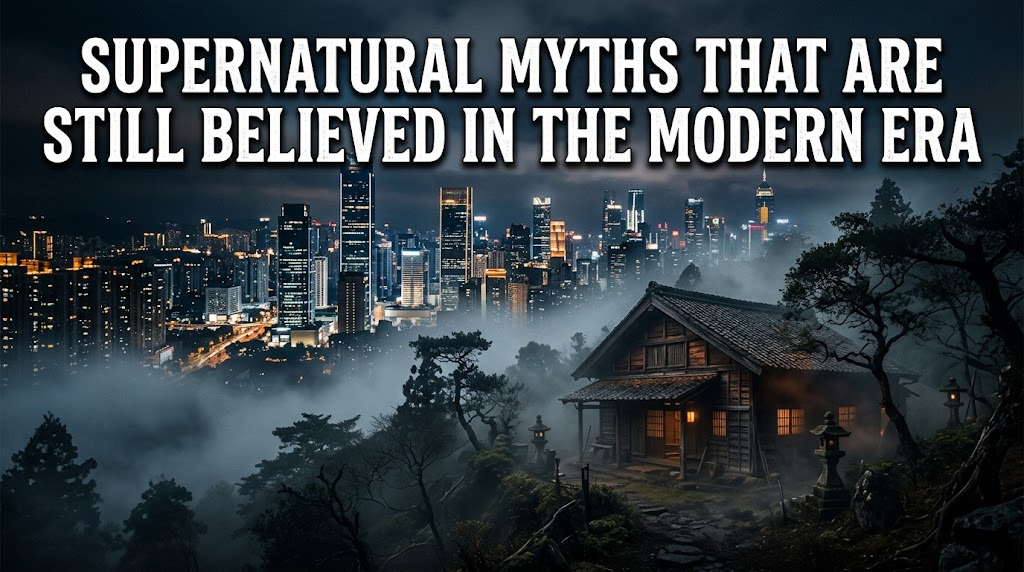
Supernatural myths have survived for centuries and continue to attract attention in the modern era. Stories about ghosts, mystical creatures, curses, sacred places, and unexplained events can still be found in many communities. Modern technology and scientific development have changed how people understand the world, but they have not completely removed traditional beliefs. In Indonesia, supernatural myths remain visible through folklore, family stories, films, social media, and local traditions. Their continued popularity shows how strongly stories and cultural memories can influence society.
WHY SUPERNATURAL MYTHS CONTINUE TO SURVIVE
One important reason supernatural myths survive is that they are often passed from one generation to another. Parents, grandparents, neighbors, and community members may share stories through conversations and traditional storytelling. A familiar story can become part of a community's cultural identity, especially when it is connected to a particular place or tradition. Even when younger generations do not fully believe the story, they may continue sharing it as entertainment or cultural knowledge. This allows old narratives to remain relevant in modern society.
Another factor is the emotional impact of mysterious stories. Fear, curiosity, and suspense can make supernatural narratives memorable and easy to share. A story that creates a strong emotional response is more likely to be remembered and retold. Modern communication platforms have made this process even faster because stories can reach thousands of people through digital content. As a result, traditional myths can survive while also taking new forms.
POPULAR SUPERNATURAL MYTHS IN INDONESIAN SOCIETY
Indonesia has numerous supernatural myths and folklore traditions that vary between regions. Stories about figures such as kuntilanak, pocong, genderuwo, wewe gombel, and leak are widely recognized in Indonesian popular culture. However, the characteristics and meanings of these figures are not always identical in every region. Some stories are associated with moral lessons, dangerous places, death, social behavior, or traditional beliefs. Their modern versions may also differ from older oral traditions.
These myths have become especially visible through horror movies, television programs, novels, online videos, and social media. Modern entertainment sometimes changes traditional characters to make them more dramatic or frightening. Consequently, audiences should understand that a representation in a movie may not accurately reflect the original local folklore. Recognizing this difference helps preserve cultural context while still allowing myths to develop creatively.
MYSTERIOUS PLACES AND LOCAL LEGENDS
Many mysterious places are surrounded by stories that have been preserved for years. Old buildings, forests, mountains, caves, cemeteries, and isolated roads may become associated with supernatural legends. Some communities attach traditional rules or warnings to these locations, particularly when they are considered sacred or culturally significant. Such stories can influence how people behave when visiting certain places. In some cases, the legend becomes an important part of the location's identity.
However, a popular legend should not automatically be treated as evidence that supernatural events actually occur. Environmental conditions, darkness, unfamiliar sounds, isolation, and expectations can influence how people interpret an experience. Stories may also become more dramatic as they are repeated. A balanced perspective allows people to appreciate local legends without presenting unverified claims as established facts.
THE INFLUENCE OF FAMILY AND COMMUNITY BELIEFS
Family and community environments can strongly influence how people understand supernatural beliefs. Children may first hear stories about spirits or mysterious events from parents and relatives. Repeated exposure can make these narratives familiar and meaningful, even when individuals later develop different personal opinions. Community traditions can also reinforce certain beliefs through ceremonies, storytelling, customs, or warnings about particular places. This social process helps explain why some myths remain influential for generations.
Beliefs can also change as society changes. Education, scientific knowledge, religion, urbanization, and technology may encourage people to reinterpret traditional stories. Some individuals may continue believing them, while others treat them as cultural heritage or entertainment. There is also a large group of people who remain uncertain and prefer to keep an open but critical perspective.
SOCIAL MEDIA AND THE SPREAD OF SUPERNATURAL STORIES
Social media has created a powerful new channel for sharing supernatural stories. People can publish personal experiences, photographs, recordings, and fictional narratives that may quickly attract public attention. Short videos and dramatic captions can make mysterious stories especially easy to consume and share. Algorithms may also repeatedly expose users to similar content, increasing interest in supernatural topics. This has helped traditional myths reach audiences that might never encounter them through conventional storytelling.
At the same time, online information requires careful evaluation. Edited videos, staged content, misleading descriptions, and fictional stories can sometimes be presented as genuine supernatural evidence. A large number of views or comments does not prove that an extraordinary claim is true. Audiences should consider the source, context, available evidence, and alternative explanations before accepting a supernatural story as fact.
SCIENCE AND THE INTERPRETATION OF SUPERNATURAL EXPERIENCES
Science provides different methods for examining events that people may describe as supernatural phenomena. Unusual experiences can sometimes be influenced by sleep deprivation, stress, environmental conditions, perception, memory, or psychological factors. For example, sleep paralysis can cause vivid sensations and hallucination-like experiences while a person is temporarily unable to move. Strange sounds can also have ordinary environmental causes that are difficult to identify in darkness or unfamiliar surroundings.
A scientific explanation does not necessarily mean that a person's experience should be mocked or ignored. Someone can genuinely experience fear or confusion even when the cause is uncertain. The important distinction is between acknowledging an experience and claiming that its supernatural interpretation has been scientifically proven. Critical thinking and cultural respect can therefore work together when discussing supernatural myths.
CONCLUSION
Supernatural myths continue to exist in the modern era because they are connected with culture, family traditions, human curiosity, and the natural attraction to mysterious stories. In Indonesia, legends about supernatural creatures and mysterious locations remain influential through folklore, entertainment, and digital media. Their continued popularity demonstrates how cultural narratives can adapt to new generations without completely disappearing.
At the same time, modern audiences can approach these stories with an open mind and critical thinking. Traditional myths can be appreciated as cultural heritage without automatically treating every supernatural claim as factual. By understanding the difference between folklore, personal experience, entertainment, and scientific evidence, people can enjoy supernatural stories while developing a more balanced view of the mysteries surrounding them.
About the Author
Gusti Ayu Tita P
Author — STEKOM University
An active author focused on academic issues, educational technology, and human resource development in the campus environment.















