
Sustainable Mobility Through Better Public Transportation
Gusti Ayu Tita P
11 Agustus 2026
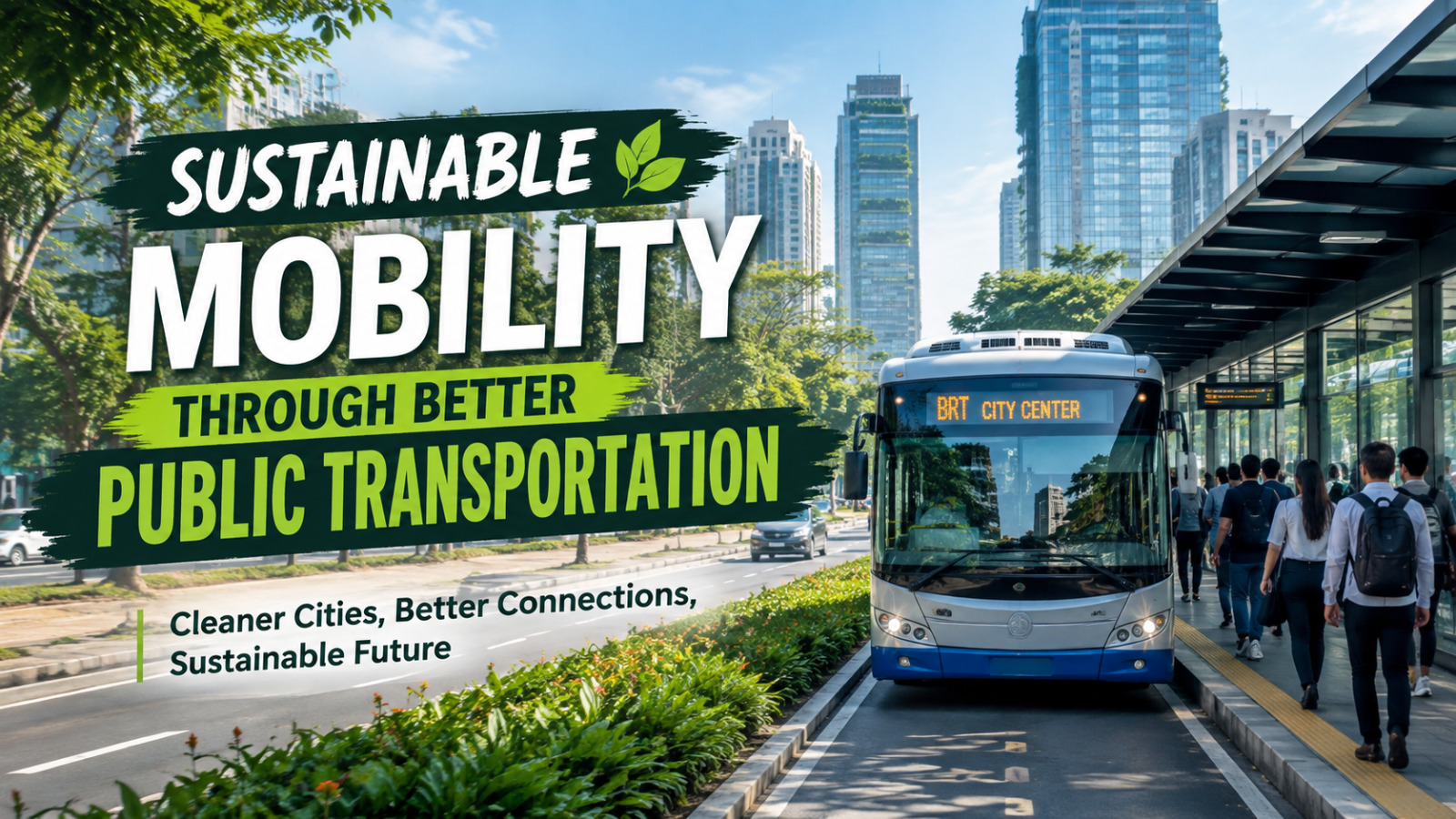
Public transportation plays an important role in creating sustainable mobility in modern cities. As urban populations continue to grow, the demand for transportation also increases, often causing traffic congestion, air pollution, and higher energy consumption. Better public transportation can provide a practical alternative to excessive private vehicle use. It can also make daily travel more affordable, accessible, and environmentally friendly. For these reasons, improving public transportation is an important step toward building healthier and more sustainable cities.
WHAT IS SUSTAINABLE MOBILITY?
Sustainable mobility refers to transportation systems that allow people and goods to move efficiently while reducing negative impacts on the environment and society. It encourages the use of transportation options that consume fewer resources and produce lower emissions. Public buses, trains, commuter rail systems, and other shared transportation services can support this goal by moving many passengers in a single journey. When these services are reliable and convenient, people may become more willing to leave private vehicles at home.
Sustainable mobility is also about accessibility and efficiency. A good transportation system should connect residential areas with schools, workplaces, healthcare facilities, shopping centers, and other important destinations. Affordable fares and convenient routes can help more people access opportunities without depending entirely on private cars or motorcycles. Therefore, sustainable mobility combines environmental responsibility with practical transportation needs.
HOW PUBLIC TRANSPORTATION SUPPORTS THE ENVIRONMENT
One of the main advantages of better public transportation is its potential to reduce transportation-related emissions. A single bus or train can carry many passengers at once, which can lower the number of individual vehicles operating on busy roads. Fewer private vehicles can contribute to lower fuel consumption and reduced air pollution, especially in densely populated urban areas. This makes public transportation an important part of strategies aimed at improving urban environmental quality.
Public transportation can also support more efficient use of energy and urban space. Instead of requiring large areas for roads and parking, cities can invest in transportation networks that move more people using shared infrastructure. Electric buses, electric trains, and other low-emission technologies can further strengthen the environmental benefits of public transportation. However, these benefits depend on proper planning, sufficient service coverage, and effective management.
MAKING PUBLIC TRANSPORTATION MORE ATTRACTIVE
People are more likely to use public transportation when the service is reliable, safe, comfortable, and convenient. Long waiting times, unpredictable schedules, overcrowding, and poor connections can discourage passengers from choosing buses or trains. Transportation providers therefore need to focus on punctual services, clean vehicles, clear information, and well-maintained facilities. These improvements can make public transportation a more competitive alternative to private vehicles.
Technology can also improve the passenger experience. Real-time arrival information, digital payment systems, mobile applications, and integrated travel information can help passengers plan their journeys more easily. Convenient connections between different modes of transportation can reduce unnecessary waiting and make longer trips more manageable. When public transportation becomes easier to understand and use, it can attract both regular passengers and people who normally depend on private vehicles.
AFFORDABILITY AND ACCESS FOR EVERYONE
Sustainable mobility should be accessible to people from different economic backgrounds. Affordable public transportation can reduce the financial burden of daily commuting, particularly for workers, students, and households with limited transportation budgets. Lower transportation costs can leave people with more money for food, education, healthcare, and other essential needs. This makes public transportation important not only for environmental sustainability but also for social and economic well-being.
Accessibility should also consider people with different physical needs. Stations, vehicles, sidewalks, and transfer points should be designed to accommodate older adults, people with disabilities, children, and other passengers who may need additional assistance. Clear signs, accessible entrances, safe pedestrian areas, and appropriate seating can make transportation more inclusive. A sustainable transportation system should ensure that environmental progress does not come at the expense of equal access.
PUBLIC TRANSPORTATION AND URBAN DEVELOPMENT
Better public transportation can influence how cities develop over time. Well-connected transit networks can encourage businesses and communities to grow around major transportation corridors and stations. This can make important destinations easier to reach while supporting more efficient land use. Transit-oriented development can also encourage a combination of housing, workplaces, services, and public facilities near transportation hubs.
Good transportation planning can reduce the need for long journeys by private vehicle. When people can easily reach essential destinations through public transportation, walking, or cycling, cities may become more compact and connected. This approach can help reduce traffic pressure and create more opportunities for pedestrian-friendly urban areas. However, transportation planning should be coordinated with housing, land use, and infrastructure policies to achieve lasting results.
CHALLENGES IN DEVELOPING SUSTAINABLE TRANSPORTATION
Although public transportation offers many benefits, improving it can involve significant challenges. Cities may need large investments to build new rail lines, purchase modern vehicles, upgrade stations, and maintain existing infrastructure. Rapid population growth can also make it difficult for transportation networks to keep pace with rising demand. Strong planning, stable funding, and effective management are therefore essential for long-term improvements.
Another challenge is changing public attitudes toward transportation. Some people may prefer private vehicles because they provide direct routes, privacy, and flexibility. Public transportation must therefore offer a service that is sufficiently convenient and dependable to encourage behavioral change. Governments and transportation operators can support this transition through better services, reasonable fares, safe infrastructure, and public awareness about the benefits of sustainable mobility.
THE FUTURE OF SUSTAINABLE PUBLIC TRANSPORTATION
The future of public transportation is likely to involve greater use of clean energy, digital technology, and integrated transportation networks. Electric buses and trains can help reduce dependence on fossil fuels, while digital systems can improve scheduling, ticketing, and passenger communication. Cities may also increasingly connect public transportation with walking, cycling, and shared mobility services. These developments can create a more flexible transportation system that responds to different travel needs.
Successful sustainable transportation will require cooperation between governments, transportation operators, businesses, technology providers, and communities. Investments should focus not only on new infrastructure but also on maintaining existing services and improving everyday passenger experiences. Reliable and accessible public transportation can become a foundation for cleaner, more inclusive, and better-connected cities. With consistent planning and innovation, public transportation can play an even greater role in sustainable urban development.
CONCLUSION
Better public transportation is an important foundation for sustainable mobility. It can help reduce emissions, improve accessibility, lower transportation costs, and make urban travel more efficient. However, achieving these benefits requires reliable services, affordable fares, inclusive infrastructure, modern technology, and long-term investment. Cities that prioritize public transportation can create better alternatives to excessive private vehicle use. Ultimately, sustainable mobility is not only about protecting the environment but also about creating cities where people can travel safely, affordably, and efficiently.
About the Author
Gusti Ayu Tita P
Author — STEKOM University
An active author focused on academic issues, educational technology, and human resource development in the campus environment.















