
Teachers’ Strategies for Building Smart and Ethical Generations
Gusti Ayu Tita P
25 Juli 2026
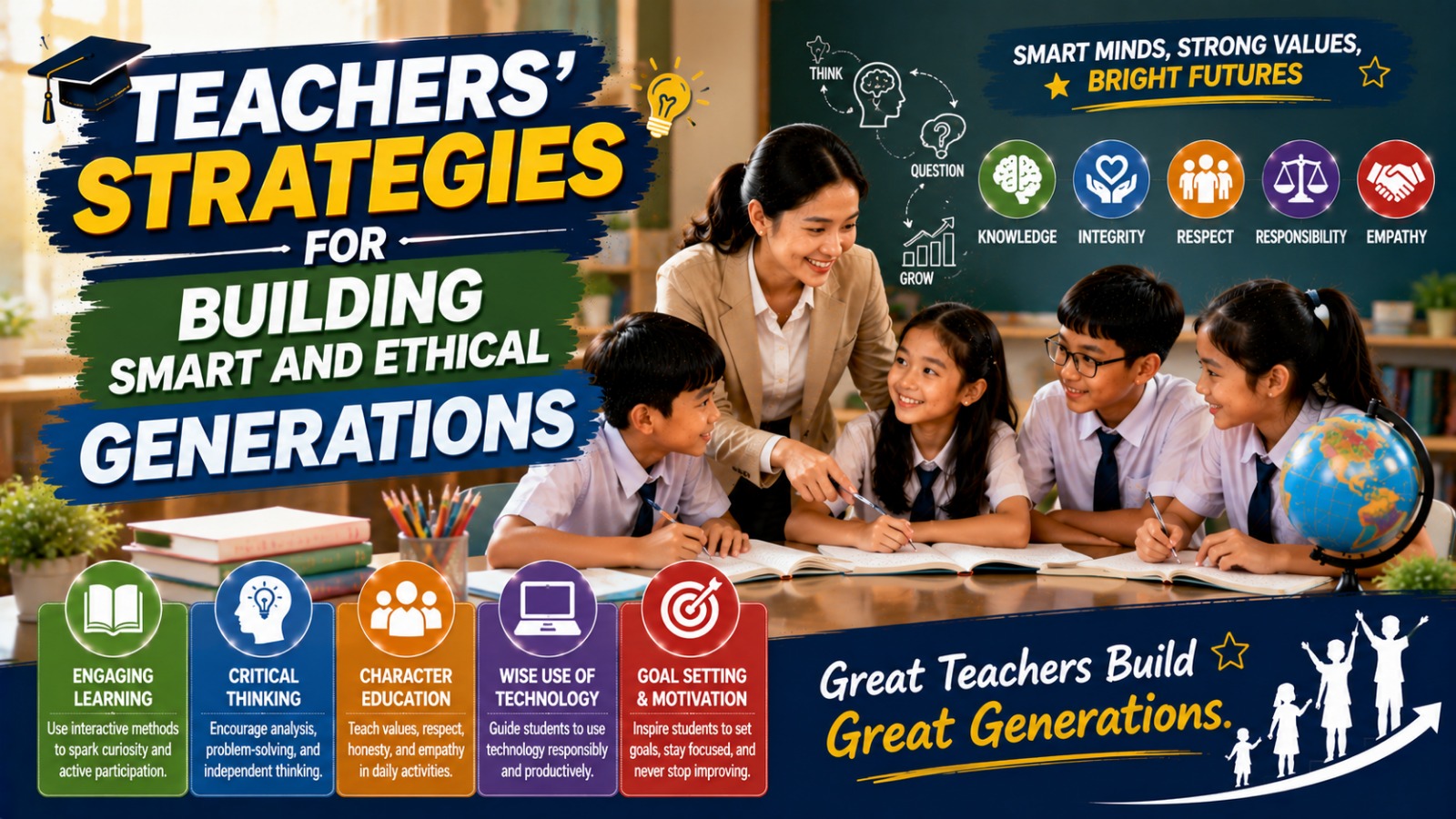
Teachers play a major role in shaping the future of society through education and character development. In the modern era, students are expected not only to achieve academic success but also to develop strong moral values and responsible behavior. Therefore, teachers must apply effective strategies that help students become smart, creative, disciplined, and ethical individuals. Through quality education and positive guidance, teachers contribute to building generations that are prepared to face future challenges while maintaining strong character and integrity.
THE IMPORTANCE OF EDUCATION IN SHAPING FUTURE GENERATIONS
Education is one of the most powerful tools for creating a better future. It helps students gain knowledge, improve skills, and develop positive attitudes that support personal and social growth.
A successful education system does not focus only on academic achievement. It also teaches students how to behave responsibly, respect others, and contribute positively to society. Teachers become the key figures who guide students throughout this important process.
By combining academic learning with character education, schools can create balanced individuals who are ready to face global challenges.
TEACHERS AS ROLE MODELS FOR STUDENTS
Students often learn by observing the behavior of their teachers. For this reason, teachers must become positive role models who demonstrate honesty, discipline, respect, and responsibility.
Teachers who show professionalism and kindness inspire students to adopt similar attitudes in daily life. Simple actions such as listening carefully, treating students fairly, and encouraging teamwork can strongly influence students’ character development.
Being a role model is one of the most effective strategies for building ethical generations.
STRATEGIES FOR DEVELOPING CRITICAL THINKING
Critical thinking is an essential skill in the modern world because students need to analyze information, solve problems, and make responsible decisions. Teachers can develop critical thinking through interactive learning methods and classroom discussions.
Activities such as debates, problem-solving exercises, and project-based learning encourage students to think independently and creatively. Teachers who ask open-ended questions also help students improve analytical skills and confidence in expressing ideas.
Critical thinking prepares students to adapt to rapid technological and social changes.
CHARACTER EDUCATION AS A FOUNDATION OF ETHICAL BEHAVIOR
Character education is an important part of building ethical generations. Teachers help students understand values such as honesty, empathy, discipline, tolerance, and teamwork.
These values can be taught through classroom activities, group collaboration, and daily interactions between teachers and students. Teachers who consistently reinforce positive behavior help students develop strong moral principles.
Character education also helps students avoid negative influences and make better decisions in their personal and social lives.
USING TECHNOLOGY WISELY IN EDUCATION
Technology has become an important part of modern learning. Teachers now use digital tools, online resources, and educational platforms to make learning more interactive and effective.
However, students also face challenges such as misinformation, cyberbullying, and excessive social media use. Teachers must guide students in using technology responsibly and ethically.
Digital literacy education helps students become smart digital citizens who can use technology for learning, creativity, and positive communication.
ENCOURAGING CREATIVITY AND INNOVATION
Creative and innovative students are better prepared to face future challenges. Teachers can encourage creativity by creating engaging learning environments that allow students to explore ideas and express opinions freely.
Creative projects, teamwork activities, and interactive assignments help students improve imagination and problem-solving abilities. Teachers who appreciate students’ ideas help increase confidence and motivation.
Innovation and creativity are important qualities for building successful future generations.
BUILDING POSITIVE TEACHER-STUDENT RELATIONSHIPS
Positive relationships between teachers and students are essential for effective learning and character development. Students who feel respected and supported are more motivated to participate actively in school activities.
Teachers who communicate openly and understand students’ emotional needs create safer and healthier learning environments. This support helps students develop confidence, emotional intelligence, and social skills.
Strong teacher-student relationships also encourage students to maintain positive attitudes and behavior.
TEACHERS ARE THE KEY TO A BETTER FUTURE
Teachers have a long-lasting influence on students and society. Through effective teaching strategies, teachers help students become intelligent, ethical, and responsible individuals who can contribute positively to the world.
Building smart and ethical generations requires collaboration between academic education and character development. Teachers who inspire, guide, and support students play a major role in achieving this goal.
With dedicated teachers and strong educational values, future generations can become leaders who bring positive change and progress to society.
About the Author
Gusti Ayu Tita P
Author — STEKOM University
An active author focused on academic issues, educational technology, and human resource development in the campus environment.















