
Temples in Central Java That Are Worth Visiting
Gusti Ayu Tita P
4 September 2026
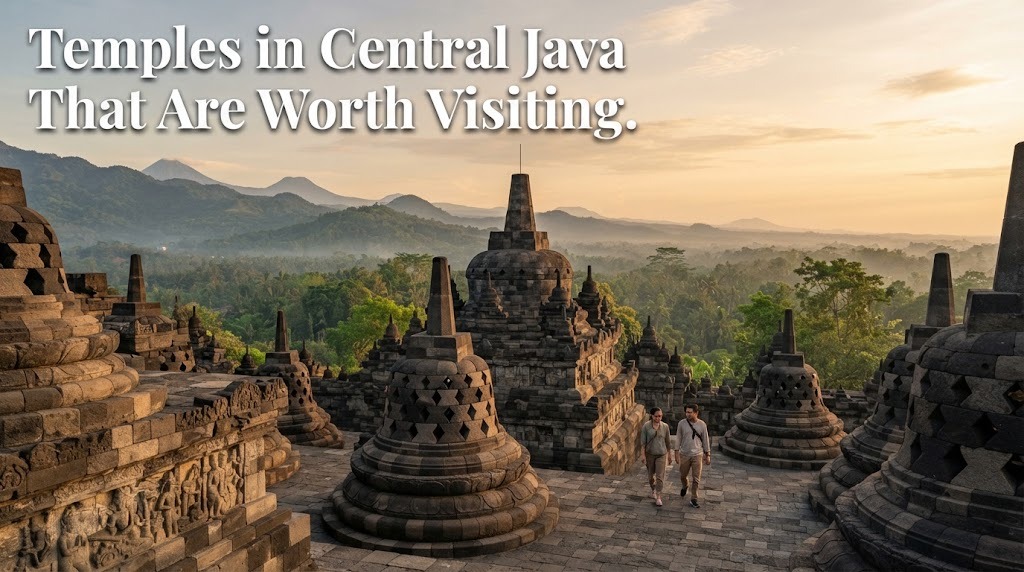
Central Java is one of Indonesia’s most interesting regions for cultural and historical tourism. The province is home to many ancient temples that reflect the development of Hinduism and Buddhism, as well as the artistic achievements of ancient Javanese civilizations. From the world-famous Borobudur Temple to temples surrounded by mountain landscapes, each destination offers a different experience.
Visiting temples in Central Java is not only about seeing beautiful old buildings. Travelers can learn about ancient kingdoms, religious traditions, architecture, sculpture, and local culture. These historical sites are suitable for travelers who want to combine education, cultural exploration, and memorable sightseeing.
BOROBUDUR TEMPLE
Borobudur Temple is one of the most famous Buddhist monuments in Indonesia and one of the main cultural attractions in Central Java. Located in Magelang, the temple was built around the 8th and 9th centuries during the period of the Syailendra Dynasty. Its structure consists of several levels decorated with detailed reliefs and numerous stupas. The monument is also recognized as a UNESCO World Heritage Site.
The beauty of Borobudur can be seen from its impressive architecture and detailed stone carvings. Visitors can explore the terraces while learning about Buddhist teachings and ancient Javanese culture. The surrounding landscape also adds to the appeal of the site, especially with the hills and mountains visible from the temple area. Borobudur is an excellent choice for history enthusiasts, photographers, and cultural travelers.
MENDUT TEMPLE
Mendut Temple is a Buddhist temple located in Magelang and is relatively close to Borobudur. The temple is believed to have been built around the same period as Borobudur and is considered part of the important Buddhist heritage of the region. One of its most notable features is the large Buddha statue inside the temple. Its walls are also decorated with reliefs depicting various figures and stories.
The relatively compact size of Mendut makes it comfortable to explore while still offering valuable historical details. Its connection with Borobudur and Pawon makes it an interesting stop for travelers exploring Central Java’s Buddhist heritage. Visitors can enjoy the peaceful atmosphere while observing the temple’s architecture and sculptures. Mendut is particularly suitable for those who want a quieter historical experience.
PAWON TEMPLE
Pawon Temple is another Buddhist temple located in the Magelang area. Although smaller than Borobudur, the temple has an important historical connection with the surrounding Buddhist monuments. Its architecture features decorative carvings and a symmetrical design that reflects the artistic traditions of ancient Java. The temple is also included within the broader Borobudur cultural landscape recognized by UNESCO.
The location of Pawon makes it convenient to visit together with Borobudur and Mendut. Exploring all three sites can provide visitors with a broader understanding of Buddhist heritage in Central Java. The temple’s relatively small structure also allows travelers to appreciate its details without spending too much time. For cultural tourism, Pawon offers an interesting combination of history and architecture.
GEDONG SONGO TEMPLES
Gedong Songo is a group of Hindu temples located in the mountainous area of Bandungan, Semarang Regency. One of its main attractions is the combination of ancient temples and beautiful highland scenery. The temples are spread across the slopes of Mount Ungaran, creating a different atmosphere compared with temples located in lowland areas. The cool climate also makes the destination appealing for travelers looking for a refreshing trip.
Exploring Gedong Songo allows visitors to enjoy both cultural heritage and nature. The journey between temple groups provides opportunities to see hills and surrounding landscapes. Visitors should prepare comfortable footwear because the area involves walking across uneven and sloping terrain. Gedong Songo is a suitable destination for travelers who enjoy history, photography, and outdoor activities.
DIENG TEMPLE COMPLEX
The Dieng Temple Complex is located in the Dieng Plateau, an area known for its cool climate and dramatic highland scenery. The temples are Hindu monuments believed to have been constructed during the early medieval period of Central Javanese history. Several temple structures can be found in the complex, each with distinctive architectural characteristics. The surrounding landscape makes the historical site particularly attractive.
A visit to Dieng Temple can be combined with other natural and cultural attractions in the Dieng Plateau. Travelers can explore the temple complex before continuing to nearby lakes, volcanic landscapes, and traditional villages. Because the area is located at a high elevation, weather conditions can change quickly. Visitors should therefore prepare warm clothing and check local conditions before traveling.
CANDI CETO
Cetho Temple is a Hindu temple complex located on the slopes of Mount Lawu in Karanganyar, Central Java. Its elevated location gives visitors beautiful views of the surrounding hills and plantations. Unlike the large temple complexes of Borobudur and Prambanan, Cetho has a distinctive terraced layout. The combination of architecture and mountain scenery makes it one of the more unique historical destinations in Central Java.
The temple complex also has religious significance and continues to be associated with Hindu traditions. Visitors should respect the site's religious character and follow local regulations. The journey to the temple can be enjoyable for travelers who appreciate mountain landscapes and cultural attractions. Cetho is particularly attractive for those looking for a quieter alternative to more famous temple destinations.
SUKUH TEMPLE
Sukuh Temple is another unique Hindu temple located on the slopes of Mount Lawu in Karanganyar. The structure has a distinctive terraced design that differs from many other temples in Java. Its architectural style has attracted attention because of its unusual appearance and historical characteristics. The temple also contains reliefs and sculptures that provide insight into religious and artistic traditions from its period.
The mountain setting adds to the appeal of Sukuh Temple. Visitors can enjoy the surrounding natural scenery while learning about the history of the site. Because some areas can be reached through slopes and stairs, comfortable footwear is recommended. Sukuh can be a worthwhile destination for travelers interested in lesser-known historical sites.
TIPS FOR VISITING TEMPLES IN CENTRAL JAVA
Before visiting a temple, travelers should check the latest information about opening hours, entrance fees, transportation, and visitor regulations. Comfortable clothing and footwear are recommended because many temple areas require considerable walking. Visitors traveling to highland temples should also prepare according to the local weather. Bringing drinking water and sun protection can be helpful when exploring outdoor sites.
Respecting historical and religious sites is equally important. Visitors should avoid climbing restricted structures, touching fragile carvings, littering, or leaving marks on temple walls. Some temples are still connected to religious activities, so travelers should behave respectfully when ceremonies or worship are taking place. Responsible tourism helps protect these valuable sites for future generations.
CONCLUSION
Central Java offers a wide range of temples worth visiting, from the magnificent Borobudur and peaceful Mendut to the mountain temples of Gedong Songo, Cetho, and Sukuh. Each site has its own architectural style, historical background, and cultural significance. This diversity makes Central Java an excellent destination for travelers interested in history and heritage.
Exploring these temples can provide a deeper appreciation of Indonesia’s ancient civilizations and cultural diversity. By planning the trip carefully and respecting the rules at each site, visitors can enjoy a memorable journey while helping preserve Central Java’s historical heritage.
About the Author
Gusti Ayu Tita P
Author — STEKOM University
An active author focused on academic issues, educational technology, and human resource development in the campus environment.















