
Temples in East Java with Fascinating Historical Heritage
Gusti Ayu Tita P
4 September 2026
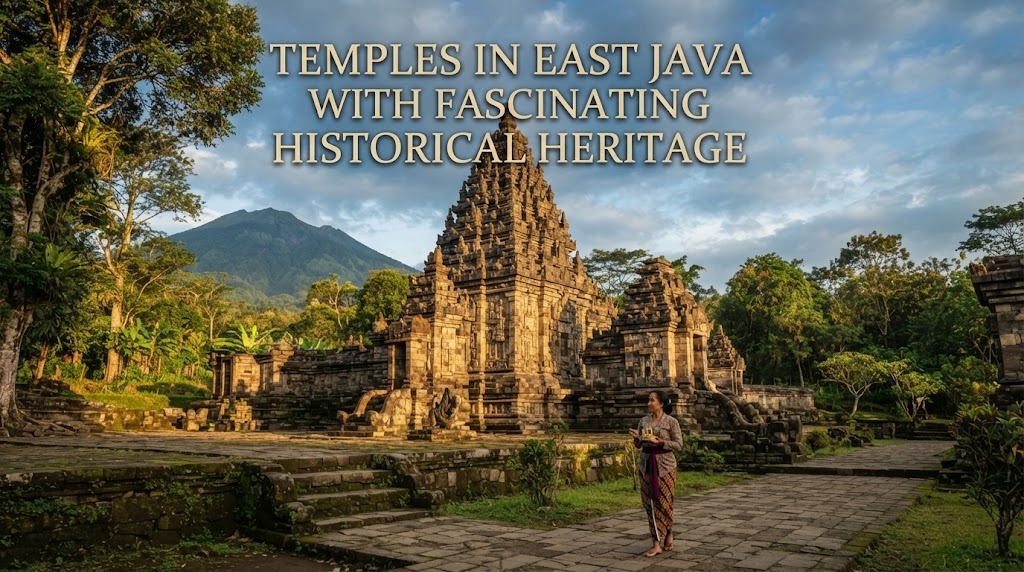
East Java is one of the regions in Indonesia with a remarkable collection of historical temples. Many of these temples are connected to important kingdoms such as Singhasari and Majapahit. Their structures, reliefs, statues, and inscriptions provide valuable evidence of the development of religion, art, and architecture in ancient Java. Visiting these temples can therefore be an interesting way to learn about Indonesia's rich cultural heritage.
Unlike some of the more famous temples in Central Java, many temples in East Java have a quieter atmosphere while offering equally fascinating historical stories. Each site has its own architectural characteristics and historical background. Some were associated with royal figures, while others were important religious sites. Here are several historic temples in East Java worth knowing.
PENATARAN TEMPLE
Penataran Temple is one of the most important Hindu temple complexes in East Java. It is located in Penataran Village, Nglegok District, Blitar Regency, and has a long history connected with several kingdoms and rulers. According to Indonesia's cultural heritage authority, the complex was built, used, renovated, and respected during the periods of the Kediri, Singhasari, and Majapahit kingdoms. This long historical development makes Penataran particularly valuable for understanding the history of East Java.
The complex is arranged across three courtyards connected by gates. Several structures can still be found within the area, including the Naga Temple, the Angka Tahun Temple, the main temple, and the Palah inscription. The site was associated with religious worship and may also have served political and symbolic purposes for rulers. Its extensive layout makes Penataran one of the most fascinating examples of ancient temple architecture in East Java.
SINGOSARI TEMPLE
Singosari Temple is a historic temple associated with the Singhasari Kingdom in Malang, East Java. The temple represents the cultural and artistic achievements of the kingdom that flourished during the 13th century. Its architecture and carvings reflect the religious and artistic traditions of ancient East Java. The temple is also connected with the historical legacy of the Singhasari rulers.
The temple is decorated with intricate carvings and reliefs associated with Hindu traditions, including stories from the Ramayana and Mahabharata. Its elegant structure demonstrates the distinctive architectural style that developed in East Java. The surrounding area also contains other archaeological remains connected with the Singhasari period. Together, these features make Singosari Temple an important historical destination.
JAGO TEMPLE
Jago Temple is located in Tumpang, Malang, and dates from the 13th century during the Singhasari period. Historical sources from Indonesia's cultural heritage authority explain that the temple was built to honor King Wisnuwardhana after his death. Construction is estimated to have taken place between 1268 and 1280. This connection with the royal family gives Jago Temple considerable historical significance.
One of its most distinctive characteristics is the combination of Hindu and Buddhist elements. Its reliefs include stories associated with Buddhism, such as Kunjarakarna, as well as Hindu stories including Arjunawiwaha and Kresnayana. The temple is also known for carvings depicting mythology, everyday life, and traditional storytelling. These details make Jago Temple an excellent example of the religious and cultural diversity of ancient East Java.
KIDAL TEMPLE
Kidal Temple is another important historical monument associated with the Singhasari Kingdom. It is located in Malang Regency and is known for its slender vertical structure. The temple consists of several architectural sections, including a base, body, and roof with distinctive levels. Its design reflects the architectural characteristics that developed in East Java during the Singhasari period.
The temple is particularly interesting because of its connection with royal history and religious traditions. Its reliefs and decorative elements provide clues about the beliefs and artistic skills of ancient Javanese society. Kidal is also frequently studied together with other Singhasari-era temples such as Jago and Singosari. Visiting these sites can provide a broader understanding of the development of East Javanese temple architecture.
JAWI TEMPLE
Jawi Temple is located in Prigen, Pasuruan, East Java, and is associated with the Singhasari Kingdom. The temple is particularly interesting because it contains Hindu and Buddhist characteristics. This combination reflects the religious environment of the Singhasari period, especially during the reign of King Kertanegara. The temple is believed to have been connected with the king's funerary or commemorative traditions.
Its location also gives Jawi Temple a distinctive atmosphere. The monument stands in an area surrounded by natural landscapes, creating a contrast between ancient architecture and the environment. Its historical background makes it more than a beautiful archaeological site. Jawi Temple provides an example of how religious traditions and royal practices could be represented through ancient monuments.
SAWENTAR TEMPLE
Sawentar Temple is located in Blitar Regency and is another valuable example of East Java's archaeological heritage. The cultural heritage database of Indonesia records Sawentar I as a designated cultural heritage building. Based on its architecture, ornaments, and reliefs, the temple is estimated to have been built around the late Singhasari or early Majapahit period. Its history therefore provides an important link between two major periods of East Javanese history.
The temple has an andesite stone structure with a base, body, and roof. Its entrance faces west and features decorative elements, including dragon motifs. The building also has a distinctive vertical appearance that is characteristic of some East Javanese temples. These architectural details make Sawentar an interesting site for learning about the evolution of temple design in the region.
TIKUS TEMPLE
Tikus Temple is located within the Trowulan archaeological area in Mojokerto. Trowulan is strongly associated with the former capital of the Majapahit Kingdom and contains numerous archaeological remains. UNESCO describes the wider Trowulan site as an important archaeological landscape containing temples, gateways, water structures, settlements, and thousands of artifacts. Tikus Temple is one of the important remains found within this historic landscape.
The temple is particularly interesting because it is connected with the broader water-management and settlement system of ancient Majapahit. Its presence alongside other archaeological remains demonstrates that temples did not always exist in isolation. The surrounding discoveries provide evidence of organized communities and sophisticated infrastructure. This makes the Trowulan area especially valuable for understanding the wider civilization behind Majapahit architecture.
THE HISTORICAL VALUE OF EAST JAVANESE TEMPLES
The temples of East Java preserve important information about the region's political and religious history. Many are connected with the Singhasari and Majapahit kingdoms, two major powers in the history of Java. Their inscriptions, reliefs, and architectural remains allow researchers to study the beliefs and cultural practices of ancient communities. They also demonstrate how local artistic traditions developed over different historical periods.
Another important feature is the diversity of religious influences found at several sites. Jago and Jawi, for example, demonstrate Hindu and Buddhist elements within the same historical environment. This reflects the complex cultural landscape of ancient Java rather than a simple division between religious traditions. Studying these temples can therefore provide a more complete understanding of Indonesia's historical development.
PRESERVING EAST JAVANESE TEMPLE HERITAGE
Preserving historic temples is essential because these structures are irreplaceable sources of cultural knowledge. Age, weather, natural disasters, and human activity can gradually affect ancient buildings and their carvings. Conservation work must therefore be carried out carefully while maintaining the historical character of the sites. Government institutions, researchers, local communities, and visitors all have roles in protecting this heritage.
Visitors can contribute by following regulations, avoiding physical contact with fragile structures, and keeping the sites clean. Learning about the history of a temple before visiting can also make the experience more meaningful. Responsible tourism can support local communities while helping raise awareness about cultural preservation. Through continued care, East Java's temples can remain valuable historical resources for future generations.
CONCLUSION
East Java has a remarkable collection of historic temples that reveal the region's rich Hindu-Buddhist heritage. Penataran, Singosari, Jago, Kidal, Jawi, Sawentar, and Tikus each have distinctive architecture and historical backgrounds. Together, they illustrate the development of kingdoms, religious traditions, art, and architecture across centuries of East Javanese history.
These temples are more than ancient stone structures. They are important records of Indonesia's cultural past and valuable destinations for heritage tourism. Understanding their history while respecting their preservation can help ensure that East Java's remarkable archaeological heritage continues to be appreciated by future generations.
About the Author
Gusti Ayu Tita P
Author — STEKOM University
An active author focused on academic issues, educational technology, and human resource development in the campus environment.















