
The Benefits Of MBG For The Growth And Development Of School Children
Gusti Ayu Tita P
20 Agustus 2026
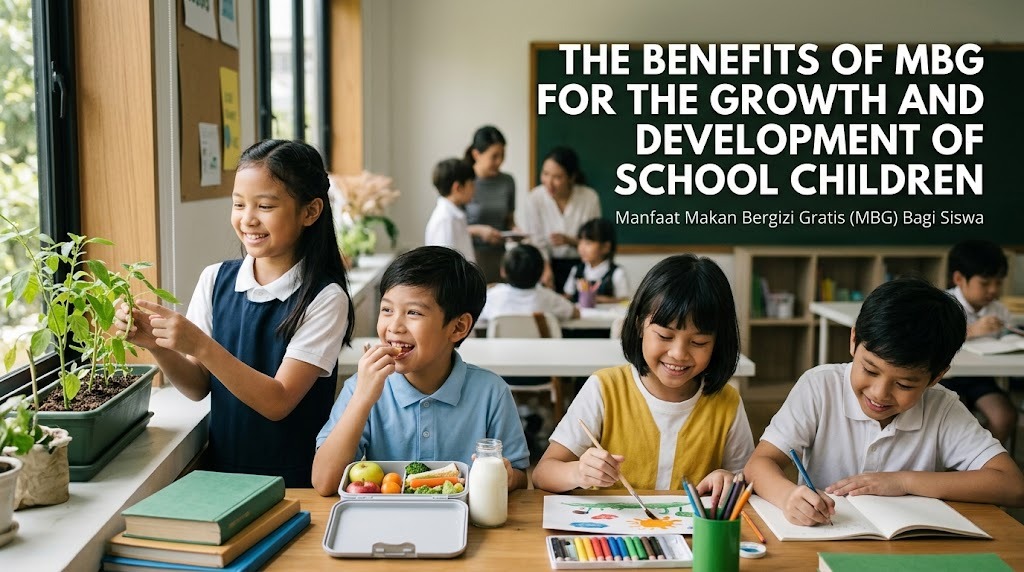
Makan Bergizi Gratis (MBG) is one of Indonesia’s major efforts to improve access to nutritious food for children. School-age children need sufficient nutrition because they are still experiencing important stages of physical, cognitive, and social development. Adequate nutrition provides energy for learning, playing, and other daily activities. Through nutritious meals, MBG can help children receive a more balanced intake of essential nutrients. When implemented properly, the program can support healthier growth and better development among Indonesian school children.
UNDERSTANDING MBG FOR SCHOOL CHILDREN
Makan Bergizi Gratis is a government food assistance program that provides meals to targeted beneficiaries, including school children. The program is designed to improve access to nutritious food while supporting children's nutritional needs during their growth period. The meals are expected to contain a combination of important nutrients such as protein, carbohydrates, vegetables, fruits, vitamins, and minerals. The exact menu can vary according to local food availability and nutritional requirements.
For school children, access to nutritious food is particularly important because their bodies and brains are developing rapidly. A balanced meal can help provide the energy needed for classroom activities and physical movement. MBG can also introduce children to a wider variety of nutritious foods. Therefore, the program has benefits that go beyond simply providing free meals.
SUPPORTING PHYSICAL GROWTH
One of the most important benefits of MBG is supporting healthy physical growth. Children require adequate protein, energy, vitamins, and minerals to develop bones, muscles, organs, and other body tissues. Regular access to balanced meals can help children meet part of their daily nutritional requirements. Good nutrition is especially important during childhood because nutritional problems can affect growth and overall health.
A nutritious school meal can also provide essential nutrients that may be lacking in a child's regular diet. Sources of protein such as eggs, fish, meat, legumes, and other nutritious foods can support tissue growth and maintenance. Vegetables and fruits provide vitamins, minerals, and dietary fiber that contribute to a healthy diet. However, MBG works best as part of an overall healthy lifestyle that also includes adequate sleep, physical activity, and good hygiene.
SUPPORTING BRAIN AND COGNITIVE DEVELOPMENT
Nutrition is closely connected to brain development and cognitive function. Children's brains require energy and nutrients to support normal development and daily mental activities. A balanced diet that provides adequate protein, essential fats, vitamins, and minerals can contribute to healthy brain function. This is particularly relevant during the school years when children are expected to learn new concepts and develop various skills.
Adequate nutrition may also help children remain focused and active during lessons. Hunger and inadequate food intake can make it harder for some students to concentrate on classroom activities. By providing a nutritious meal, MBG can help create better conditions for students to participate in learning. Nevertheless, academic achievement depends on many factors, including teaching quality, family support, learning environments, and children's individual needs.
IMPROVING ENERGY FOR DAILY ACTIVITIES
School children need sufficient energy for studying, playing, exercising, and participating in school activities. A nutritious meal can provide carbohydrates and other nutrients that the body uses as sources of energy. Adequate energy intake helps children stay active throughout the school day. This makes nutrition an important part of supporting both educational and physical activities.
MBG can be especially helpful for children who may not always have consistent access to nutritious meals. Providing food at school can help ensure that eligible students receive an additional source of balanced nutrition during the day. However, children still need nutritious meals outside school to meet their overall daily requirements. Cooperation between schools and families is therefore essential.
SUPPORTING IMMUNITY AND GENERAL HEALTH
A balanced diet can contribute to normal immune system function and help the body maintain good health. Nutrients such as protein, vitamins, and minerals play important roles in the body's normal biological processes. Children who receive adequate nutrition have a stronger nutritional foundation for healthy development. MBG can contribute to this foundation by increasing access to nutritious foods.
Healthy eating should also be combined with clean water, sanitation, personal hygiene, physical activity, and appropriate healthcare. Nutrition alone cannot prevent every illness or health problem. Schools can use the MBG program as an opportunity to strengthen children's awareness of healthy lifestyles. This broader approach can make the benefits of the program more meaningful.
DEVELOPING HEALTHY EATING HABITS
Another benefit of MBG is its potential to encourage healthy eating habits from an early age. Children can become familiar with balanced meals that include different food groups. Repeated exposure to vegetables, fruits, protein sources, and other nutritious foods may help children understand the importance of dietary variety. These experiences can influence their food preferences and habits over time.
Schools can strengthen this benefit by combining meals with nutrition education. Teachers can explain why children need different nutrients and how healthy food supports growth. Parents can then reinforce these lessons by offering nutritious choices at home. When children receive consistent messages from schools and families, they have better opportunities to develop sustainable healthy habits.
SUPPORTING SCHOOL PARTICIPATION AND LEARNING
Adequate nutrition can help create better conditions for school participation and learning. Children who are hungry may have difficulty concentrating or participating fully in classroom activities. Providing nutritious meals at school can help address hunger during the school day. This may allow students to focus more comfortably on their lessons and other activities.
MBG can also provide an opportunity to strengthen the connection between nutrition and education. Schools can integrate discussions about healthy food into relevant learning activities. Students can learn that education is not only about academic knowledge but also about maintaining their physical and mental wellbeing. In this way, the program can support a more holistic school environment.
REDUCING NUTRITION GAPS AMONG CHILDREN
Children do not all have the same access to nutritious food. Differences in household income, location, food availability, and family circumstances can influence dietary quality. MBG has the potential to help reduce some of these nutrition gaps by providing nutritious meals to targeted children. This can give more students access to a basic source of balanced nutrition during school hours.
However, reducing nutritional inequality requires cooperation across multiple sectors. Families, schools, health professionals, local governments, food suppliers, and communities can all contribute to better nutrition outcomes. Food quality and safety must also be carefully monitored. A well-managed program can provide greater benefits while reducing potential risks associated with large-scale meal distribution.
CHALLENGES IN MAXIMIZING MBG BENEFITS
Although MBG has significant potential, its benefits depend heavily on proper implementation and monitoring. Meals need to meet appropriate nutritional standards and should be prepared using safe food handling practices. Distribution must also be managed carefully so that food reaches children in good condition and at appropriate times. These factors are essential because a nutrition program must prioritize both quality and safety.
Another challenge is maintaining menu diversity and local suitability. Different regions have different food traditions, ingredients, and nutritional needs. Using safe and nutritious local foods can make menus more acceptable while potentially supporting local farmers and food producers. Continuous evaluation can help identify weaknesses and improve the effectiveness of the program over time.
THE LONG TERM IMPACT OF MBG
The benefits of good nutrition during childhood can extend beyond the school years. Healthy growth and development provide an important foundation for future learning, productivity, and quality of life. By improving access to nutritious food, MBG can become part of a broader investment in Indonesia's human resources. The program's long-term value therefore depends on how consistently it improves children's nutritional conditions.
To achieve sustainable results, MBG should not be viewed only as a meal distribution program. It should be supported by nutrition education, health monitoring, food safety, family involvement, and community participation. Regular evaluation is also important for measuring whether the program achieves its intended outcomes. With effective management and continuous improvement, MBG can provide meaningful support for the growth and development of school children.
CONCLUSION
MBG can provide important benefits for the growth and development of school children in Indonesia. Nutritious meals can support physical growth, brain development, energy levels, immune function, and healthy eating habits. The program can also help reduce differences in access to nutritious food among eligible students. However, its success depends on food quality, safety, nutritional balance, effective distribution, and continuous monitoring. When combined with support from families, schools, health professionals, and communities, MBG can contribute to building a healthier and better-prepared generation of Indonesian children.
About the Author
Gusti Ayu Tita P
Author — STEKOM University
An active author focused on academic issues, educational technology, and human resource development in the campus environment.















