
The Benefits Of Sea Transportation For Interregional Goods Distribution
Gusti Ayu Tita P
11 Agustus 2026
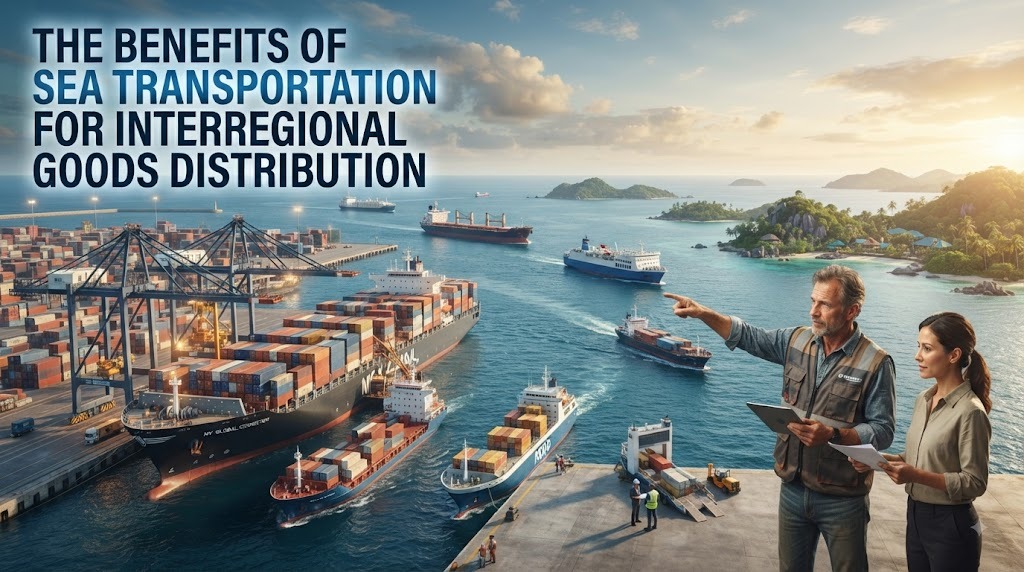
Sea transportation has an important role in distributing goods between different regions, especially in an archipelagic country such as Indonesia. Thousands of islands create geographical challenges that require reliable transportation connections. Ships can move large quantities of goods across long distances and connect production areas with consumer markets. Sea transportation is particularly useful for commodities, raw materials, food products, fuel, machinery, and manufactured goods. An effective maritime network can therefore support economic activity and improve the availability of goods in different regions.
Interregional distribution is not only about moving products from one port to another. It also involves warehouses, logistics companies, roads, distribution centers, and local markets. Sea transportation becomes more effective when these different components work together. Reliable shipping schedules can help businesses manage inventory and plan deliveries more accurately. Strong maritime connectivity can ultimately make regional distribution more efficient and support balanced economic development.
SUPPORTING LARGE SCALE GOODS DISTRIBUTION
One of the main benefits of sea transportation is its ability to carry large quantities of cargo. Cargo ships can transport significantly more goods than many individual land vehicles on a single journey. This makes maritime transportation suitable for bulk commodities and large shipments. Businesses can use ships to move agricultural products, minerals, fuel, construction materials, and manufactured goods. Large cargo capacity makes sea transportation an important part of interregional logistics.
The ability to transport large volumes can also reduce the number of individual trips required to move the same quantity of goods. This can improve transportation planning and make supply chains more organized. However, efficiency still depends on vessel utilization, port operations, and route planning. Companies need to ensure that ships are used effectively to gain the maximum economic benefit. Proper cargo planning can help reduce unnecessary transportation costs.
CONNECTING ISLANDS AND REGIONS
Indonesia's geographical structure makes transportation between islands essential for economic activity. Many regions produce goods that are needed by consumers or industries in other parts of the country. Sea routes provide connections between major islands, coastal communities, and remote areas. Interregional connectivity allows products to move from production centers to markets that may be difficult to reach through land transportation alone.
Regular maritime services can also help reduce geographical isolation. Remote communities can receive food, fuel, household products, and other essential supplies through shipping routes. At the same time, local producers can send agricultural, fisheries, and other regional products to larger markets. Better connections can create opportunities for local businesses to expand. Sea transportation therefore supports both supply and demand across different regions.
REDUCING TRANSPORTATION COSTS
Sea transportation can be cost-effective when large volumes of goods need to travel long distances. Ships can carry substantial cargo loads, which can lower transportation costs per unit when vessels operate efficiently. This advantage is especially relevant for heavy and non-urgent commodities. Lower distribution costs can help businesses manage expenses and improve competitiveness.
However, total logistics costs are influenced by more than the shipping journey itself. Port charges, cargo handling, storage, fuel, and land transportation can affect the final cost. Efficient coordination between ports and inland transportation is therefore necessary. Digital systems and better scheduling can help reduce unnecessary waiting and handling. When the entire supply chain is managed effectively, maritime transportation can provide significant cost advantages.
SUPPORTING BUSINESS AND INDUSTRY
Businesses depend on transportation to receive raw materials and deliver finished products. Sea transportation provides an effective option for companies that need to move large quantities between regions. Industries such as manufacturing, construction, agriculture, energy, and fisheries can benefit from reliable maritime distribution. Industrial supply chains become stronger when transportation services are predictable and efficient.
Reliable shipping can help companies maintain production schedules. Factories can receive materials on time and distribute finished products to different markets. Better logistics planning can also reduce the need to hold excessive inventory. Companies can use transportation data to optimize routes and delivery schedules. These improvements can increase productivity and strengthen business competitiveness.
SUPPORTING REMOTE AND ISLAND COMMUNITIES
Remote islands often face higher transportation challenges because of their distance from major economic centers. Sea transportation can provide an essential connection between these communities and larger markets. Ships can deliver food, medicine, fuel, construction materials, and consumer products. Remote area distribution can help improve access to essential goods.
Maritime routes can also help local communities sell their products outside their immediate area. Fisheries, agricultural products, and local crafts can reach larger markets when shipping services are available. This can create additional income opportunities for local producers. Regular transportation can also support education, tourism, and other economic activities. Reliable maritime connectivity can therefore contribute to better regional inclusion.
SUPPORTING AGRICULTURAL AND FISHERY PRODUCTS
Agriculture and fisheries are important sources of income in many Indonesian regions. Producers often need transportation to move their products from production areas to larger markets. Sea transportation can carry large quantities of agricultural and fishery products between islands. Agricultural distribution becomes more effective when shipping services are regular and properly managed.
Proper handling is important because some agricultural and fishery products are perishable. Cold storage, suitable packaging, and efficient port operations can help maintain product quality. Refrigerated containers can be used for certain types of cargo that require controlled temperatures. Faster coordination between ships, ports, and distribution centers can reduce unnecessary delays. These measures can help producers reach markets while maintaining product value.
IMPROVING SUPPLY CHAIN EFFICIENCY
A reliable maritime transportation system can improve the overall performance of supply chains. Ships connect ports with warehouses, factories, distribution centers, and markets. Supply chain efficiency depends on how well these different components are coordinated. Delays at one stage can affect the entire distribution process.
Digital technology can improve coordination by providing real-time information about vessels and cargo. Companies can monitor shipments and adjust plans when unexpected problems occur. Better scheduling can also reduce vessel waiting times and unnecessary cargo handling. Integration between sea and land transportation can further improve delivery performance. A coordinated supply chain can make interregional distribution more predictable and efficient.
THE IMPORTANCE OF DIGITAL TECHNOLOGY
Digital technology is changing how goods are transported and monitored. Vessel tracking systems can provide information about ship locations, routes, and estimated arrival times. Digital logistics platforms can connect shipping companies, port operators, warehouses, and customers. Digital logistics can improve transparency and coordination throughout the supply chain.
Real-time information allows businesses to respond more quickly to delays and changing market conditions. Electronic documentation can also reduce paperwork and administrative errors. Data analysis can help companies identify inefficient routes and transportation patterns. However, digital systems require reliable infrastructure, skilled workers, and strong cybersecurity. Responsible technology adoption can make interregional distribution faster and more transparent.
CHALLENGES IN INTERREGIONAL DISTRIBUTION
Although sea transportation offers many benefits, several challenges can reduce its effectiveness. Weather conditions, port congestion, limited infrastructure, and irregular shipping schedules can affect delivery performance. Remote areas may also have fewer shipping services and higher transportation costs. Distribution challenges need to be addressed to ensure that maritime connectivity provides consistent benefits.
Solutions require cooperation among government agencies, shipping companies, port operators, logistics providers, and local communities. Infrastructure improvements should focus on regions with significant connectivity gaps. Better scheduling and digital systems can help reduce delays. Workforce training can also improve operational efficiency and safety. A coordinated approach can make interregional maritime distribution more reliable.
HOW TO MAXIMIZE THE BENEFITS
Maximizing the benefits of sea transportation requires an integrated logistics strategy. Ports, ships, warehouses, roads, and distribution centers should operate as connected parts of one system. Integrated logistics can reduce unnecessary handling, waiting times, and transportation costs. Digital information sharing can help different stakeholders coordinate their activities more effectively.
Investment should also focus on modern infrastructure and appropriate technology. Shipping companies can improve vessel efficiency through maintenance, route optimization, and better cargo planning. Ports can adopt systems that improve scheduling and cargo management. Training programs can prepare workers to operate modern maritime equipment. These strategies can help Indonesia build a stronger interregional distribution network.
FUTURE OF INTERREGIONAL MARITIME DISTRIBUTION
The future of interregional goods distribution will be influenced by digitalization, automation, sustainability, and improved infrastructure. Smart ports can provide faster cargo handling and better vessel coordination. Advanced tracking systems can provide greater visibility throughout the supply chain. Future maritime logistics can become more efficient as technology becomes increasingly accessible.
Sustainability will also become more important in maritime transportation. Cleaner fuels, efficient engines, and optimized routes can reduce the environmental impact of shipping. At the same time, Indonesia needs to maintain reliable connections between major economic centers and remote islands. Continued investment and cooperation will be essential. A modern maritime distribution system can support stronger economic integration across Indonesia.
CONCLUSION
Sea transportation provides major benefits for interregional goods distribution, particularly in an archipelagic country such as Indonesia. Its large cargo capacity, long-distance efficiency, and ability to connect islands make it an important part of national logistics. Maritime transportation supports businesses, industries, remote communities, agriculture, fisheries, and regional economic growth. It also helps maintain the availability of essential goods across different areas.
To maximize these benefits, Indonesia needs efficient ports, reliable shipping routes, modern technology, skilled workers, and integrated logistics networks. Better coordination between sea and land transportation can further improve delivery performance. Sustainable practices should also be included to reduce environmental impacts. With continuous improvement, sea transportation can strengthen interregional connectivity and support more efficient and inclusive economic development.
About the Author
Gusti Ayu Tita P
Author — STEKOM University
An active author focused on academic issues, educational technology, and human resource development in the campus environment.















