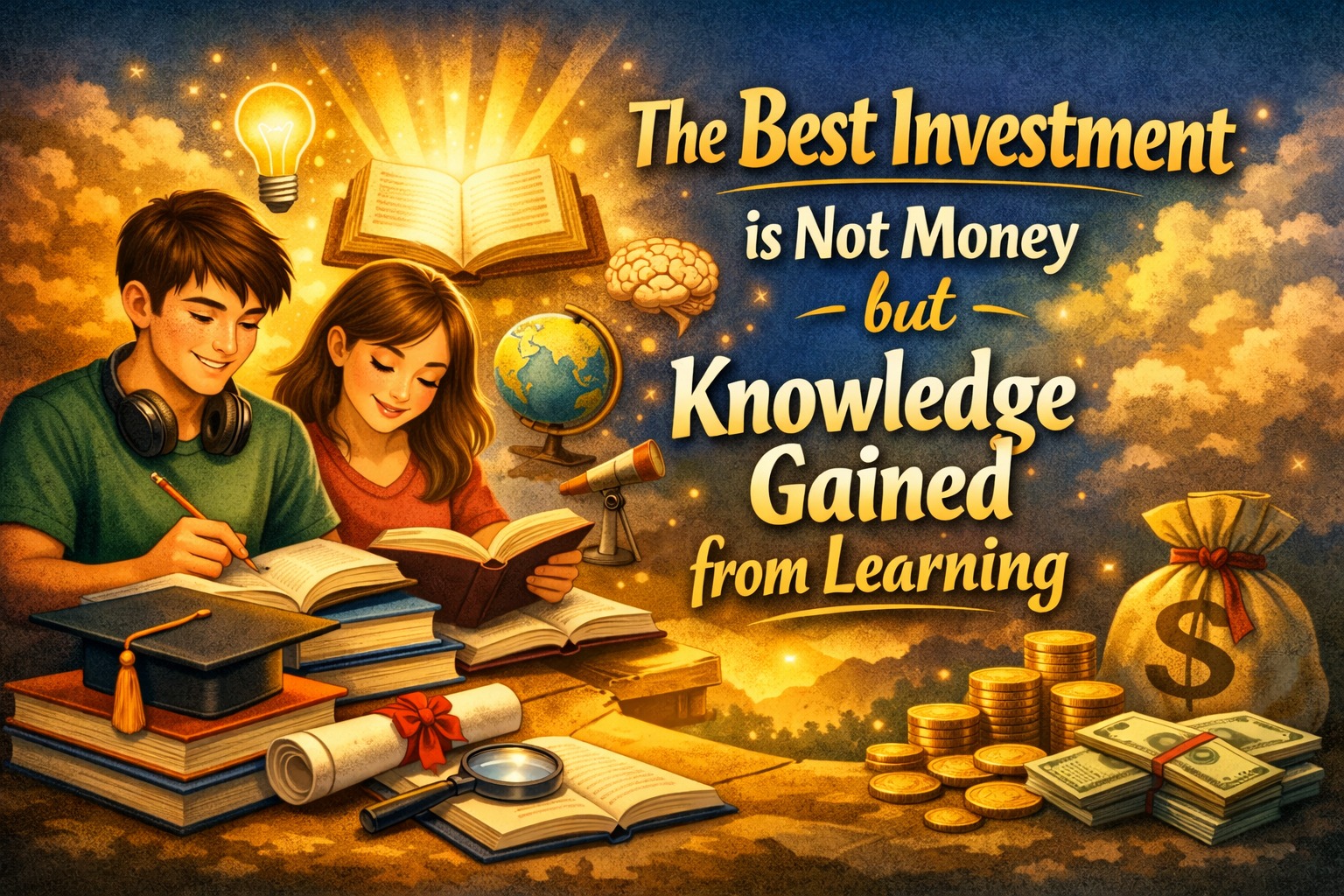
In a world that often measures success by financial wealth, many people overlook a more powerful form of investment—knowledge. Money can be lost, spent, or devalued over time, but what you learn stays with you and continues to grow in value. This is why learning is considered the most reliable and rewarding investment anyone can make.
Knowledge shapes how we think, act, and respond to challenges. It equips us with the ability to make informed decisions and adapt to change. Unlike material assets, knowledge cannot be taken away easily, making it a lifelong asset that continues to pay dividends.
WHY KNOWLEDGE OUTWEIGHS MONEY
Money can provide comfort and opportunities, but without knowledge, it is difficult to sustain or grow wealth. Many successful individuals emphasize that their achievements are rooted in what they have learned rather than what they initially owned.
Knowledge allows you to create opportunities instead of waiting for them. It helps you understand risks, solve problems, and innovate. In the long run, a knowledgeable person can rebuild financial stability even after losses, while someone without knowledge may struggle despite having resources.
LEARNING AS A LONG-TERM INVESTMENT
Investing in knowledge requires time, effort, and consistency. Unlike quick financial gains, the benefits of learning often appear gradually. However, these benefits are long-lasting and often increase over time.
Every skill you develop and every concept you understand adds to your personal value. Whether it is learning a new language, improving technical skills, or gaining insights into human behavior, all forms of learning contribute to your growth and future opportunities.
THE ROLE OF CONTINUOUS LEARNING IN A CHANGING WORLD
We live in an era of rapid change, where technology and industries evolve constantly. In such an environment, relying only on past knowledge is not enough. Continuous learning becomes essential to stay relevant and competitive.
People who commit to lifelong learning are more adaptable and resilient. They are better prepared to face uncertainties and seize new opportunities. This mindset not only enhances career prospects but also enriches personal development.
PRACTICAL WAYS TO INVEST IN KNOWLEDGE
Making learning a habit does not have to be complicated. Start by setting aside a small amount of time each day to read, watch educational content, or practice new skills. Consistency matters more than intensity.
You can also take advantage of online resources, courses, and communities that support learning. Choose topics that interest you to keep motivation high. Over time, these small efforts will accumulate into significant personal growth.
CONCLUSION
While money is important, it is not the most secure or valuable investment. Knowledge gained from learning offers lasting benefits that go beyond financial success. It empowers you to grow, adapt, and create a better future for yourself. In the end, investing in knowledge is investing in a life full of possibilities.
About the Author
Gusti Ayu Tita P
Author — STEKOM University
An active author focused on academic issues, educational technology, and human resource development in the campus environment.