
The Clean Water Crisis and How to Save Water at Home
Gusti Ayu Tita P
22 Agustus 2026
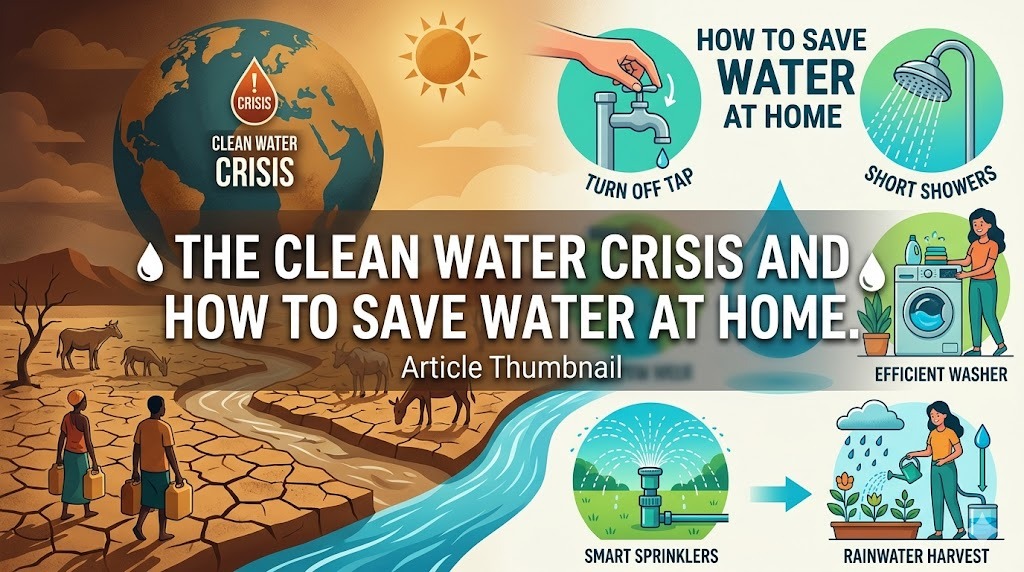
Clean water is one of the most essential resources for human life, yet millions of people worldwide face water shortages every year. Rapid population growth, climate change, and excessive water consumption have intensified the global clean water crisis. Understanding the causes and learning how to save water at home are important steps toward protecting this vital resource.
---
## WHY THE CLEAN WATER CRISIS IS HAPPENING
The shortage of clean water is not caused by a single factor. It is the result of several interconnected issues that continue to grow over time.
### POPULATION GROWTH
As the global population increases, the demand for water rises significantly. More water is required for drinking, sanitation, agriculture, and industry.
### CLIMATE CHANGE
Irregular rainfall, longer droughts, and extreme weather reduce the availability of fresh water sources. Many regions struggle to replenish groundwater supplies.
### WATER POLLUTION
Industrial waste, household chemicals, and plastic pollution contaminate rivers and lakes. This reduces the amount of safe, usable water.
### EXCESSIVE WATER USE
Daily habits such as leaving the tap running or using inefficient appliances contribute to unnecessary water waste.
---
## IMPACTS OF WATER SHORTAGE ON DAILY LIFE
The clean water crisis affects health, food production, and economic stability.
* Increased risk of waterborne diseases
* Reduced agricultural productivity
* Rising costs of water supply
* Limited access to sanitation and hygiene
Without action, these challenges will become more severe in the future.
---
## SIMPLE WAYS TO SAVE WATER AT HOME
Every household can contribute to water conservation. Small lifestyle changes can lead to significant long-term results.
### TURN OFF TAPS WHEN NOT IN USE
Avoid letting water run while brushing teeth, washing dishes, or cleaning.
### FIX LEAKS IMMEDIATELY
A dripping faucet can waste hundreds of liters of water every month.
### REUSE WATER WHEN POSSIBLE
Water used to rinse vegetables or rice can be reused for watering plants.
### TAKE SHORTER SHOWERS
Reducing shower time by a few minutes can save large amounts of water each week.
### USE APPLIANCES EFFICIENTLY
Run washing machines and dishwashers only when they are fully loaded.
### COLLECT RAINWATER
Rainwater can be used for gardening, cleaning, and other non-drinking purposes.
---
## BUILDING A WATER-SAVING FAMIHABIT
Water conservation starts at home. Teaching family members to value water encourages long-term sustainable habits. When many households adopt water-saving practices, the collective impact becomes powerful.
---
## CONCLUSION
The clean water crisis is a real and growing challenge, but everyone can help by adopting simple water-saving habits at home. Small actions today can protect water resources for future generations.
---
About the Author
Gusti Ayu Tita P
Author — STEKOM University
An active author focused on academic issues, educational technology, and human resource development in the campus environment.















