The Complete Game Development Process from Idea to Launch
Gusti Ayu Tita P
24 Juli 2026
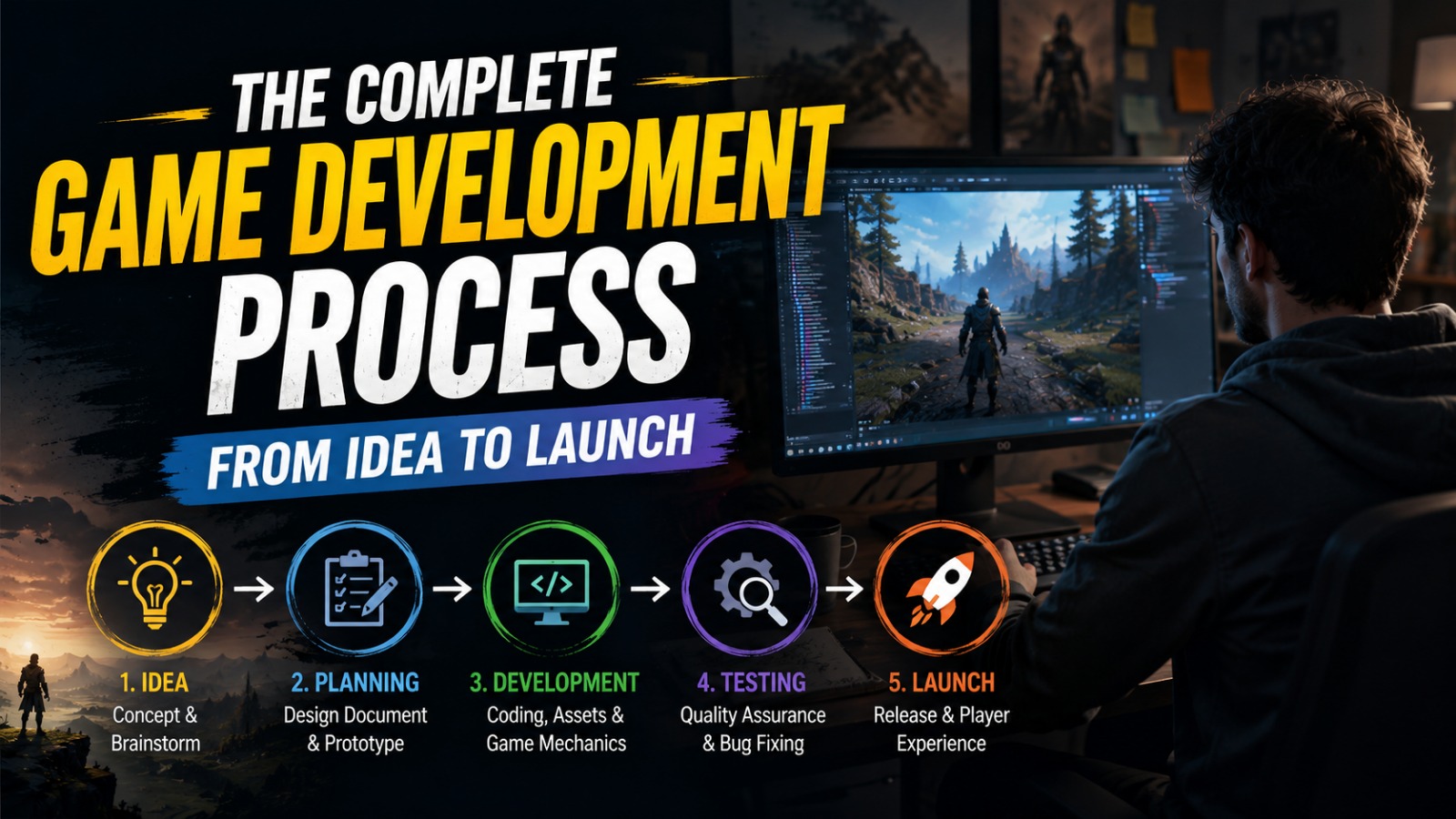
The game development process is a structured journey that transforms a creative idea into a fully playable video game. Every successful game begins with careful planning, followed by design, development, testing, and finally release. Throughout this process, game developers, artists, designers, writers, and testers work together to ensure the final product meets player expectations. Modern development also relies on advanced technologies and efficient project management to deliver high-quality games on time. Understanding each stage helps aspiring developers build better games while avoiding common production challenges.
IDEA GENERATION AND CONCEPT DEVELOPMENT
Every game starts with a creative idea that serves as the foundation of the entire project. Developers brainstorm gameplay mechanics, target audiences, genres, themes, and unique features that will make the game stand out. During this stage, teams evaluate whether the concept is technically possible, financially realistic, and appealing to players.
After selecting the best concept, developers create a Game Design Document (GDD) that outlines gameplay systems, storylines, characters, environments, objectives, and core mechanics. This document becomes the primary reference throughout development. A well-prepared concept significantly reduces confusion and keeps every team member aligned with the project's vision.
PRE-PRODUCTION AND PROJECT PLANNING
The pre-production phase focuses on organizing resources before full development begins. Teams establish project schedules, assign responsibilities, estimate budgets, and select the appropriate game engine and development tools. Careful planning minimizes production risks and improves overall efficiency.
Developers also build small prototypes to validate gameplay ideas and identify technical challenges early. These prototypes allow the team to experiment with mechanics before investing significant resources. Solving problems during pre-production saves both time and development costs later in the project.
GAME DESIGN AND ASSET CREATION
Once planning is complete, designers begin creating detailed gameplay systems, level layouts, user interfaces, and progression mechanics. Artists simultaneously produce concept art, character models, animations, environments, textures, and visual effects. Every visual asset must match the game's artistic direction while supporting the intended player experience.
Audio specialists contribute by creating background music, sound effects, and voice recordings that enhance immersion. Writers develop dialogues and narratives that give purpose to player actions. Together, these creative elements shape the game's unique identity and emotional appeal.
PROGRAMMING AND GAME DEVELOPMENT
The programming stage is where developers transform ideas into functional gameplay. Programmers write code for player movement, enemy behavior, artificial intelligence, physics systems, multiplayer functionality, and game logic. They also integrate graphics, audio, animations, and user interfaces into a complete interactive experience.
Modern game engines provide powerful development tools that simplify coding and improve productivity. Developers continuously optimize performance to ensure stable gameplay across different platforms. Clean, efficient programming contributes directly to better game quality and smoother player experiences.
TESTING AND QUALITY ASSURANCE
Testing is one of the most important phases in the game development process. Quality Assurance (QA) teams carefully examine every feature to identify bugs, performance issues, balancing problems, and gameplay inconsistencies. Their goal is to ensure players enjoy a stable and polished experience.
Testing includes functional testing, compatibility testing, usability evaluation, and performance optimization. Developers fix reported issues while making additional improvements based on tester feedback. Multiple testing cycles help eliminate major problems before the game reaches players.
POLISHING AND OPTIMIZATION
After major issues have been resolved, developers focus on refining every aspect of the game. They improve graphics, optimize loading times, balance gameplay mechanics, enhance animations, and increase overall stability. Even small improvements can significantly enhance player satisfaction.
Optimization also ensures consistent performance across PCs, consoles, and mobile devices with different hardware specifications. Developers reduce memory usage and improve frame rates without sacrificing visual quality. This polishing phase helps create a professional final product ready for release.
GAME LAUNCH AND MARKETING
Launching a game requires more than simply publishing it online. Developers work closely with marketing teams to create promotional campaigns, trailers, social media content, and community engagement strategies. Effective marketing helps attract players before the official release date.
Distribution platforms allow developers to reach global audiences through digital downloads. Developers continue monitoring player feedback immediately after launch to address technical issues and improve user satisfaction. A successful launch depends on both product quality and strong promotional efforts.
POST-LAUNCH SUPPORT AND FUTURE UPDATES
The development process does not end after release. Developers continue providing post-launch support by fixing newly discovered bugs, improving performance, and releasing content updates. Player feedback becomes an important source of information for future improvements.
Many modern games receive downloadable content, seasonal events, balance updates, and new gameplay features that extend their lifespan. Continuous maintenance strengthens player loyalty and increases the game's long-term success. Ongoing support has become an essential part of today's game development industry.
CONCLUSION
The complete game development process involves much more than writing code. It begins with creative planning, progresses through design, programming, testing, optimization, and marketing, and continues even after the official launch. Every stage requires collaboration, technical expertise, creativity, and careful project management to deliver engaging gaming experiences. By understanding this complete workflow, aspiring developers can better prepare themselves for successful careers in the rapidly evolving game development industry.
About the Author
Gusti Ayu Tita P
Author — STEKOM University
An active author focused on academic issues, educational technology, and human resource development in the campus environment.