
The Connection Between Human Life and Beliefs About the Afterlife
Gusti Ayu Tita P
9 September 2026
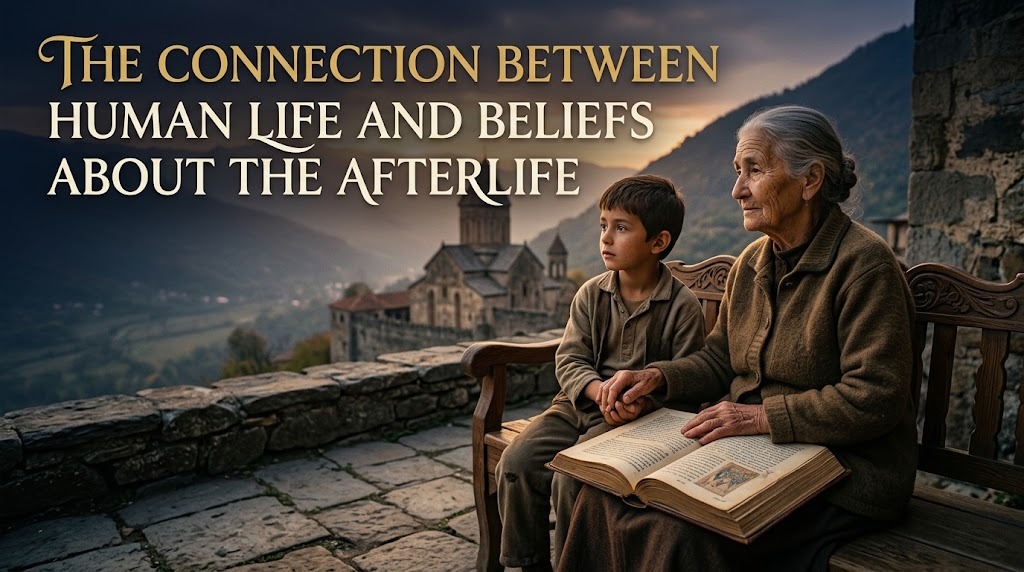
Human beings have always wondered what happens after death. Although death is a universal part of life, beliefs about the afterlife differ widely across religions, cultures, and personal perspectives. Some people believe that life continues in a spiritual realm, while others understand the afterlife through ideas such as rebirth, heaven, hell, or spiritual existence. These beliefs can influence how people understand their purpose, relationships, choices, and responsibilities in the present world. Understanding the connection between human life and afterlife beliefs can therefore provide insight into how people give meaning to their existence.
THE MEANING OF THE AFTERLIFE IN HUMAN LIFE
The afterlife generally refers to a form of existence believed to occur after physical death. For many people, this concept provides an explanation for what may happen when the body can no longer function. Religious traditions often describe the afterlife according to their own teachings, including different ideas about the soul, judgment, reward, punishment, or spiritual transformation. Some beliefs describe a permanent destination, while others view existence as part of a continuing cycle. These different interpretations show that the idea of life after death is closely connected to human attempts to understand mortality and existence.
Belief in an afterlife can also affect how individuals understand their current lives. A person who believes that present actions have consequences beyond death may place strong importance on moral behavior and personal responsibility. Such beliefs can encourage people to develop compassion, honesty, generosity, and respect for others. At the same time, people who do not believe in an afterlife may still develop strong ethical principles based on human relationships, reason, or social responsibility. Therefore, beliefs about what comes after death can influence human life without determining a single universal way of living.
HOW AFTERLIFE BELIEFS INFLUENCE HUMAN BEHAVIOR
One important connection between human life and afterlife beliefs can be seen in everyday behavior. People may make decisions based on the values taught by their religious or philosophical traditions. For example, the belief that good actions have positive consequences after death can encourage individuals to practice kindness, charity, forgiveness, and self-control. Conversely, beliefs about punishment after death may encourage people to avoid actions considered harmful or morally wrong. In this way, ideas about the future can influence choices made in the present.
Afterlife beliefs can also provide psychological and emotional support. The death of a loved one often creates grief, uncertainty, and emotional pain, and beliefs about continued existence may help some individuals cope with these experiences. The idea that a deceased person continues in another form or place can provide comfort and hope. However, not everyone finds comfort through religious beliefs, and people can process loss through family support, personal reflection, philosophy, or other approaches. The effect of afterlife beliefs therefore depends on a person's worldview and individual experience.
THE ROLE OF CULTURE AND RELIGION IN AFTERLIFE BELIEFS
Culture and religion play significant roles in shaping how people understand death and what may happen afterward. Different religious traditions have developed distinct teachings about the soul, judgment, resurrection, reincarnation, heaven, and hell. Cultural traditions may also influence funeral ceremonies, mourning practices, and ways of remembering deceased family members. These practices help communities express their understanding of death while supporting people who are experiencing loss. As a result, afterlife beliefs are often connected not only to individual faith but also to collective identity.
Ancient civilizations also developed complex ideas about existence after death. Some societies believed that the dead entered another world and therefore provided rituals, offerings, burial practices, and ceremonies for deceased individuals. These traditions demonstrate how strongly beliefs about death could influence social structures and cultural practices. Although modern societies may approach death differently, many communities still maintain traditions designed to honor and remember those who have died. This continuity shows that questions about the afterlife remain an important part of human culture.
DIFFERENT PERSPECTIVES ON LIFE AFTER DEATH
There is no single global interpretation of what happens after death. Some religious traditions teach that individuals may experience judgment and eternal existence, while others describe death as part of a cycle of rebirth. Certain philosophical perspectives focus less on a specific afterlife and more on the meaning people create during their limited physical existence. Scientific perspectives generally study the biological processes associated with death rather than confirming a particular spiritual destination. It is therefore important to distinguish between religious belief, philosophical interpretation, and scientific evidence when discussing the afterlife.
These different perspectives can coexist within a diverse society. People may reach different conclusions because their beliefs are influenced by family, education, culture, personal experiences, and religious traditions. Respectful discussion can help people understand why others may have different views without requiring everyone to reach the same conclusion. Exploring different perspectives can also encourage critical thinking and cultural understanding. The subject remains deeply personal because it concerns questions that cannot be answered in exactly the same way for every individual.
HOW BELIEFS ABOUT THE AFTERLIFE GIVE LIFE MEANING
For many people, beliefs about the afterlife provide a framework for understanding the purpose of human existence. If someone believes that life has a spiritual dimension, everyday experiences may be viewed as part of a larger journey. This perspective can encourage individuals to focus on meaningful relationships, ethical choices, spiritual growth, and personal development. It may also influence how people respond to difficulties because challenges can be interpreted as opportunities for learning or strengthening character. In this sense, afterlife beliefs can shape not only ideas about death but also attitudes toward life.
However, finding meaning in life does not depend entirely on believing in an afterlife. Many people find purpose through family, friendship, education, creativity, work, service, and contributions to society. The awareness that life is limited can also encourage people to appreciate the present and use their time responsibly. Whether someone believes in an afterlife or not, reflection on mortality can encourage deeper consideration of personal priorities. The connection between human life and afterlife beliefs ultimately depends on how individuals interpret their existence and values.
CONCLUSION
The connection between human life and beliefs about the afterlife is complex and deeply influenced by religion, culture, philosophy, and personal experience. Ideas about life after death can shape moral values, emotional responses, cultural traditions, and perceptions of human purpose. Different communities may have very different explanations, including concepts of judgment, rebirth, spiritual existence, or the end of consciousness. Although there is no single interpretation accepted by everyone, exploring these perspectives can encourage greater understanding of human diversity. Ultimately, beliefs about the afterlife often reveal how people understand life, death, responsibility, hope, and the meaning of existence.
About the Author
Gusti Ayu Tita P
Author — STEKOM University
An active author focused on academic issues, educational technology, and human resource development in the campus environment.















