The Dangers of Corruption for Future Generations
Gusti Ayu Tita P
16 Juli 2026
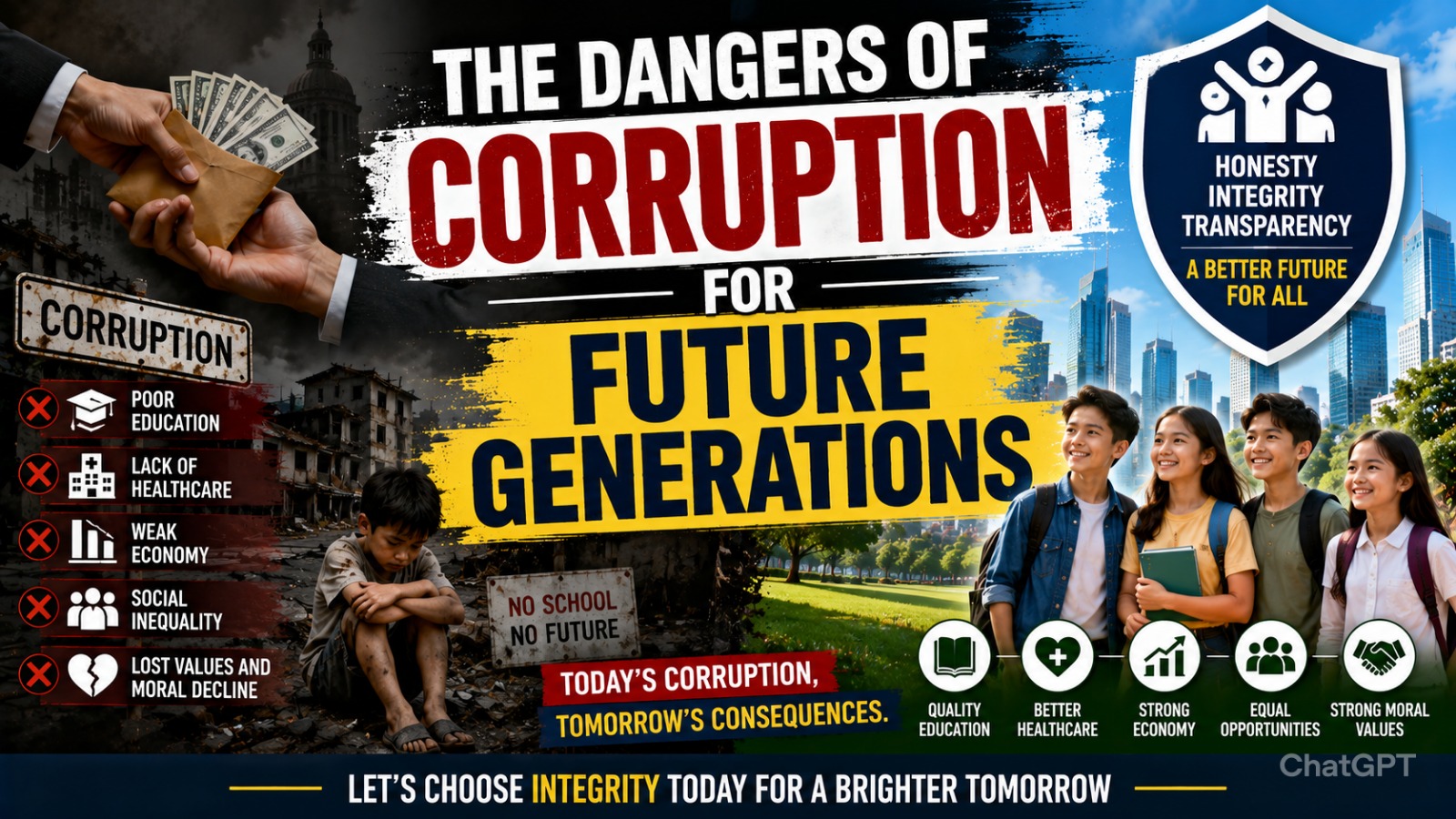
Corruption is one of the most serious problems that can damage a nation’s future. It affects not only the economy and government systems but also the lives of future generations. When corruption becomes common in society, young people may grow up in an environment where dishonesty and unfairness are considered normal.
Future generations deserve a country with equal opportunities, quality education, and strong moral values. Therefore, understanding the dangers of corruption is important to build awareness and encourage society to fight against it.
THE MEANING OF CORRUPTION
Corruption is the misuse of power or authority for personal benefit. It can occur in many forms, including bribery, embezzlement, illegal payments, and abuse of public resources.
Although corruption is often associated with large financial crimes, small dishonest actions can also contribute to a corrupt culture. When people ignore unethical behavior, corruption can spread more easily in society.
Teaching honesty and responsibility from an early age is essential to prevent corruption from becoming a normal habit.
HOW CORRUPTION DAMAGES EDUCATION
Education is one of the most important foundations for future generations. However, corruption can reduce the quality of education by misusing funds that should support schools, teachers, and students.
When educational budgets are corrupted, schools may lack proper facilities, learning materials, and qualified teachers. Students in poor areas often become the biggest victims because they lose access to quality education.
As a result, young people may struggle to develop the skills and knowledge needed to compete in the future.
THE IMPACT OF CORRUPTION ON THE ECONOMY
Corruption weakens economic growth and increases poverty. Government funds that should be used for public welfare and development are often stolen or mismanaged.
This situation reduces job opportunities and limits economic progress for younger generations. High corruption levels can also discourage investors from supporting national development projects.
Without a stable economy, future generations may face unemployment, social inequality, and limited opportunities for success.
CORRUPTION DESTROYS MORAL VALUES
One of the most dangerous effects of corruption is the destruction of moral values. When young people frequently witness dishonesty, bribery, and abuse of power, they may begin to believe that unethical behavior is acceptable.
This mindset can weaken integrity and responsibility in society. Over time, corruption may become deeply rooted in daily life, making it more difficult to create a fair and honest environment.
Strong moral education is necessary to help future generations understand the importance of ethics and integrity.
THE ROLE OF FAMILY AND EDUCATION
Families and schools play an important role in preventing corruption. Parents should teach children values such as honesty, discipline, and accountability through daily examples.
Schools should also promote character education by encouraging students to respect rules, avoid cheating, and take responsibility for their actions. Teachers can become role models by demonstrating integrity and fairness.
By building strong character from an early age, society can create a generation that rejects corruption.
THE IMPORTANCE OF YOUTH PARTICIPATION
Young people have the power to create positive change in society. Through education, social campaigns, and digital platforms, youth can spread awareness about the dangers of corruption.
Social media can be used to promote anti-corruption values and inspire others to support transparency and justice. Students and young communities can also organize discussions and activities that encourage ethical behavior.
The involvement of young generations is essential in building a cleaner and more honest future.
BUILDING A BETTER FUTURE WITHOUT CORRUPTION
A country can only achieve sustainable progress when corruption is reduced and integrity is strengthened. Governments, communities, schools, and families must work together to create transparent systems and fair law enforcement.
Future generations need a safe environment where they can grow with equal opportunities and strong moral values. Fighting corruption today means protecting the future of tomorrow’s society.
With honesty, responsibility, and cooperation, nations can build a brighter future for all citizens.
CONCLUSION
Corruption is a dangerous problem that threatens future generations by damaging education, weakening the economy, and destroying moral values. If corruption continues to grow, young people may face limited opportunities and unfair living conditions.
Therefore, society must work together to prevent corruption through education, integrity, and strong public awareness. By teaching honesty and responsibility from an early age, future generations can create a better, fairer, and more prosperous world.
About the Author
Gusti Ayu Tita P
Author — STEKOM University
An active author focused on academic issues, educational technology, and human resource development in the campus environment.