
The Destiny Of Life As Part Of The Process Of Growing Up
Gusti Ayu Tita P
9 September 2026
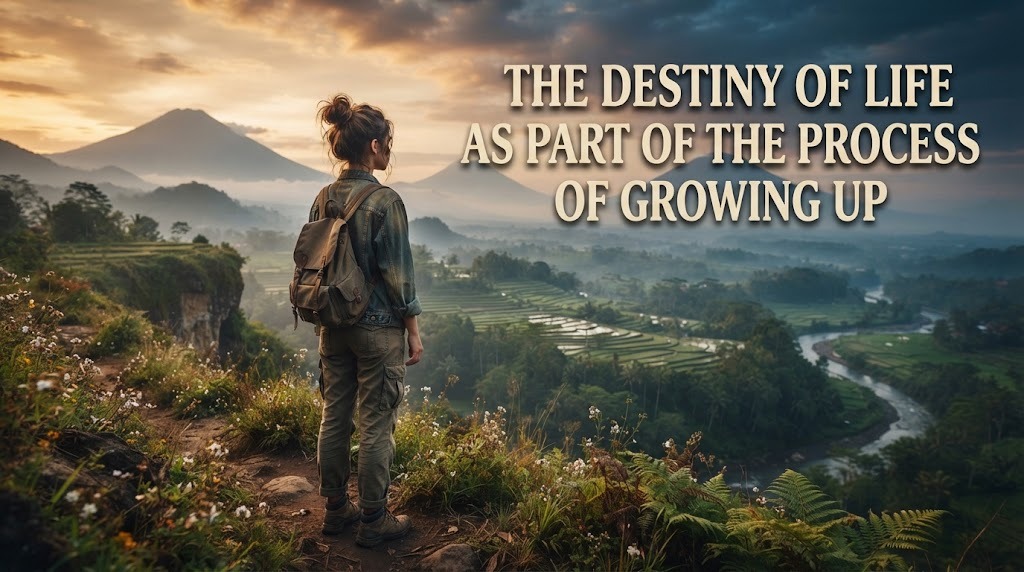
Growing up is not only about getting older. It is also about learning from experiences, making decisions, facing challenges, and understanding the changes that happen in life. The destiny of life can become an important part of this process because every experience can influence how a person thinks and behaves. Some moments may bring happiness, while others may create disappointment or uncertainty. Through these experiences, people gradually develop maturity, responsibility, patience, and self understanding.
Everyone has a different journey while growing up. Some people achieve their goals quickly, while others need more time and experience several difficulties along the way. These differences are a natural part of life and do not determine someone's value. Growing up means learning how to respond to life rather than expecting everything to happen perfectly. By accepting the journey, people can become stronger and wiser over time.
UNDERSTANDING DESTINY AS PART OF LIFE
Destiny can be understood as the different events and circumstances that become part of a person's life journey. Some situations are influenced by personal choices, while others happen beyond individual control. People can make plans, prepare carefully, and work toward their goals, but they cannot guarantee every outcome. Understanding destiny means recognizing the limits of human control. This understanding can make it easier to deal with unexpected situations.
Accepting destiny does not mean giving up responsibility. People still need to make good decisions and take action when opportunities are available. They can control their effort, attitude, and preparation even when they cannot control the final result. Effort and acceptance should work together. This balance allows people to keep pursuing their goals while remaining prepared for changes.
EXPERIENCES HELP PEOPLE BECOME MORE MATURE
Growing up involves many experiences that gradually shape a person's character. Success can build confidence, while failure can teach humility and persistence. Difficult situations can also reveal personal strengths and weaknesses. Every meaningful experience can contribute to emotional and personal growth. The lessons gained from these experiences often become useful later in life.
Maturity develops when people begin to understand the consequences of their choices. Instead of blaming others whenever something goes wrong, a mature person learns to evaluate their own actions. They become more willing to listen, reflect, and correct mistakes. Taking responsibility is an important sign of growing maturity. These habits can help people make better decisions in the future.
LEARNING FROM FAILURE AND DISAPPOINTMENT
Failure is a normal part of growing up. People may fail at school, work, relationships, personal goals, or other areas of life. Although failure can feel painful, it can provide valuable information about what needs to be improved. Failure should be viewed as a learning experience rather than a permanent definition of ability. This perspective can help people recover and try again.
Disappointment can also teach people how to manage expectations. Not every plan will produce the desired result, even when someone has made a serious effort. Instead of remaining focused on what went wrong, people can consider what they can learn from the experience. Reflection can turn disappointment into useful knowledge. Over time, these lessons can make a person more prepared for future challenges.
ACCEPTING CHANGES WHILE GROWING UP
Change is unavoidable throughout life. As people grow older, their responsibilities, relationships, interests, and priorities may change. Some changes are planned, while others happen unexpectedly. Learning to adapt is an important part of becoming mature. People who can adjust to new situations are often better prepared to face uncertainty.
Accepting change does not mean that every change feels comfortable. It is normal to feel worried or uncertain when familiar situations disappear. However, people can gradually learn to adjust by focusing on what they can do in the present. Flexibility helps people continue moving forward when life takes a different direction. Each change can also introduce new experiences and opportunities for development.
DEVELOPING RESPONSIBILITY THROUGH LIFE EXPERIENCES
Responsibility becomes increasingly important as people grow up. Individuals begin to understand that their choices can affect themselves and the people around them. They learn to manage time, complete commitments, and consider the consequences of their actions. Being responsible means being willing to accept the results of personal decisions. This skill is useful in education, work, relationships, and everyday life.
Life experiences can strengthen responsibility naturally. When people make mistakes, they have an opportunity to understand what should be improved. They can learn to think before acting and consider possible consequences. Responsible decisions are usually built through experience and reflection. This process helps people become more dependable and independent.
LEARNING TO ACCEPT THINGS BEYOND CONTROL
Growing up also means understanding that not everything can be controlled. People cannot determine every decision made by others, every unexpected event, or every future outcome. Trying to control everything can create unnecessary stress and frustration. Accepting the limits of personal control can create a healthier mindset. It allows people to focus their energy on areas where their actions can make a difference.
For example, a person cannot control whether another person agrees with them, but they can control how respectfully they communicate. They cannot guarantee that every plan will succeed, but they can prepare and respond responsibly when circumstances change. This way of thinking encourages practical action instead of excessive worry. Knowing what to accept and what to change is an important part of maturity.
BUILDING PATIENCE AND EMOTIONAL STRENGTH
Patience develops through experiences that require people to wait, adapt, and continue trying. Growing up rarely happens in a straight line because everyone experiences periods of progress and difficulty. Emotional strength develops when people learn how to manage difficult feelings without allowing them to control every decision. This does not mean ignoring emotions. Instead, it means understanding emotions and responding to them in healthier ways.
Difficult experiences can strengthen resilience over time. A person who has learned how to recover from disappointment may become more confident when facing future problems. They understand that difficult moments can pass and that setbacks do not necessarily determine the future. Resilience helps people continue moving forward despite uncertainty. This ability becomes increasingly valuable as responsibilities grow.
BECOMING MORE INDEPENDENT
Growing up often involves becoming more independent. People gradually learn to make decisions without relying completely on others. They also become responsible for managing their time, priorities, and personal goals. Independence does not mean refusing help, but rather being able to take responsibility for important choices. Knowing when to ask for guidance is also part of maturity.
Life experiences can help people discover their own abilities. Someone may initially feel uncertain when facing a new responsibility, but repeated practice can increase confidence. Mistakes can become opportunities to develop better judgment and problem solving skills. Independence grows through experience, responsibility, and confidence. These qualities prepare people for future stages of life.
FINDING MEANING IN EVERY LIFE JOURNEY
Every person has a unique path, and not every journey looks the same. Some people may experience success early, while others may need more time before finding the direction that suits them. A different journey does not mean an unsuccessful journey. What matters is the ability to learn and grow from the experiences encountered along the way.
Finding meaning does not require understanding every event immediately. Some experiences become meaningful only after people have gained more knowledge and perspective. A difficult period may later be remembered as a time that encouraged personal growth. Reflection helps people discover lessons hidden within ordinary and difficult experiences. This can make the journey feel more valuable and purposeful.
MOVING FORWARD WITH HOPE
Growing up also means learning how to look toward the future. Past experiences should provide lessons rather than become permanent barriers. People can use what they have learned to create better plans and make wiser decisions. Hope gives people the motivation to continue developing themselves. It allows them to remain open to new possibilities.
The future may not follow the exact path that someone has imagined. However, unexpected changes can create opportunities that were not visible before. By combining realistic planning with flexibility, people can continue moving forward without demanding complete certainty. A hopeful and adaptable mindset makes it easier to face the next stage of life. Every new experience can become another opportunity to grow.
CONCLUSION
The destiny of life is closely connected to the process of growing up because experiences shape the way people understand themselves and the world around them. Success, failure, change, responsibility, and unexpected situations can all provide valuable lessons. Growing up is not simply about age but about developing maturity through experience. Each stage can help people become more patient, responsible, independent, and resilient.
Accepting the journey does not mean giving up on personal goals. It means understanding that some things are beyond control while continuing to make responsible efforts. Every experience can become part of personal growth when it is approached with an open mind. By learning from the past, accepting change, and maintaining hope for the future, people can continue growing into stronger and wiser individuals.
About the Author
Gusti Ayu Tita P
Author — STEKOM University
An active author focused on academic issues, educational technology, and human resource development in the campus environment.