
The Development of Bus Terminals and the Future of Public Transportation
Gusti Ayu Tita P
10 Agustus 2026
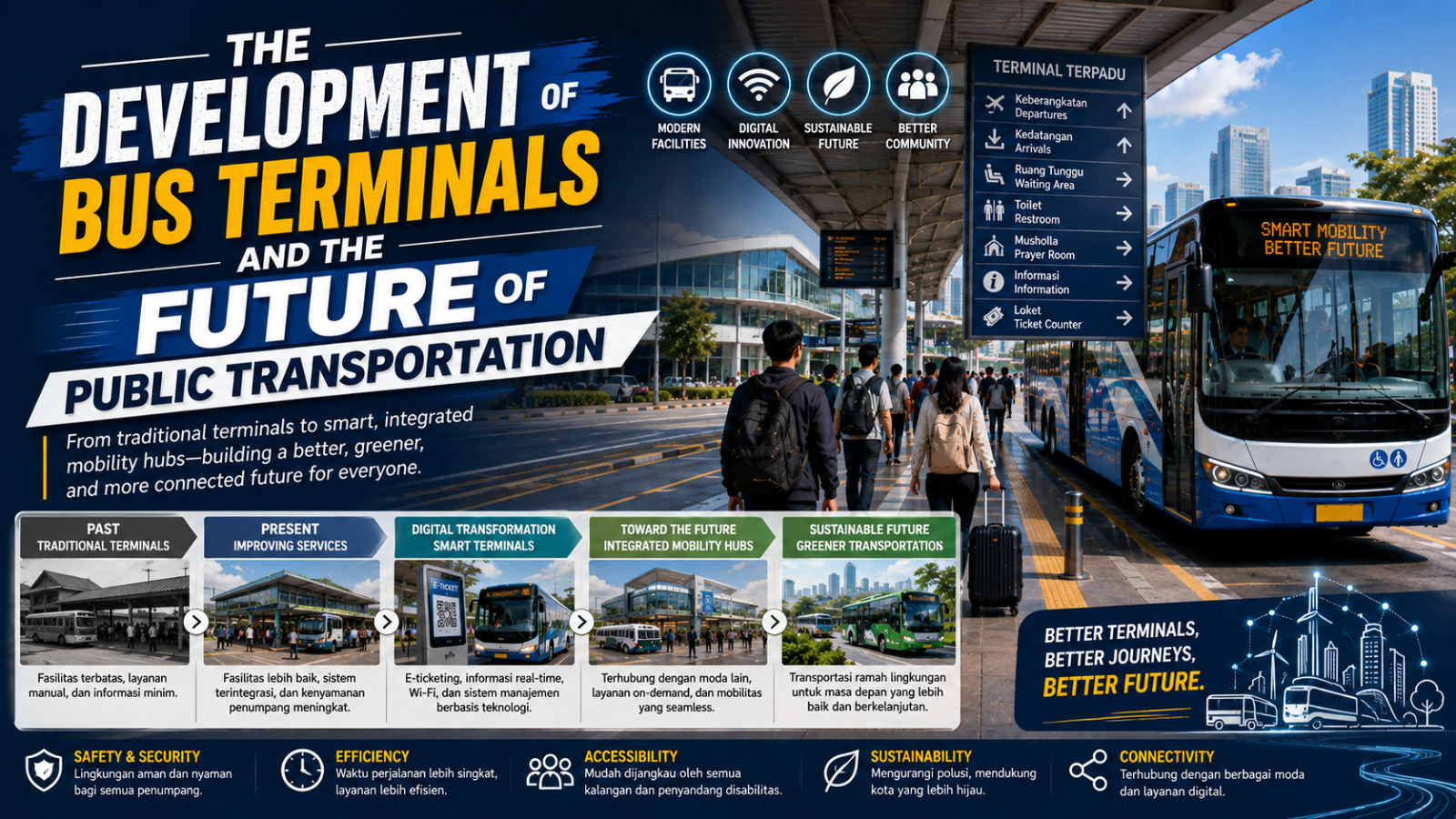
Bus terminals continue to develop as public transportation needs change and technology becomes more widely used. Modern terminals are gradually moving beyond their traditional role as places where buses arrive and depart. They are becoming important transportation hubs that can connect passengers, routes, and different transportation services.
CHANGING FUNCTIONS OF BUS TERMINALS
Traditional bus terminals mainly focused on bus arrivals, departures, and passenger boarding. Modern terminals are increasingly designed to provide better passenger services and more organized transportation operations. Waiting areas, information centers, accessibility facilities, and other supporting services can improve the overall travel experience.
Terminal management is also becoming more structured. Dedicated platforms, vehicle lanes, passenger areas, and operational zones can help reduce confusion and improve movement within the terminal. These changes are important for creating a transportation environment that is safer and more efficient.
THE ROLE OF DIGITAL TECHNOLOGY
Digital technology is becoming an important part of modern terminal development. Digital information boards can provide departure times, destinations, platform numbers, and other travel information. Updated information can help passengers make better decisions and respond more easily to operational changes.
Technology can also support terminal management and security. Digital monitoring systems can help staff observe vehicle movements and important areas within the terminal. However, technology requires accurate data, regular maintenance, and trained personnel to ensure that digital services work effectively.
INTEGRATION WITH OTHER TRANSPORTATION
The future of public transportation will increasingly depend on integrated transportation networks. Bus terminals can connect bus services with local transportation, rail services, and other available mobility options. Better integration allows passengers to transfer between transportation modes more easily.
Integrated systems also require clear and connected travel information. Passengers need to know where to transfer, when the next service operates, and how different routes connect. When transportation services are coordinated effectively, terminals can become important points within a larger mobility network.
IMPROVING ACCESSIBILITY AND COMFORT
Future terminal development should prioritize comfort and accessibility for different groups of passengers. Clean waiting areas, accessible pathways, suitable restrooms, clear signs, and facilities for passengers with disabilities can make terminals easier to use. These improvements are important because public transportation should be accessible to as many people as possible.
Passenger services also need to remain clear and helpful. Staff assistance and simple information systems should continue to support people who may not be familiar with digital technology. Combining modern facilities with human assistance can create a more inclusive terminal environment.
THE FUTURE OF PUBLIC TRANSPORTATION
The future of bus terminals will likely focus on technology, integration, efficiency, safety, and passenger needs. Terminals can become more connected with digital transportation systems and other mobility services. Better data and information can help transportation operators manage services and respond to changing passenger demand.
However, modern infrastructure alone is not enough to create effective public transportation. A strong system also requires reliable routes, dependable schedules, safe operations, accessible facilities, and quality services. When these elements develop together, bus terminals can play a major role in building a more efficient and sustainable public transportation network.
CONCLUSION
The development of bus terminals reflects the changing needs of modern public transportation. Digital technology, transportation integration, accessibility, safety, and passenger comfort are becoming increasingly important in terminal development. Future terminals can serve as connected transportation hubs rather than simple bus stopping points. With proper planning and management, they can support a safer, more accessible, efficient, and passenger-focused public transportation system.
About the Author
Gusti Ayu Tita P
Author — STEKOM University
An active author focused on academic issues, educational technology, and human resource development in the campus environment.















