The Development Of Entertainment Content Amid Social Media Growth
Gusti Ayu Tita P
7 Agustus 2026
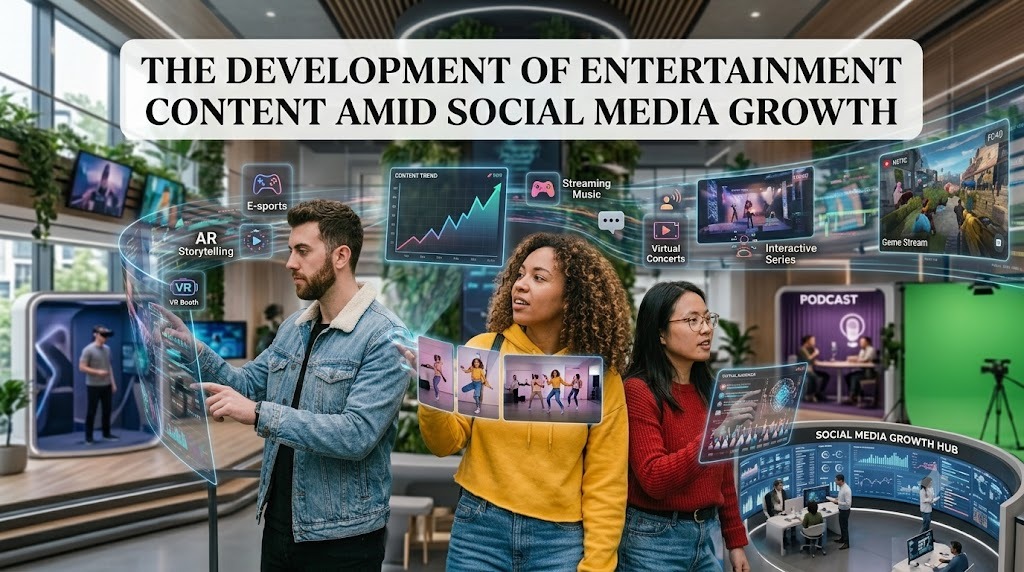
Social media has significantly changed the way people create, share, and consume entertainment. In the past, audiences mainly depended on television, radio, cinema, and other traditional media for entertainment. Today, platforms such as social networks allow users to discover entertainment content within seconds. This transformation has created new opportunities for creators, brands, and digital entertainment companies.
The growth of social media has also influenced what audiences expect from entertainment. Users generally want content that is easy to access, visually appealing, relevant, and interactive. Short videos, live broadcasts, memes, podcasts, and user-generated content have become important parts of the digital entertainment landscape. As social media continues to develop, entertainment content is expected to become increasingly diverse and personalized.
SOCIAL MEDIA CHANGES ENTERTAINMENT HABITS
Social media has made entertainment available almost anytime and anywhere. Users can watch videos, listen to music, follow creators, and discover new trends through mobile devices. Easy access has changed traditional entertainment habits because audiences no longer have to wait for scheduled television programs or specific releases. They can choose content based on their personal interests and available time.
This change has also encouraged users to become more active. Instead of simply watching content, audiences can comment, share, react, and create their own responses. The relationship between creators and audiences has become more interactive. This interaction allows creators to receive direct feedback and understand what their followers enjoy.
SHORT FORM CONTENT CONTINUES TO GROW
Short form content has become one of the most recognizable developments in social media entertainment. Videos with brief and focused messages are easy to consume during short breaks. Fast paced entertainment can quickly capture audience attention when the opening and presentation are engaging. Comedy, challenges, music, tutorials, and storytelling can all be adapted into short videos.
The popularity of short videos has also encouraged creators to develop more creative approaches. A creator may use visual effects, captions, humor, music, or unexpected endings to make a video memorable. Creativity is especially important when content must compete for limited audience attention. However, creators should focus on quality instead of producing content simply for the sake of following trends.
USER GENERATED CONTENT BECOMES MORE IMPORTANT
Social media has lowered the barriers for ordinary users to become content creators. People can record videos, take photographs, write posts, or share personal experiences using devices they already own. User generated content has become an important part of modern digital entertainment. Some users can even build large communities without traditional media companies supporting them.
This development creates greater diversity in entertainment. Audiences can discover different personalities, cultures, interests, and creative styles from around the world. Authentic and relatable content can create strong connections with viewers. At the same time, creators should respect privacy, copyright, and other people's rights when producing content.
LIVE CONTENT BUILDS DIRECT CONNECTIONS
Live streaming has introduced a more immediate form of digital entertainment. Creators can communicate with audiences while events are happening. Gaming sessions, music performances, discussions, product demonstrations, and casual conversations can all be presented through live broadcasts. Real time interaction creates a stronger sense of connection between creators and viewers.
Audiences can ask questions, leave comments, and respond to creators during a broadcast. This makes viewers feel more involved in the experience. Direct communication can strengthen audience loyalty when creators provide consistent and meaningful interactions. However, live content also requires creators to be prepared for unexpected situations and follow platform guidelines.
PERSONALIZATION SHAPES CONTENT DISCOVERY
Social media platforms use recommendation systems to help users discover content that matches their interests. The content displayed on a user's feed may depend on previous interactions, viewing habits, searches, and other signals. Personalized feeds make entertainment discovery more convenient for users. They can quickly find creators and topics that match their preferences.
For creators, personalization can provide opportunities to reach specific audiences. Understanding audience behavior can help creators choose appropriate topics, formats, and publishing strategies. Audience data can support better content planning and evaluation. Nevertheless, responsible data practices and respect for user privacy remain essential.
ENTERTAINMENT TRENDS SPREAD FASTER
Social media has accelerated the spread of entertainment trends. A song, joke, challenge, dance, or video format can become widely recognized within a short period. Rapid trend cycles can create opportunities for creators to gain visibility. However, trends can also disappear quickly, requiring creators to remain adaptable.
Following trends does not necessarily mean copying popular content. Creators can add their own perspectives, storytelling styles, or creative elements. Originality helps content stand out in a crowded digital environment. A balance between current trends and a recognizable creator identity can support long term audience growth.
CREATOR ECONOMY EXPANDS
The development of social media has created new economic opportunities for content creators. Creators may earn income through advertising, brand partnerships, subscriptions, merchandise, affiliate activities, and other forms of monetization. The creator economy allows individuals to turn digital creativity into potential professional opportunities. This has encouraged more people to explore content creation as a career.
However, creator income can be influenced by platform policies, audience size, trends, and engagement levels. Depending entirely on one platform or one revenue source can create financial risks. Diversifying income sources can help creators build greater stability. Professional skills such as financial planning, marketing, communication, and content strategy can also become increasingly valuable.
TECHNOLOGY SUPPORTS CREATIVE PRODUCTION
Technology continues to influence how entertainment content is produced. Editing applications, artificial intelligence tools, cameras, microphones, graphics software, and other digital tools can make production more accessible. Modern technology allows creators to experiment with different formats and production styles. Some creators can now produce professional looking content with relatively simple equipment.
Artificial intelligence can also support tasks such as brainstorming, editing, transcription, and visual development. However, technology should be used responsibly and with human oversight. Human creativity remains important for storytelling, emotion, originality, and artistic direction. Creators also need to consider copyright, transparency, and ethical issues when using digital tools.
CHALLENGES IN DIGITAL ENTERTAINMENT
The rapid growth of entertainment content also creates several challenges. Creators face intense competition because audiences have access to millions of pieces of content. Maintaining attention and producing consistent quality can be difficult. Creators may also face pressure to follow trends continuously.
Other concerns include misinformation, copyright violations, online harassment, privacy issues, and unhealthy consumption habits. Platforms, creators, and audiences all have roles in creating a safer digital environment. Digital literacy and responsible content creation are essential as entertainment becomes increasingly integrated into everyday life.
CONCLUSION
The development of entertainment content amid social media growth has transformed the digital entertainment industry. Social media has made entertainment more accessible, interactive, personalized, and diverse. Short videos, user generated content, live streaming, personalized recommendations, and creator driven entertainment are now important parts of the digital landscape.
The future of entertainment will continue to depend on technological development and changing audience preferences. Creativity, originality, adaptability, digital literacy, and responsible content creation will remain important for creators who want to succeed. By combining technology with meaningful creative ideas, entertainment content can continue to grow while providing valuable experiences for audiences.
About the Author
Gusti Ayu Tita P
Author — STEKOM University
An active author focused on academic issues, educational technology, and human resource development in the campus environment.