
The Development Of Fuel In Indonesia And Future Challenges
Gusti Ayu Tita P
10 Agustus 2026
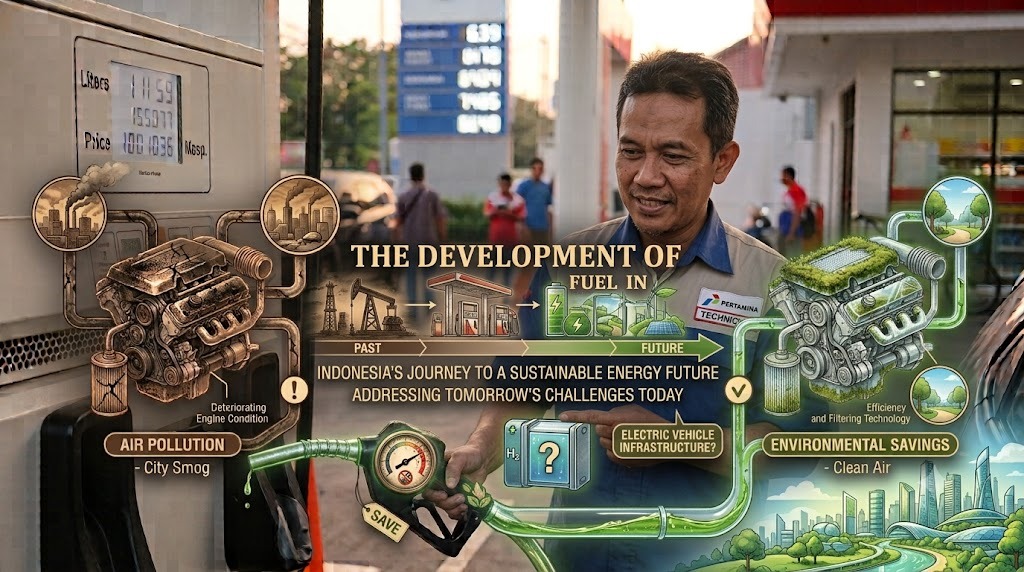
Fuel has become an important part of Indonesia’s economic and social development. It supports transportation, industries, businesses, and daily activities across the country. As the population and economic activities continue to grow, the demand for energy, especially fuel, also increases significantly.
Indonesia has experienced major changes in its fuel sector, from relying heavily on fossil fuels to exploring cleaner and more sustainable energy sources. The development of fuel in Indonesia is influenced by technological progress, government policies, global energy trends, and environmental concerns. Understanding this development helps explain the challenges and opportunities of Indonesia’s future energy system.
THE HISTORY OF FUEL DEVELOPMENT IN INDONESIA
The development of fuel in Indonesia began with the exploration and use of natural resources, especially petroleum. Indonesia has long been known as a country with significant oil and gas potential. The discovery and production of oil supported economic growth and provided energy for transportation and industrial activities.
During the early stages, Indonesia depended heavily on fossil fuels such as gasoline and diesel. These fuels became the main energy sources for vehicles, factories, and other sectors. The growth of cities and transportation systems increased the demand for fuel throughout the country.
Over time, Indonesia started improving its fuel management and production systems. The government developed energy policies to ensure fuel availability and reduce dependence on imported energy. These efforts continue as Indonesia faces changing energy needs and environmental challenges.
THE ROLE OF FOSSIL FUELS IN INDONESIA’S ENERGY SYSTEM
Fossil fuels remain an important part of Indonesia’s energy supply. Gasoline and diesel are widely used for transportation because many vehicles still depend on internal combustion engines. Industries and businesses also rely on fuel to support production and distribution activities.
The availability of fuel has helped Indonesia maintain economic activities and improve connectivity between regions. Transportation networks, including land, sea, and air transportation, require stable fuel supplies to operate effectively. This makes fuel security an important national priority.
However, the continued use of fossil fuels creates environmental concerns. The burning of fossil fuels produces greenhouse gas emissions and contributes to air pollution. These challenges encourage Indonesia to search for cleaner and more sustainable energy alternatives.
GOVERNMENT EFFORTS IN FUEL DEVELOPMENT
The Indonesian government has implemented various strategies to improve the national fuel system. One important effort is developing energy policies that focus on availability, affordability, and sustainability. These policies aim to ensure that communities can access energy while reducing environmental impacts.
Indonesia has also encouraged the use of renewable energy and alternative fuels. Programs involving biofuels, especially biodiesel made from palm oil, have been introduced to reduce dependence on imported petroleum. These initiatives are part of Indonesia’s strategy to create a more independent energy system.
In addition, the government continues investing in energy infrastructure and technology development. Improvements in fuel distribution, storage, and production systems help strengthen national energy security. These efforts are important for supporting Indonesia’s long-term economic development.
THE DEVELOPMENT OF BIOFUEL IN INDONESIA
Biofuel has become one of Indonesia’s important alternative energy solutions. Biodiesel programs use renewable resources, such as palm oil, to produce fuel that can be mixed with conventional diesel. This approach helps reduce petroleum consumption and supports domestic agricultural industries.
The development of biofuel energy provides several benefits for Indonesia. It can reduce dependence on imported fuel, support local farmers, and create new economic opportunities. Biofuel also has the potential to reduce certain emissions compared with traditional fossil fuels.
However, biofuel development also faces challenges. Issues related to production sustainability, land use, and environmental management must be carefully considered. Proper regulations and responsible production methods are needed to ensure long-term benefits.
THE GROWTH OF ELECTRIC VEHICLES AND CLEAN ENERGY
Indonesia is beginning to develop cleaner transportation solutions through electric vehicle technology. Electric vehicles use electricity instead of conventional fuel, which can reduce direct emissions from transportation. This development is part of Indonesia’s effort to support cleaner and more efficient mobility.
The growth of electric vehicles requires supporting infrastructure, including charging stations and battery production facilities. Indonesia has significant potential because it has important mineral resources used for battery technology. Developing a domestic electric vehicle industry can create new economic opportunities.
However, the transition to electric vehicles requires time and investment. Factors such as vehicle prices, charging availability, electricity sources, and public acceptance influence adoption rates. Continuous innovation is needed to make clean transportation more accessible.
FUTURE CHALLENGES IN INDONESIA’S FUEL SECTOR
Indonesia’s fuel sector faces several challenges in the future. One major challenge is balancing increasing energy demand with environmental protection. As the population grows, Indonesia needs more energy while reducing negative impacts from fuel consumption.
Another challenge is reducing dependence on fossil fuels. Although fossil fuels remain important, limited resources and environmental concerns encourage the development of alternative energy. Indonesia needs effective strategies to achieve a more balanced and sustainable energy system.
Energy infrastructure is also a major challenge. Developing renewable energy facilities, electric vehicle infrastructure, and modern fuel systems requires significant investment. Cooperation between the government, businesses, and communities is necessary to overcome these challenges.
ENVIRONMENTAL IMPACT AND SUSTAINABILITY ISSUES
Fuel consumption has a strong relationship with environmental conditions. The use of gasoline and diesel contributes to air pollution and carbon emissions, especially in areas with high transportation activity. Reducing these impacts has become an important goal for Indonesia’s future energy planning.
Sustainable fuel development focuses on creating energy sources with lower environmental impacts. Renewable energy, biofuels, and electric transportation are examples of solutions being explored. These alternatives can help Indonesia reduce emissions while continuing economic growth.
Public awareness also plays an important role in achieving sustainability. Responsible fuel use, energy conservation, and support for cleaner technologies can contribute to environmental protection. Individual actions combined with national policies can create meaningful improvements.
THE FUTURE OF FUEL IN INDONESIA
The future of fuel in Indonesia will likely involve a combination of traditional and renewable energy sources. Fossil fuels may continue to play a role during the transition period, but cleaner alternatives will become increasingly important. The development of sustainable energy will shape Indonesia’s future transportation and industrial systems.
Technology will be a key factor in improving Indonesia’s fuel sector. Innovations in electric vehicles, renewable energy production, and fuel efficiency can support a cleaner energy future. Investment in research and infrastructure will determine how quickly these changes can occur.
Indonesia has the opportunity to build a stronger and more sustainable energy system. By managing resources responsibly and adopting new technologies, the country can meet future energy needs while reducing environmental impacts.
CONCLUSION
The development of fuel in Indonesia has experienced significant changes, from heavy dependence on fossil fuels to the exploration of cleaner energy alternatives. Fuel remains essential for economic activities, transportation, and national development, but environmental challenges require new solutions.
The future of Indonesia’s fuel sector depends on renewable energy, technological innovation, and effective energy policies. By developing biofuels, electric vehicles, and sustainable energy systems, Indonesia can create a more secure and environmentally responsible energy future.
About the Author
Gusti Ayu Tita P
Author — STEKOM University
An active author focused on academic issues, educational technology, and human resource development in the campus environment.















