
The Development of Robotics in Modern Life
Gusti Ayu Tita P
23 Juli 2026
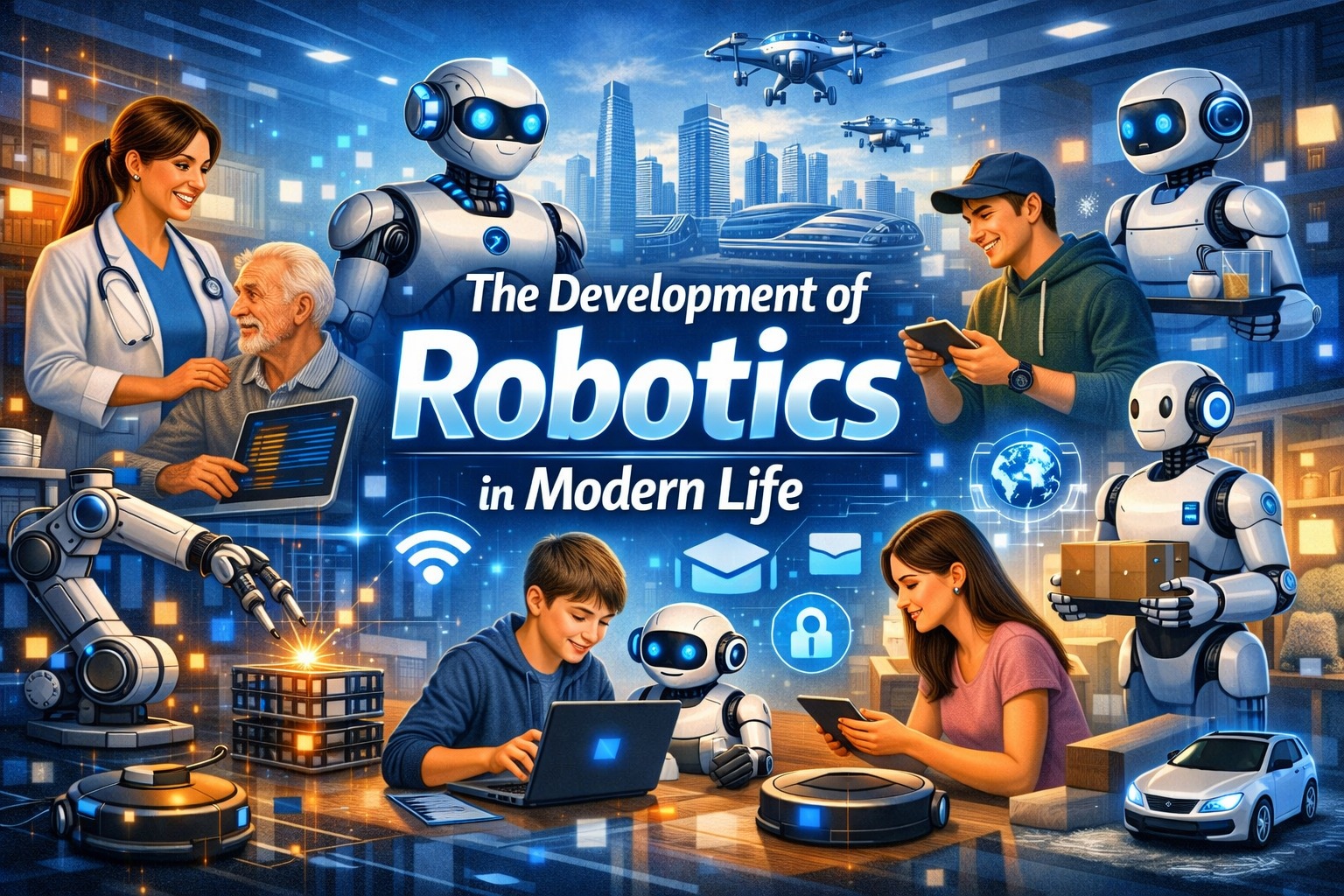
Robotics has transformed from a futuristic concept into a practical technology that shapes everyday life. From smart home assistants to advanced medical machines, robots are becoming essential tools that improve efficiency, safety, and convenience. As artificial intelligence and automation continue to evolve, robotics is rapidly reshaping how people work, communicate, and solve global challenges.
THE RISE OF ROBOTICS IN DAILY LIFE
Not long ago, robots were mostly associated with science fiction and industrial manufacturing. Today, they are present in homes, hospitals, offices, and even agriculture. Smart vacuum cleaners, delivery robots, and customer service chatbots are now common examples of how robotics integrates into everyday routines.
The growing demand for convenience and efficiency has accelerated robotic adoption. People want faster services, safer working environments, and more accurate results. Robotics offers solutions that reduce manual labor and allow humans to focus on more creative and strategic tasks.
ROBOTICS IN INDUSTRY AND MANUFACTURING
Manufacturing remains one of the most influential sectors for robotics development. Industrial robots are widely used in automotive, electronics, and packaging industries to perform repetitive tasks with high precision. These machines can operate continuously without fatigue, improving productivity and reducing errors.
Automation also enhances workplace safety. Dangerous tasks such as welding, heavy lifting, and chemical handling can be performed by robots, minimizing risks for human workers. As a result, companies benefit from increased efficiency while employees experience safer working conditions.
THE ROLE OF ROBOTS IN HEALTHCARE
Healthcare is one of the most promising areas for robotics innovation. Surgical robots assist doctors in performing complex procedures with remarkable accuracy. These machines enable minimally invasive surgeries, leading to faster recovery times and reduced complications.
Robots are also helping with patient care. In hospitals and elderly care facilities, robotic assistants help monitor vital signs, deliver medication, and support mobility. Telepresence robots allow doctors to consult patients remotely, expanding healthcare access to rural or underserved communities.
SMART HOMES AND PERSONAL ROBOTS
The concept of smart homes has become more realistic thanks to robotics. Personal robots can manage household chores, control smart devices, and provide entertainment. Voice-controlled assistants, robotic cleaners, and security robots are becoming part of modern living.
These technologies save time and energy, allowing families to focus on meaningful activities. As technology becomes more affordable, personal robots are expected to become standard features in many homes.
ROBOTICS IN AGRICULTURE AND FOOD PRODUCTION
Agriculture is undergoing a technological revolution driven by robotics. Farmers are using automated machines to plant, monitor, and harvest crops more efficiently. Drones and robotic systems help analyze soil conditions, detect pests, and optimize irrigation.
This innovation is essential for feeding a growing global population. Robotics helps increase crop yields while reducing resource waste, making farming more sustainable and environmentally friendly.
CHALLENGES AND ETHICAL CONSIDERATIONS
Despite its many benefits, the development of robotics raises important ethical and social questions. Job displacement is a common concern, as automation may replace certain roles traditionally performed by humans. However, robotics also creates new career opportunities in engineering, programming, and maintenance.
Privacy and security are additional concerns. As robots collect and process data, ensuring data protection becomes essential. Governments and organizations must establish regulations that balance innovation with public safety.
THE FUTURE OF ROBOTICS
The future of robotics promises even more advanced integration into daily life. Innovations in artificial intelligence, machine learning, and sensor technology will make robots smarter, more adaptable, and more collaborative.
Human-robot collaboration is expected to become the norm in workplaces. Rather than replacing humans, robots will assist them in performing tasks more efficiently. From space exploration to disaster response, robotics will continue to expand its role in solving complex global challenges.
CONCLUSION
The development of robotics in modern life represents one of the most significant technological transformations of the 21st century. Robotics improves productivity, enhances safety, and opens new possibilities across multiple industries. While challenges remain, the benefits of robotics are undeniable.
As society continues to embrace innovation, robotics will play a crucial role in shaping a smarter, safer, and more efficient future.
About the Author
Gusti Ayu Tita P
Author — STEKOM University
An active author focused on academic issues, educational technology, and human resource development in the campus environment.















