
The Development Of Sea Transportation In The Modern Era
Gusti Ayu Tita P
11 Agustus 2026
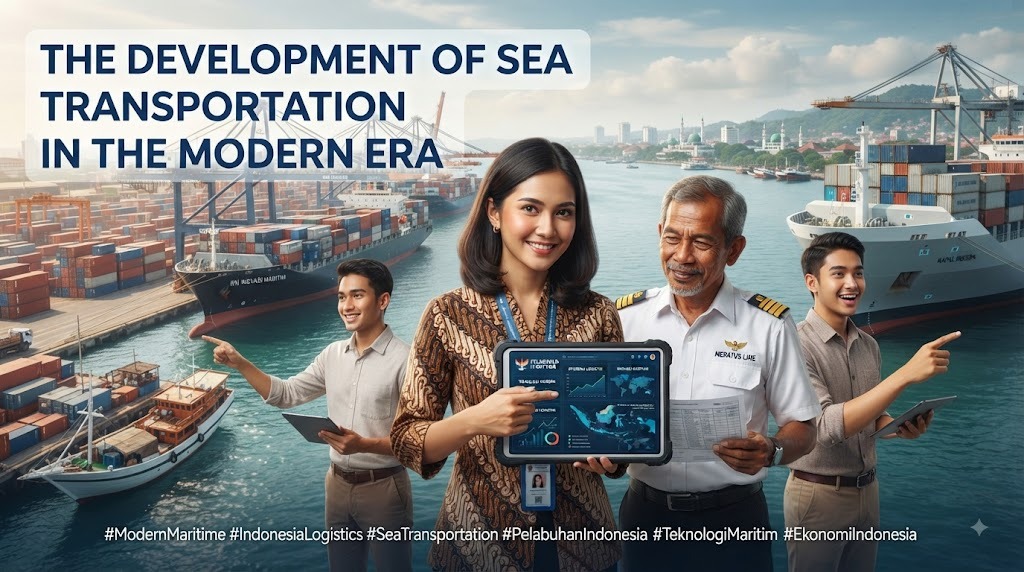
Sea transportation has played an important role in connecting countries, regions, and communities for centuries. In the modern era, its role continues to grow as global trade, tourism, and logistics become increasingly connected. Ships can carry large quantities of goods and passengers across long distances, making maritime transportation an efficient option for many activities. Modern sea transportation is now supported by advanced technology, improved infrastructure, and better safety systems. These developments have changed the way ships, ports, and maritime services operate.
The development of sea transportation is not only about building larger and faster ships. It also involves improving port facilities, digital systems, navigation technology, environmental performance, and human resources. Modern shipping companies are increasingly using data and automation to improve operational efficiency. At the same time, the maritime industry is looking for cleaner technologies to reduce its environmental impact. These changes are creating a more efficient, safe, connected, and sustainable maritime transportation system.
THE IMPORTANCE OF SEA TRANSPORTATION
Sea transportation is an essential part of the global transportation and logistics system. A large amount of international trade is transported by sea because ships can carry significant volumes of cargo. Raw materials, food, machinery, fuel, vehicles, and manufactured products are commonly moved through maritime routes. Sea transportation also connects islands and coastal regions that may have limited land transportation options. Therefore, maritime transportation supports global trade and economic activity.
In addition to cargo transportation, ships are also used to transport passengers and support tourism. Ferry services connect islands and coastal communities, while cruise ships provide international tourism services. Reliable maritime connections can improve access to remote areas and support local economies. The development of sea transportation can therefore create benefits beyond the shipping industry. It contributes to wider economic connectivity and regional development.
TECHNOLOGICAL DEVELOPMENT IN SHIPPING
Technology has become one of the most important drivers of modern sea transportation. Ships now use advanced navigation, communication, monitoring, and engine management systems. Digital equipment can provide information about vessel position, weather conditions, fuel consumption, and machinery performance. This information allows operators to make faster and more informed decisions. Maritime technology can improve both operational efficiency and safety.
Modern ships can also use sensors to monitor important components continuously. Data collected from these sensors can help identify potential problems before they become serious failures. Predictive maintenance can reduce unexpected downtime and improve vessel reliability. Digital communication also allows ships to exchange information with ports and control centers more effectively. As technology continues to advance, maritime operations are becoming increasingly data driven.
DEVELOPMENT OF ELECTRIC AND HYBRID SHIPS
Electric and hybrid propulsion systems are becoming more relevant in specific maritime operations. Electric vessels can be suitable for shorter routes where charging infrastructure is available. They can reduce direct emissions during operation and may also reduce noise. However, battery capacity and charging time remain important considerations. Electric ships are therefore more suitable for certain routes and vessel types than for every maritime application.
Hybrid ships combine conventional engines with electric systems or energy storage. This approach can provide flexibility and improve energy efficiency during specific operating conditions. Hybrid technology can also serve as a transition toward cleaner maritime transportation. The appropriate system depends on vessel size, route length, operating patterns, and available infrastructure. Continued technological development may make these systems more practical in the future.
IMPROVEMENTS IN NAVIGATION SYSTEMS
Navigation technology has developed significantly in the modern maritime industry. Electronic navigation systems can combine information from positioning systems, digital charts, weather data, and other maritime sources. These tools help crews determine routes and monitor vessel positions more accurately. Better navigation can reduce unnecessary travel distances and improve fuel efficiency. Modern navigation systems also contribute to safer maritime operations.
Weather and ocean data can be used to support route planning. Ships can adjust their routes or speeds when conditions change, depending on safety requirements. However, technology should support rather than replace professional judgment. Maritime crews must still understand the operating environment and follow safety procedures. Combining advanced navigation systems with skilled personnel creates a stronger maritime safety system.
IMPROVING MARITIME SAFETY
Safety remains one of the most important priorities in the development of sea transportation. Modern vessels use alarms, sensors, communication systems, and monitoring technologies to identify potential hazards. Weather information can help crews prepare for changing sea conditions. Emergency communication systems can also support coordination during incidents. Maritime safety technology can reduce risks when properly maintained and operated.
Regular inspections and maintenance are equally important. Even advanced technology cannot guarantee safety if equipment is poorly maintained or procedures are ignored. Crew members need appropriate training to understand modern systems and respond effectively during emergencies. Companies must also establish strong safety management practices. The combination of technology, maintenance, training, and proper procedures is essential for safe maritime transportation.
THE ROLE OF DATA AND ARTIFICIAL INTELLIGENCE
Modern ships and ports generate large amounts of operational data. This data can be analyzed to improve routes, fuel consumption, maintenance schedules, and cargo management. Artificial intelligence can identify patterns that may not be immediately visible to human operators. Predictive systems can help identify possible equipment failures before they occur. Artificial intelligence in shipping can therefore support more efficient decision-making.
AI can also assist ports in managing vessel arrivals and cargo flows. Predictive analysis may help reduce congestion and improve resource allocation. However, AI systems depend on accurate and reliable data. Human oversight remains necessary when decisions involve safety and complex operational conditions. Responsible use of AI can improve maritime performance while maintaining human control.
IMPROVING LOGISTICS AND SUPPLY CHAINS
Sea transportation is closely connected to global supply chains. Goods often travel through several transportation modes before reaching their final destinations. Modern logistics systems aim to coordinate ships, ports, warehouses, trucks, and other services more efficiently. Digital tracking can provide information about cargo locations and expected arrival times. Maritime logistics can become more efficient when all parts of the supply chain are properly connected.
Better coordination can reduce unnecessary waiting and storage time. Companies can use real-time information to manage inventory and respond to changes in demand. Integrated logistics platforms can also improve communication between different organizations. However, effective supply chains require reliable infrastructure and accurate information. Strong coordination between maritime and land transportation can improve overall delivery performance.
THE ROLE OF HUMAN RESOURCES
Technology cannot completely replace the importance of skilled maritime workers. Ship crews, engineers, port workers, logistics professionals, and managers all contribute to maritime operations. As technology becomes more advanced, workers need new technical and digital skills. Training programs can help employees understand automated systems, digital platforms, and modern safety equipment. Skilled maritime workers remain essential for the successful development of the industry.
Human judgment is especially important when unexpected situations occur. Technology can provide information and recommendations, but trained personnel must understand how to respond appropriately. Continuous professional development can help workers adapt to changing technologies. Companies should also promote strong safety and cybersecurity awareness. A combination of skilled people and modern technology can create a more reliable maritime system.
CHALLENGES OF MODERN SEA TRANSPORTATION
Despite its rapid development, modern sea transportation faces several challenges. New technologies can require significant investment in ships, ports, software, and infrastructure. Not every company or region has the same financial and technical capacity to adopt advanced systems. The transition to cleaner fuels can also require new storage, supply, and safety infrastructure. High investment costs can therefore slow down technological transformation.
Cybersecurity is another growing challenge. Connected ships and digital ports may become targets for cyberattacks if their systems are not properly protected. Maritime organizations need effective security policies, regular system updates, and employee training. Regulations must also develop alongside new technologies. Addressing these challenges requires cooperation between governments, companies, technology providers, and maritime professionals.
THE FUTURE OF SEA TRANSPORTATION
The future of sea transportation will likely be shaped by digitalization, automation, cleaner energy, and advanced data systems. Smart ships may become more common as technology becomes more reliable and affordable. Ports can become increasingly automated and connected through integrated digital platforms. Alternative fuels and energy-efficient technologies may reduce the environmental impact of maritime operations. The future of sea transportation will focus on efficiency, safety, sustainability, and connectivity.
The development of maritime transportation will also require stronger cooperation between different stakeholders. Governments need to create supportive regulations and infrastructure. Companies need to invest in technology and workforce development. Educational institutions can help prepare professionals with the skills needed for future maritime operations. With coordinated development, the maritime industry can become more competitive and sustainable.
THE IMPACT ON GLOBAL AND REGIONAL ECONOMIES
Modern sea transportation contributes significantly to economic development. Efficient shipping allows businesses to move raw materials and finished products across long distances. Lower transportation costs can improve the competitiveness of products in domestic and international markets. Ports can also create employment and stimulate economic activities in surrounding regions. Maritime connectivity therefore has a broad economic impact.
For island countries, sea transportation is particularly important for connecting communities and markets. Reliable maritime services can support regional trade and improve access to essential goods. Tourism can also benefit from better ferry services, cruise facilities, and coastal transportation. As maritime infrastructure improves, more economic opportunities can emerge in coastal regions. This makes sea transportation an important part of long-term economic development.
CONCLUSION
The development of sea transportation in the modern era is driven by technology, digitalization, automation, sustainability, and improved infrastructure. Modern ships are becoming more efficient and connected, while ports are adopting digital systems to improve cargo and vessel management. Artificial intelligence, smart sensors, advanced navigation, and data analysis can improve operational performance. At the same time, electric, hybrid, and alternative-fuel technologies are creating opportunities for cleaner maritime transportation.
However, technological development must be supported by skilled workers, strong safety systems, cybersecurity, appropriate regulations, and adequate infrastructure. The transition to modern maritime transportation requires long-term investment and cooperation between governments, companies, technology developers, and educational institutions. If these elements are developed together, sea transportation can become safer, more efficient, environmentally responsible, and competitive. The modern maritime sector will therefore remain an important foundation for global trade, regional connectivity, and economic growth.
About the Author
Gusti Ayu Tita P
Author — STEKOM University
An active author focused on academic issues, educational technology, and human resource development in the campus environment.















