
The Difference Between Reincarnation and Life After Death
Gusti Ayu Tita P
9 September 2026
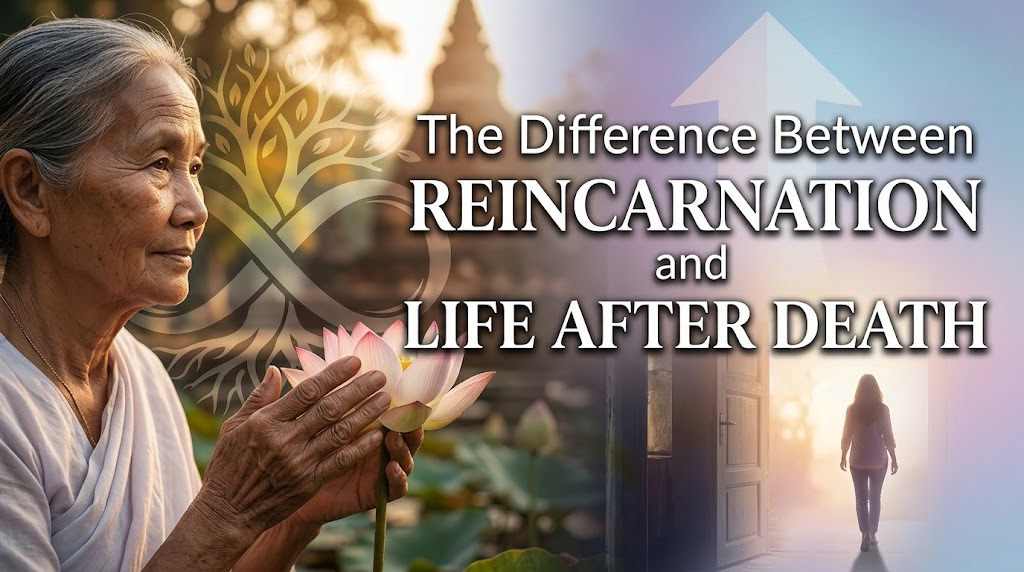
Reincarnation and life after death are two concepts that are often discussed when people talk about what may happen after death. Although they are related, the two ideas do not have exactly the same meaning. Reincarnation generally refers to the belief that a person may be born again in another existence, while life after death is a broader concept concerning what happens to a person after physical death.
Different religions, cultures, and spiritual traditions have their own explanations of these concepts. Some traditions include Rebirth as part of their understanding of existence, while others describe an afterlife without reincarnation. Understanding the difference can make discussions about death, spirituality, and Past Lives easier to follow.
WHAT DOES REINCARNATION MEAN?
Reincarnation is the belief that existence continues through another life after death. In traditions that accept this concept, a person may experience a new birth as part of a continuing cycle of existence. The details of how this process occurs vary according to different religious and philosophical teachings.
In some traditions, reincarnation is connected with Karma, which refers broadly to the consequences of actions. The cycle of birth, death, and rebirth may continue until a form of spiritual liberation is reached. Therefore, reincarnation is often understood as more than simply being born again because it can also involve ideas about morality and spiritual development.
WHAT DOES LIFE AFTER DEATH MEAN?
Life after death is a broader concept that refers to beliefs about what happens after physical death. Depending on the religion or culture, it may involve an afterlife, spiritual existence, resurrection, or another form of continued existence. Unlike reincarnation, the concept does not necessarily require a person to be born into another physical body.
Different traditions provide different explanations of the Afterlife. Some believe that a person's existence continues in a spiritual realm, while others describe a future state connected with judgment, resurrection, or spiritual transformation. Because the term is broad, its meaning depends heavily on the belief system being discussed.
KEY DIFFERENCES BETWEEN THE TWO CONCEPTS
The main difference between reincarnation and life after death is the way continued existence is understood. Reincarnation involves the idea of another birth or existence, whereas life after death can refer to any continued existence following physical death. Therefore, someone can believe in an afterlife without believing in reincarnation.
Another difference concerns the idea of a continuing cycle. Reincarnation is often associated with repeated cycles of Rebirth, while many concepts of life after death describe a state that follows death without another earthly birth. These distinctions are important because religious traditions may use different concepts to explain the human journey beyond physical life.
HOW RELIGIONS AND CULTURES INTERPRET THEM?
Hindu traditions commonly connect reincarnation with samsara, karma, and liberation. Buddhist traditions also include rebirth but explain it through their own teachings about existence, consciousness, and the causes that continue the cycle of existence. These traditions therefore provide distinctive interpretations of what happens beyond one lifetime.
Other religions and cultures may emphasize an afterlife rather than reincarnation. Some traditional cultures also have beliefs involving ancestors, spirits, or continued existence after death. These differences demonstrate that ideas about Life After Death are diverse and cannot be reduced to one universal explanation.
WHY THE DISTINCTION MATTERS?
Understanding the difference between reincarnation and life after death helps people discuss spiritual beliefs more accurately. It prevents the two concepts from being treated as identical when they actually represent different ideas. This distinction is especially useful when comparing religious teachings and cultural traditions.
The subject can also be approached from philosophical and scientific perspectives. Science can study human experiences, beliefs, memory, and reports related to Past Lives, but religious claims about an afterlife or reincarnation involve questions that are not established simply through personal belief. Keeping these perspectives separate encourages respectful and balanced discussion.
CONCLUSION
The difference between reincarnation and life after death mainly concerns how continued existence is understood. Reincarnation refers to the belief in another birth or existence, often as part of a cycle of rebirth, while life after death is a broader concept that can include many different beliefs about existence after physical death.
Both ideas have influenced religions, cultures, and philosophical discussions throughout history. By understanding concepts such as Rebirth, Karma, and the Afterlife, people can better recognize the differences between various beliefs about what may happen after death.
About the Author
Gusti Ayu Tita P
Author — STEKOM University
An active author focused on academic issues, educational technology, and human resource development in the campus environment.















