
The Duties and Authorities of a Regent Every Citizen Should Know
Gusti Ayu Tita P
12 Agustus 2026
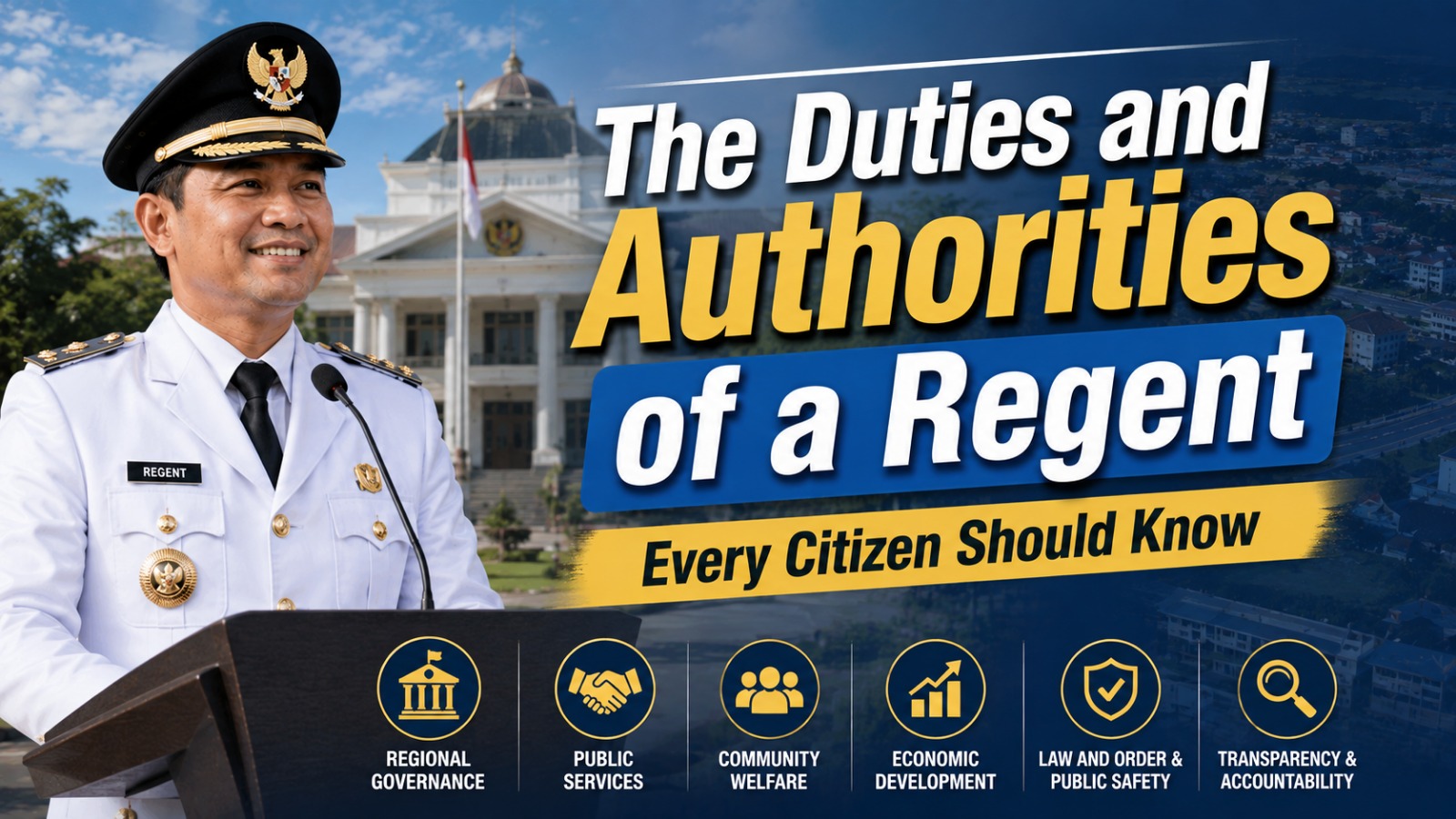
A regent is one of the most important leaders in a regency-level government. The regent has responsibilities that directly affect the daily lives of citizens, from public services and regional development to economic programs and community welfare. Understanding the duties and authorities of a regent can help citizens recognize how local government works and what they can reasonably expect from their regional leader. It also encourages greater public participation in development and government oversight. For this reason, knowledge about the role of a regent is important for every citizen.
UNDERSTANDING THE POSITION OF A REGENT
A regent serves as the head of the regional government at the regency level. In Indonesia, the regent leads the administration of the regency together with the deputy regent and the regional government apparatus according to applicable laws and regulations. The regent is responsible for directing government activities and ensuring that regional policies are implemented properly. This position requires leadership, coordination, and a strong understanding of local conditions. A regent must also consider the needs and aspirations of the people when developing regional policies.
The regent does not work alone. Various regional government agencies, civil servants, the Regional House of Representatives, and other institutions have different roles in regional governance. Effective administration therefore requires coordination and cooperation among these parties. Citizens should understand this structure so they can identify the appropriate institution when they need government assistance. This knowledge can also prevent misunderstandings about the responsibilities of a regent.
MAIN DUTIES OF A REGENT
One of the main duties of a regent is to lead the implementation of regional government affairs within the authority of the regency. The regent also guides regional development programs based on established plans and applicable regulations. These responsibilities may involve areas such as education, healthcare, infrastructure, economic development, social services, and public administration. The regent must ensure that these programs are implemented effectively and according to established priorities. Public resources should be managed responsibly to achieve meaningful results.
Another important duty is coordinating the work of regional government organizations. Government programs often involve several agencies, making coordination essential to avoid duplication and inefficiency. A regent needs to monitor implementation and respond when programs encounter problems. Effective regional leadership requires continuous evaluation rather than simply creating policies. This helps ensure that government programs provide practical benefits for citizens.
DEVELOPING REGIONAL POLICIES
A regent plays an important role in developing policies that address local conditions and development priorities. Policies should be based on relevant data, legal requirements, available resources, and the needs of the community. For example, a region with strong agricultural potential may prioritize agricultural productivity, market access, and rural infrastructure. Another region may focus more heavily on tourism, industry, or digital economic development. Regional policy should therefore reflect the unique characteristics of each regency.
Policy development should also involve appropriate consultation and coordination with relevant institutions. Citizens can contribute by expressing their concerns, suggestions, and expectations through available public participation mechanisms. Listening to residents can help government officials identify problems that may not be fully visible through administrative data. A responsive policy-making process can create programs that are more relevant to local communities. This can strengthen public confidence in local government.
MANAGING REGIONAL FINANCES
Regional financial management is another important area of responsibility. A regent must ensure that regional financial resources are managed according to applicable laws and established procedures. Public funds should support programs that provide clear benefits to the community. Budget priorities may include public infrastructure, education, healthcare, social programs, economic development, and government services. Proper financial management is essential because regional development depends heavily on the effective use of public resources.
Financial management also requires accountability and transparency. Citizens need access to appropriate public information so they can understand regional development priorities and government performance. Strong internal controls can help reduce the risk of waste and administrative errors. Oversight from authorized institutions is also an important part of responsible governance. Transparent regional budgeting can strengthen public trust and support better development outcomes.
PROVIDING PUBLIC SERVICES
Citizens interact with local government through many types of public services. These may include administrative services, health services, education-related services, licensing, social assistance, and other government programs. A regent is responsible for leading the regional administration so these services can be delivered effectively. The quality of public services can strongly influence how citizens experience government in their daily lives. Efficient public services should be accessible, fair, responsive, and consistent with applicable standards.
Improving public services requires continuous evaluation. Government agencies should identify unnecessary procedures, improve staff capabilities, and use technology where appropriate. Complaint mechanisms can also help officials understand problems experienced by citizens. Residents should be encouraged to provide feedback through official channels. In this way, public services can become more responsive to actual community needs.
SUPPORTING ECONOMIC DEVELOPMENT
A regent also has an important role in supporting the economic development of the region. Local governments can create an environment that encourages entrepreneurship, investment, trade, agriculture, tourism, and other productive activities. Small and Medium Enterprises or SMEs can be particularly important because they contribute to employment and local economic activity. Government programs may support businesses through training, information, market access, and other lawful forms of assistance. Strong coordination can help local businesses become more competitive.
Economic development should benefit communities across different areas of the regency. Development programs should not focus exclusively on major urban centers while neglecting rural communities. Improving transportation, digital connectivity, skills, and access to markets can help more residents participate in economic opportunities. A balanced approach can support inclusive regional economic growth. Long-term economic policies should also consider environmental and social impacts.
DEVELOPING INFRASTRUCTURE
Infrastructure is essential for supporting economic activity and public welfare. A regent has an important leadership role in planning and implementing regional infrastructure programs within the government's authority. Roads, bridges, drainage systems, public facilities, water infrastructure, and digital connectivity can affect how easily people access services and economic opportunities. Regional infrastructure development should be based on clear priorities and community needs. Projects should also be properly planned, implemented, and maintained.
Infrastructure development requires attention to both accessibility and sustainability. Remote communities may require additional support because geographic conditions can make access more difficult. Government officials should evaluate the condition of existing infrastructure before deciding whether construction, rehabilitation, or maintenance is needed. Good infrastructure can improve mobility, reduce logistical barriers, and support regional economic activity. Therefore, infrastructure planning is an important part of regional development.
PROTECTING COMMUNITY WELFARE
The responsibilities of a regent also include supporting programs that improve community welfare. Local government programs can address issues such as poverty, access to healthcare, education, employment, social protection, and basic services. Effective programs should identify vulnerable groups and respond to their specific needs. Community welfare programs should ideally combine immediate support with long-term empowerment. This can help residents become more independent rather than relying solely on short-term assistance.
Welfare programs also require accurate data and cooperation between government institutions. Poorly targeted programs can waste resources or fail to reach the people who need assistance. Regular monitoring can help determine whether a program is producing the intended results. Cooperation with communities and relevant organizations can provide additional information about local conditions. A welfare-oriented government should focus on measurable improvements in people's quality of life.
MAINTAINING GOOD GOVERNANCE
Good governance requires more than effective administration. It also involves transparency, accountability, integrity, participation, and compliance with the law. A regent must lead the regional government in a manner that supports these principles. Decisions should be made according to established legal authority and administrative procedures. Public officials should also be encouraged to provide professional services and avoid conflicts that could undermine public trust.
Citizens have an important role in supporting good governance. They can participate in public discussions, monitor development programs, provide constructive feedback, and use official complaint mechanisms when necessary. At the same time, citizens should obtain information from reliable sources and understand the division of responsibilities between different government institutions. Cooperation between citizens and government can strengthen regional administration. Good governance ultimately depends on shared responsibility.
CONCLUSION
The duties and authorities of a regent cover many important aspects of regional government. These include leading regional administration, developing policies, managing public resources, improving public services, supporting economic growth, developing infrastructure, and promoting community welfare. Understanding the duties of a regent helps citizens better understand how local government operates and how they can participate in regional development. A responsible regent must work within the law while responding to genuine community needs. With transparent, accountable, and effective leadership, regional government can create better opportunities and improve the quality of life for its citizens.
About the Author
Gusti Ayu Tita P
Author — STEKOM University
An active author focused on academic issues, educational technology, and human resource development in the campus environment.















