
The Effect of Corruption on People’s Welfare
Gusti Ayu Tita P
22 Juli 2026
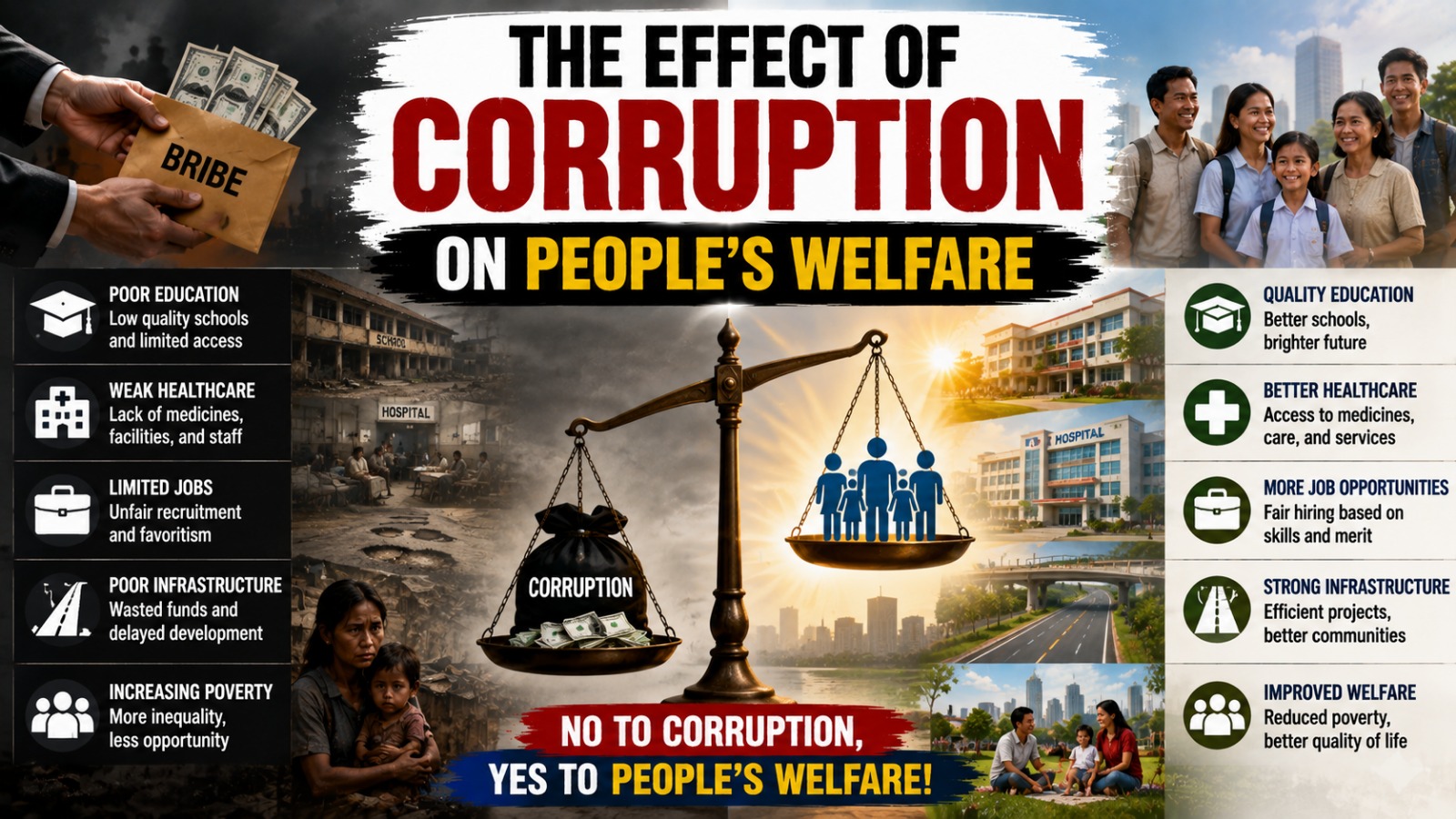
Corruption is one of the biggest obstacles to social and economic development in many countries. It affects governments, businesses, and public institutions by allowing dishonest practices to replace fairness and accountability. While corruption often benefits a small group of individuals, its negative impact is mostly experienced by ordinary people, especially vulnerable communities.
People’s welfare depends on access to quality education, healthcare, employment, infrastructure, and social justice. However, corruption weakens these essential services and creates inequality within society. Understanding the effects of corruption is important for building awareness and encouraging collective efforts to promote transparency and integrity.
UNDERSTANDING CORRUPTION
Corruption refers to the misuse of power, authority, or public resources for personal gain. It can occur in many forms, including bribery, embezzlement, fraud, favoritism, and abuse of authority.
Corruption may happen at high levels of government or in daily public services. Even small corrupt practices can create long-term damage to society and economic stability.
HOW CORRUPTION AFFECTS PEOPLE’S WELFARE?
Corruption has direct and indirect impacts on the quality of life experienced by citizens.
1.REDUCING ACCESS TO PUBLIC SERVICES
Public funds intended for healthcare, education, transportation, and social assistance may be stolen or misused because of corruption.
As a result, communities often experience poor facilities, limited services, and inadequate public support.
2.INCREASING POVERTY
Corruption widens the gap between rich and poor. Resources that should help improve social welfare are often controlled by a small group of people.
Poor communities suffer the most because they depend heavily on public services and government assistance.
3.WEAKENING EDUCATION QUALITY
Corruption in education can lead to unfair admissions, misuse of school funds, and low teaching quality. Students may lose equal opportunities to receive proper education.
In the long term, this weakens human resource development and economic progress.
4.DAMAGING HEALTHCARE SYSTEMS
When healthcare budgets are corrupted, hospitals and clinics may lack medicines, equipment, and professional staff.
Patients may also face illegal fees or unfair treatment, especially those from low-income backgrounds.
5.REDUCING EMPLOYMENT OPPORTUNITIES
Corruption can create unfair recruitment systems where jobs are given based on personal connections or bribery rather than skills and qualifications.
This discourages talented individuals and weakens professional standards.
THE ECONOMIC IMPACT OF CORRUPTION
Corruption does not only affect individuals but also slows national economic growth.
1.DISCOURAGING INVESTMENT
Investors prefer transparent and stable environments. High corruption levels create uncertainty and reduce business confidence.
2.LOWERING GOVERNMENT EFFICIENCY
Corruption increases unnecessary bureaucracy and financial waste, making development projects less effective.
3.SLOWING INFRASTRUCTURE DEVELOPMENT
Public infrastructure such as roads, schools, and public transportation may be poorly built due to misuse of budgets and dishonest contracts.
SOCIAL CONSEQUENCES OF CORRUPTION
Beyond economic damage, corruption also affects social harmony and public trust.
1.LOSING TRUST IN INSTITUTIONS
Citizens may lose confidence in governments, law enforcement, and public institutions if corruption becomes widespread.
2.NORMALIZING DISHONEST BEHAVIOR
When corruption becomes common, some people may begin to see unethical actions as normal and acceptable.
3.INCREASING SOCIAL INEQUALITY
Corruption often benefits powerful groups while disadvantaging ordinary citizens, creating frustration and social division.
SOLUTIONS TO REDUCE CORRUPTION
Fighting corruption requires cooperation from governments, institutions, and society.
1.IMPROVING TRANSPARENCY
Open access to public information can help citizens monitor government activities and reduce opportunities for corruption.
2.STRENGTHENING LAW ENFORCEMENT
Fair legal systems and strict punishment are necessary to discourage dishonest behavior.
3.PROMOTING ETHICAL EDUCATION
Teaching integrity, honesty, and accountability from an early age can help build responsible future generations.
4.USING DIGITAL TECHNOLOGY
Digital systems for public services and financial management can minimize human manipulation and increase accountability.
CONCLUSION
Corruption has serious effects on people’s welfare by reducing access to public services, increasing poverty, weakening education and healthcare, and damaging economic growth. It also destroys public trust and creates social inequality within communities.
Preventing corruption requires transparency, ethical leadership, public participation, and strong legal systems. By promoting honesty and accountability, societies can create fairer opportunities and improve the quality of life for all citizens.
About the Author
Gusti Ayu Tita P
Author — STEKOM University
An active author focused on academic issues, educational technology, and human resource development in the campus environment.















