
The Evolution of City Buses in the Digital Era
Gusti Ayu Tita P
11 Agustus 2026
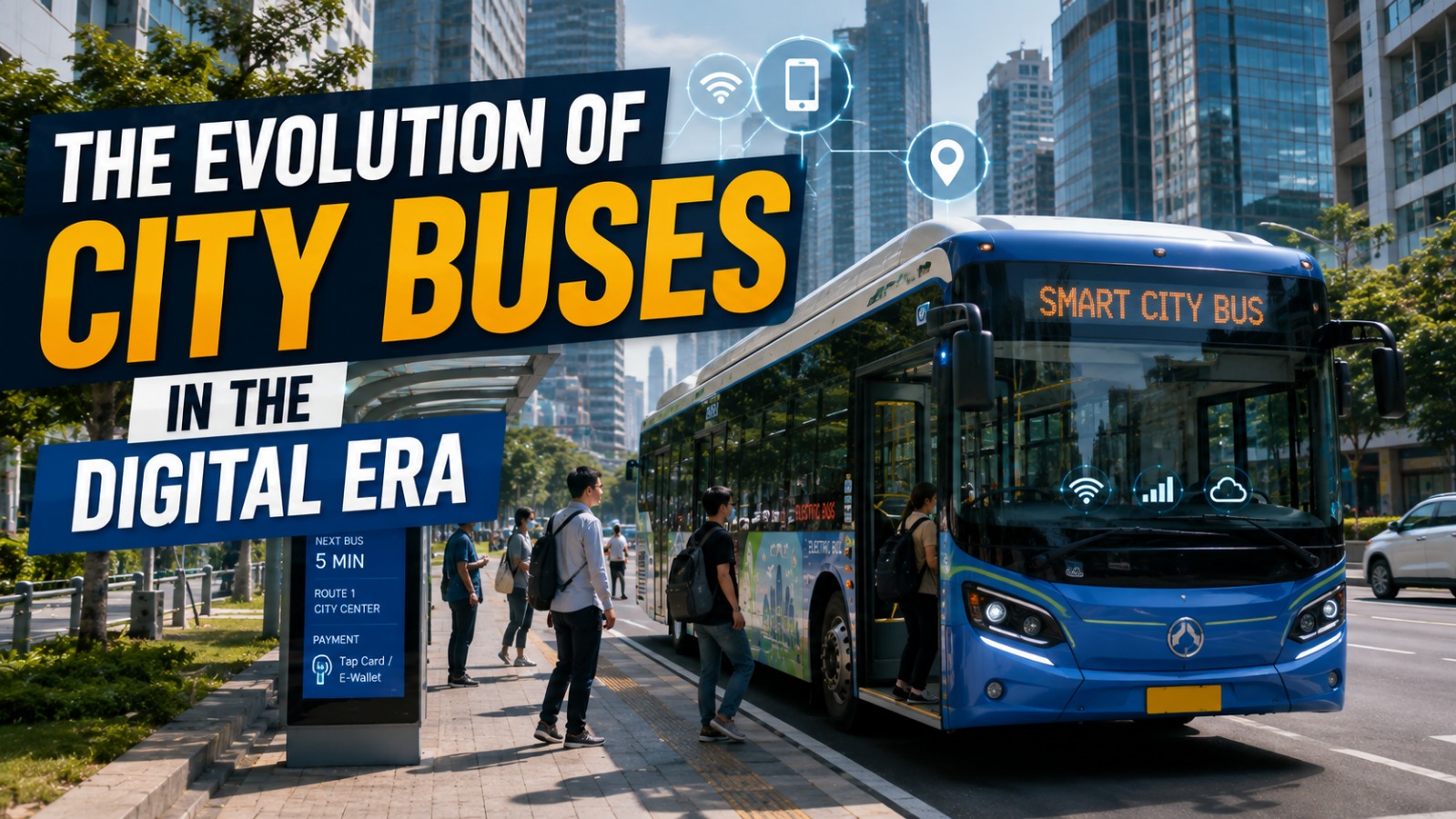
City buses have experienced significant changes as technology continues to influence modern transportation. In the past, buses mainly served as simple vehicles for moving passengers from one location to another. Today, they are becoming part of a connected public transportation system supported by digital technology. These changes aim to make bus services more efficient, comfortable, safe, and accessible.
The digital transformation of city buses includes real-time information, digital payments, fleet monitoring, electric vehicles, and smart transportation systems. Technology allows operators to understand passenger demand and manage vehicles more effectively. At the same time, passengers can access travel information more easily through smartphones and digital displays. This evolution shows that city buses remain important in meeting the mobility needs of growing urban populations.
THE DEVELOPMENT OF CITY BUSES
Modern city buses have developed far beyond their traditional role. Digital systems now help operators monitor vehicle locations, manage routes, and track service performance. Passengers can use mobile applications to check routes, schedules, and estimated arrival times. This makes daily travel more predictable and convenient.
The development of buses is also influenced by changing environmental needs. Many transportation operators are introducing electric buses and other lower-emission technologies to reduce the environmental impact of urban transportation. These vehicles can contribute to cleaner urban air because they produce no direct exhaust emissions while operating. However, their overall environmental benefits also depend on electricity sources and battery production.
DIGITAL PAYMENT SYSTEMS
One of the most noticeable changes in modern bus services is the adoption of digital payment systems. Passengers can pay fares using electronic cards, mobile applications, or digital wallets where these services are available. Cashless payment can make boarding faster and reduce the need for manual transactions. It can also make fare collection easier for transportation operators.
Digital payment systems can provide useful operational data when they are managed responsibly. Operators can analyze travel patterns and passenger demand to improve services. However, transportation providers must maintain strong data protection and privacy practices. Digital convenience should always be balanced with responsible handling of passenger information.
REAL TIME TRAVEL INFORMATION
Access to real-time travel information has changed how passengers plan their journeys. Mobile applications and electronic displays can show bus locations, estimated arrival times, route changes, and service disruptions. This information helps passengers decide when to leave and which route to take. It can also reduce uncertainty, especially during busy travel periods.
Real-time information is particularly valuable when unexpected situations occur. Traffic congestion, road incidents, weather conditions, or temporary route changes can affect bus schedules. When passengers receive timely updates, they can adjust their plans more easily. Better information can therefore improve the overall passenger experience and service reliability.
SMART FLEET MANAGEMENT
Digital technology also changes how bus operators manage their fleets. Fleet management systems can collect information about vehicle locations, routes, fuel or energy use, and operating conditions. Operators can use this information to improve scheduling and identify areas where service adjustments are needed. This can help reduce inefficient operations and improve the use of available buses.
Technology can also support preventive maintenance. Data from vehicles may help operators identify maintenance needs before a minor issue becomes a serious operational problem. Regular maintenance is important for passenger safety and service reliability. A well-managed fleet can provide more consistent transportation while reducing unnecessary downtime.
ELECTRIC BUSES AND SUSTAINABLE TRANSPORTATION
The transition toward electric buses is another important part of modern public transportation. Electric buses use battery-powered motors instead of conventional internal combustion engines. They do not produce direct tailpipe emissions during operation, making them attractive for reducing local air pollution in busy urban areas.
However, adopting electric buses requires more than purchasing new vehicles. Cities also need suitable charging infrastructure, reliable electricity supply, trained personnel, and effective route planning. Battery performance, charging time, operating range, and maintenance requirements must be considered carefully. A successful transition therefore depends on developing the entire supporting transportation system, not just replacing conventional buses.
SMART TECHNOLOGY FOR PASSENGER SAFETY
Safety remains a major priority in the evolution of city buses. Modern buses can use cameras, sensors, GPS tracking, and communication systems to support vehicle and passenger safety. These technologies can help operators monitor vehicles and respond more quickly to certain incidents. They can also provide useful information for investigating operational problems.
Some buses also include automated passenger information systems and accessibility features. Audio announcements, digital displays, and clearer route information can help passengers navigate their journeys more easily. Features such as low floors, ramps, and designated spaces can improve accessibility for people with different mobility needs. Technology is therefore becoming an important tool for creating a safer and more inclusive bus service.
DATA AND ARTIFICIAL INTELLIGENCE IN BUS SERVICES
Data has become a valuable resource for modern transportation management. Operators can analyze passenger numbers, travel times, traffic conditions, and route demand to improve service planning. Artificial intelligence and data analytics can potentially identify patterns that are difficult to detect through traditional methods. These insights can support better decisions about schedules, routes, and fleet allocation.
The use of advanced technology must still be carefully managed. Data systems require reliable infrastructure and appropriate security measures. Operators should also make sure that automated recommendations are reviewed when necessary. Technology should support professional decision-making rather than completely replace human judgment in complex transportation situations.
THE FUTURE OF CITY BUSES
The future of city buses will likely involve greater integration between vehicles, roads, passengers, and other forms of transportation. Connected buses may communicate with traffic management systems and provide more accurate information about changing road conditions. Integration with trains, bicycles, ride-sharing services, and other public transportation modes can make urban journeys more convenient.
Future bus networks may also become increasingly sustainable and data-driven. Electric vehicles, smart charging, intelligent scheduling, and digital ticketing can work together to improve transportation efficiency. However, successful modernization requires investment, reliable infrastructure, skilled workers, and policies that prioritize public transportation. The goal should be to create a system that is not only technologically advanced but also affordable, reliable, safe, and accessible.
CONCLUSION
The evolution of city buses in the digital era demonstrates how technology is transforming traditional public transportation. Digital payments, real-time information, fleet management, electric buses, smart safety systems, and data analytics are changing the way bus services operate. These innovations can improve efficiency while providing passengers with a more convenient travel experience.
Technology alone, however, cannot guarantee better transportation. Successful modernization requires good planning, reliable infrastructure, appropriate regulations, and continuous attention to passenger needs. By combining digital innovation with sustainable transportation planning, city buses can remain an essential part of modern urban mobility and help cities create cleaner, safer, and more efficient transportation systems.
About the Author
Gusti Ayu Tita P
Author — STEKOM University
An active author focused on academic issues, educational technology, and human resource development in the campus environment.















