The Future Of Bank Indonesia Employee Careers In The Era Of Technological Change
Gusti Ayu Tita P
27 Juli 2026
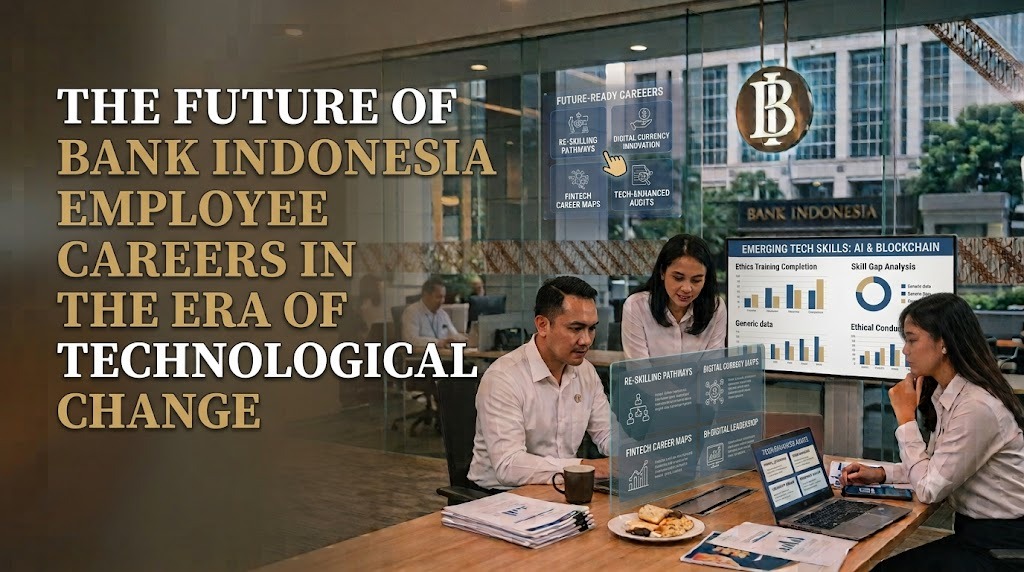
The rapid advancement of technology is transforming the financial industry around the world. As the central bank of Indonesia, Bank Indonesia must continuously adapt to these developments to maintain economic stability and strengthen the national financial system. As a result, the future careers of Bank Indonesia employees will become increasingly dynamic and technology-oriented.
Employees are expected to combine economic expertise with digital capabilities to meet modern workplace demands. They must be ready to work with advanced technologies while maintaining professionalism and integrity. This combination of knowledge and adaptability will shape the future success of Bank Indonesia and its workforce.
THE IMPACT OF TECHNOLOGICAL CHANGE ON BANK INDONESIA EMPLOYEES
Technological change has significantly influenced how financial institutions operate. Digital transformation has introduced new systems for data processing, payment services, and economic analysis. Bank Indonesia employees must understand these innovations to perform their responsibilities more efficiently.
The increasing use of automation and digital platforms does not reduce the importance of employees. Instead, it shifts their roles toward strategic analysis, policy development, and innovation. Employees who continuously improve their digital knowledge will have greater opportunities to succeed in the future.
DEVELOPING DIGITAL COMPETENCE FOR THE FUTURE
One of the most important requirements for future Bank Indonesia employees is strong digital competence. Employees need to understand financial technology, data analytics, artificial intelligence, cybersecurity, and digital payment systems. These skills support better decision-making and improve operational efficiency.
Continuous training is essential for developing these competencies. Employees who actively learn new technologies can adapt more quickly to industry changes. As technology continues to evolve, digital competence will become a key factor in career development.
ENHANCING ADAPTABILITY AND CONTINUOUS LEARNING
Technological innovation creates constant changes in the workplace. Therefore, Bank Indonesia employees must develop adaptability and maintain a lifelong learning mindset. Being open to new knowledge allows employees to remain relevant in an increasingly competitive environment.
Continuous learning can be achieved through professional training, certifications, seminars, and practical experience. Employees who consistently improve their competencies will be better prepared for future responsibilities. Adaptability also enables them to contribute more effectively to organizational success.
MAINTAINING PROFESSIONAL ETHICS IN THE DIGITAL ERA
Technology provides many opportunities, but it also introduces new ethical challenges. Bank Indonesia employees must continue to uphold integrity, transparency, and accountability while working with digital systems. Ethical behavior remains the foundation of public trust.
Employees should protect confidential information, use technology responsibly, and follow institutional regulations. Strong professional ethics ensure that technological innovation supports public interests rather than creating unnecessary risks. This balance is essential for maintaining the credibility of Bank Indonesia.
EXPANDING CAREER OPPORTUNITIES THROUGH INNOVATION
The digital era creates broader career opportunities within Bank Indonesia. Employees with expertise in financial technology, digital payments, cybersecurity, economic research, and data analysis will become increasingly valuable. Innovation opens new career paths that did not exist in previous decades.
Employees who embrace innovation can contribute to developing modern financial services and improving institutional performance. By combining technical expertise with leadership skills, they can prepare themselves for more strategic roles in the future. Innovation therefore becomes an important driver of career growth.
BUILDING FUTURE LEADERS FOR BANK INDONESIA
Future leaders at Bank Indonesia must possess more than technical expertise. They should demonstrate leadership skills, strategic thinking, communication abilities, and the capacity to manage change. Effective leaders inspire teams to adapt and innovate while maintaining organizational values.
Leadership development should begin early through continuous learning and practical experience. Employees who build strong leadership competencies will be better prepared to guide the institution through future economic and technological challenges. These qualities will ensure the long-term success of Bank Indonesia.
CONCLUSION
The future of Bank Indonesia employee careers will be shaped by technological innovation, digital transformation, and continuous competency development. Employees who strengthen their digital skills, analytical abilities, adaptability, and leadership will be well prepared to succeed in an evolving financial environment.
At the same time, professional ethics, integrity, and a commitment to lifelong learning will remain essential values. By combining technology with strong human competencies, Bank Indonesia employees can continue supporting economic stability, financial innovation, and sustainable national development.
About the Author
Gusti Ayu Tita P
Author — STEKOM University
An active author focused on academic issues, educational technology, and human resource development in the campus environment.