
The Future of Functional Positions
Gusti Ayu Tita P
12 Agustus 2026
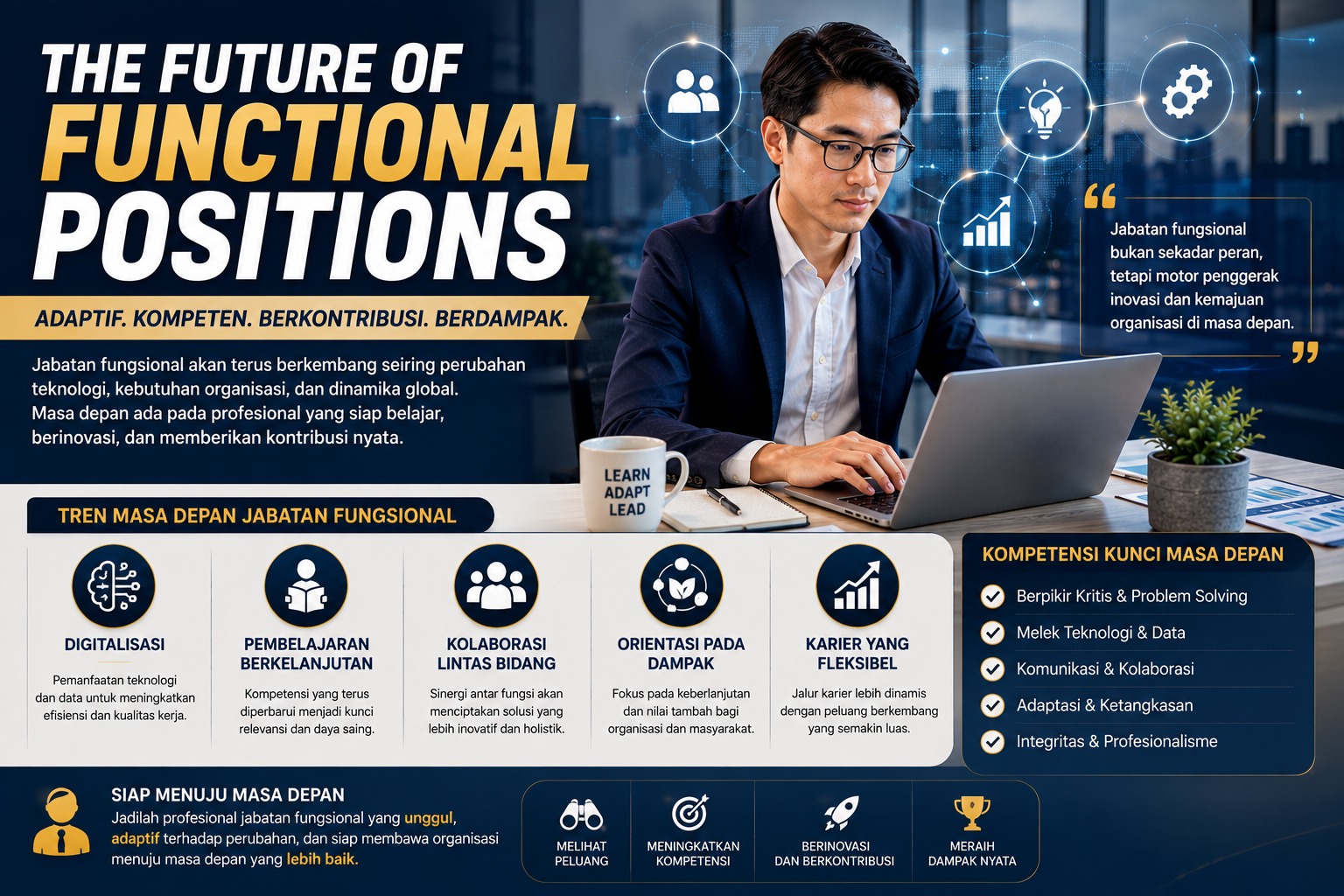
The future of work is experiencing significant changes due to digital transformation, automation, and evolving organizational needs. These changes also influence the development of functional positions across various professional fields. Functional roles are expected to become more strategic because organizations increasingly need specialists who can provide expertise and innovative solutions. Professionals who can adapt their skills will have greater opportunities to build sustainable careers.
Functional positions will no longer focus only on completing technical tasks. In the future workplace, professionals will need to combine specialized knowledge, digital capabilities, problem-solving skills, and adaptability. These abilities will help employees remain valuable contributors while responding to new challenges and opportunities.
THE EVOLUTION OF FUNCTIONAL POSITIONS
Functional positions are evolving from traditional task-oriented roles into more strategic professional roles. Employees are increasingly expected to analyze situations, provide recommendations, and contribute to organizational improvements. This development increases the importance of professional expertise and innovation within functional careers.
Organizations will continue to rely on specialists who can solve complex problems and support decision-making. As challenges become more complicated, professionals with deep knowledge in specific areas will become increasingly valuable. This makes functional positions an important part of future organizational development strategies.
THE IMPACT OF DIGITAL TRANSFORMATION
Digital transformation will significantly influence how functional positions operate. Technologies such as digital platforms, data systems, and automation tools are changing workplace processes. Professionals who understand how to use technology effectively will be better prepared for future demands. Digital competence will become one of the essential skills for functional employees.
However, technology will not replace the importance of professional expertise. Human judgment, creativity, and problem-solving abilities remain necessary in many fields. The future of functional work will depend on how well professionals combine technology with specialized knowledge.
THE IMPORTANCE OF CONTINUOUS LEARNING
Future functional positions will require professionals to maintain a commitment to lifelong learning. Skills that are relevant today may need to be updated as industries and technologies develop. Employees who continuously improve their abilities will have stronger opportunities to remain competitive. Continuous learning will become a key factor in professional success.
Learning can be achieved through training programs, education, workplace experience, and independent exploration. Professionals should focus on developing skills that match both current responsibilities and future career goals. This approach helps create adaptive and future-ready professionals.
DEVELOPING FUTURE PROFESSIONAL COMPETENCIES
The future workplace will require a combination of technical and supporting competencies. Technical expertise will remain essential, but professionals will also need communication, collaboration, creativity, and analytical thinking. These abilities allow employees to handle complex situations more effectively. Professional competency development will become increasingly important.
Future functional professionals should also strengthen their ability to work with changing systems and diverse teams. The ability to learn quickly and adjust to new situations will become a major advantage. Combining expertise with flexible professional skills can support long-term career growth.
GREATER ROLE OF INNOVATION AND PROBLEM SOLVING
Innovation will become an important part of future functional positions. Professionals will be expected to identify opportunities for improvement and create solutions that support organizational goals. Innovation does not always mean developing completely new ideas but can also involve improving existing processes. Problem-solving ability will help professionals respond to complex workplace challenges.
Organizations will value employees who can think critically and provide practical solutions. Functional professionals who understand their field deeply can contribute valuable insights to improve efficiency and quality. This ability can strengthen their position as strategic contributors within organizations.
ADAPTING TO CHANGING WORK ENVIRONMENTS
Future workplaces will continue to experience changes in technology, processes, and professional expectations. Functional professionals need to develop adaptability to remain effective in these conditions. Employees who are open to change can adjust their methods while maintaining professional standards.
Adaptability also involves being prepared for new responsibilities and learning opportunities. Professionals should regularly evaluate their skills and identify areas that need improvement. This mindset allows employees to remain relevant and prepared for future workplace challenges.
BUILDING SUSTAINABLE FUNCTIONAL CAREERS
A successful future functional career requires clear planning and consistent development. Professionals should understand their strengths, identify career goals, and develop skills that support their direction. Strategic career planning helps individuals prepare for future opportunities. Career development will remain an important part of professional success.
Sustainable careers are built through a combination of expertise, experience, adaptability, and continuous improvement. Professionals who invest in their development can create stronger career foundations. By maintaining relevant skills and embracing change, functional employees can achieve long-term professional growth.
CONCLUSION
The future of functional positions will be shaped by technological advancement, continuous learning, innovation, and changing workplace expectations. Professionals need to strengthen their expertise while developing digital skills, adaptability, and problem-solving abilities. Functional roles will become increasingly valuable as organizations require specialized knowledge to address complex challenges. By preparing themselves through continuous development, professionals can build a strong and future-ready functional career.
About the Author
Gusti Ayu Tita P
Author — STEKOM University
An active author focused on academic issues, educational technology, and human resource development in the campus environment.















