
The Future of Hydropower Amid Climate Change
Gusti Ayu Tita P
31 Agustus 2026
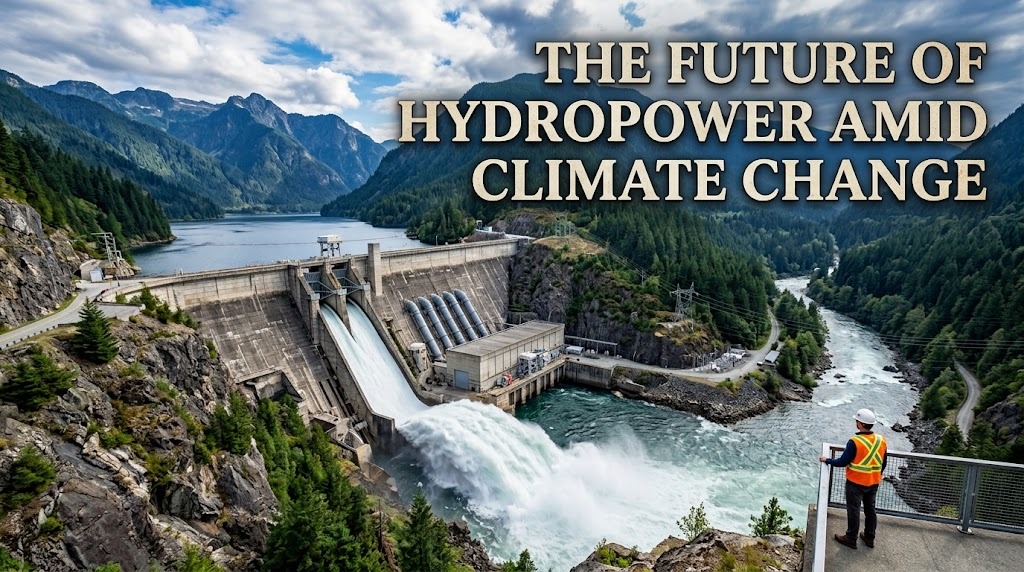
Hydropower has long been an important source of renewable electricity around the world. It uses the natural movement of water to generate power without directly burning fossil fuels during normal operation. Hydropower can also provide valuable flexibility for electricity systems because some plants can adjust their output according to demand.
However, climate change is changing the conditions that hydropower depends on. Rainfall patterns, droughts, floods, evaporation, and seasonal river flows can all influence electricity production. The future of hydropower will therefore depend not only on building new facilities but also on making existing and future plants more resilient.
CLIMATE CHANGE IS ALTERING WATER AVAILABILITY
Water is the primary resource needed to generate hydropower. Changes in rainfall and river runoff can directly affect the amount of water available to turbines. Some regions may receive more water, while others may experience declining runoff or longer dry periods.
The IPCC explains that climate change can alter both the volume and seasonality of water flows, creating different effects from one region to another. This means there is no single global outcome for hydropower. Some locations may see greater generation potential, while others may face significant reductions.
DROUGHT CAN REDUCE POWER GENERATION
Drought is one of the biggest climate-related risks for hydropower. When rainfall decreases and rivers become less productive, reservoirs may receive less water. Lower reservoir levels can reduce the amount of electricity that a plant can generate.
Recent global electricity trends have already shown how drought can affect hydropower output. The IEA reported that global hydropower generation was affected by drought in 2023, followed by a significant recovery in 2024, illustrating how strongly annual production can depend on hydrological conditions.
EXTREME RAINFALL CREATES DIFFERENT RISKS
Climate change is not only associated with drought. More intense rainfall and extreme weather events can also create serious challenges for hydropower infrastructure. Heavy rainfall can increase river flows rapidly and contribute to flooding, landslides, erosion, and debris entering reservoirs.
These conditions can damage dams, turbines, roads, transmission systems, and other infrastructure. Increased sedimentation can also reduce reservoir storage and affect plant equipment. Stronger monitoring, better forecasting, and resilient infrastructure will become increasingly important.
CHANGING SEASONS AFFECT HYDROPOWER
Hydropower plants are often designed around expected seasonal water patterns. Climate change can shift when rainfall occurs or change the timing of snow and glacier melt in mountainous regions. As a result, water may arrive earlier, later, or in different quantities than expected.
Changes in seasonal water availability can make reservoir management more complicated. Operators may need to adjust when water is stored and when it is released for electricity generation. Long-term planning based only on historical weather patterns may become less reliable.
HIGHER TEMPERATURES INCREASE EVAPORATION
Rising temperatures can increase evaporation from reservoirs, particularly in hot and dry regions. Water lost through evaporation is no longer available for electricity generation or other reservoir uses.
The IPCC notes that higher temperatures can contribute to greater surface evaporation, lower water storage, and changes in equipment efficiency. These effects may appear gradually but can become increasingly important over the operating life of a hydropower facility.
CLIMATE CHANGE CAN AFFECT DAM SAFETY
Hydropower dams are designed to manage large quantities of water, but extreme events can test their safety systems. More intense rainfall can produce unusually high inflows that require effective spillway operation and emergency management.
Dam safety therefore needs to consider changing climate conditions. Regular inspections, improved flood forecasting, updated risk assessments, and well-maintained spillways can strengthen resilience. Older infrastructure may also require upgrades if its original design no longer reflects current or future climate risks.
SEDIMENTATION MAY BECOME A GREATER PROBLEM
Heavy rainfall and erosion can increase the amount of sediment carried into rivers and reservoirs. When sediment accumulates, it can gradually reduce the amount of water that a reservoir can store.
Sedimentation can also affect turbines and other equipment. Effective sediment management may include watershed conservation, monitoring, controlled sediment releases where feasible, and engineering measures suited to local conditions. Long-term planning is essential because sediment accumulation can reduce the useful life and performance of reservoirs.
CLIMATE CHANGE CAN CREATE WATER COMPETITION
Hydropower plants are sometimes part of multipurpose water systems. Reservoirs may provide water for electricity, agriculture, drinking supplies, industry, flood management, and ecosystems.
Climate change can increase competition between these uses when water becomes less predictable. More irrigation demand during hot or dry periods, for example, can reduce the amount of water available for electricity generation. Integrated water management will become increasingly important as different sectors compete for limited resources.
MODERNIZATION CAN IMPROVE RESILIENCE
Many hydropower plants have been operating for decades. Modernizing older facilities can improve their efficiency, reliability, monitoring capabilities, and ability to respond to changing conditions.
Upgrades may include more efficient turbines, stronger control systems, improved sensors, better forecasting tools, and upgraded electrical equipment. The IPCC notes that improving hydropower efficiency can help offset some effects of reduced water availability in many regions.
BETTER FORECASTING CAN SUPPORT OPERATIONS
Modern hydropower operations can use weather forecasts, satellite information, river measurements, and hydrological models to estimate future water conditions. Better information allows operators to make more informed decisions about reservoir levels and electricity generation.
Climate and hydrological forecasting can also help prepare for extreme rainfall and drought. Forecasting is not perfect, but improved information can reduce uncertainty. Combining forecasts with flexible operating strategies can make hydropower systems more adaptable.
DIGITAL TECHNOLOGY CAN HELP HYDROPOWER
Digital technology is becoming increasingly useful for monitoring hydropower facilities. Sensors can measure water levels, flow rates, temperature, vibration, equipment performance, and structural conditions.
Data analysis can help identify unusual conditions and support predictive maintenance. Digital systems can also improve coordination between reservoirs, turbines, and electricity networks. When combined with strong cybersecurity and reliable communications, digitalization can improve operational resilience.
HYDROPOWER CAN SUPPORT OTHER RENEWABLES
Despite climate risks, hydropower remains valuable because some facilities can provide flexibility and energy storage. This is particularly useful as electricity systems add more solar and wind power.
Solar and wind output changes with weather conditions, while reservoir hydropower can sometimes adjust generation when electricity demand or renewable output changes. Pumped storage hydropower can also store electricity by moving water to a higher reservoir and releasing it later. This flexibility can support the wider clean-energy transition.
DIVERSIFICATION CAN REDUCE ENERGY RISKS
Climate change demonstrates why electricity systems should not depend excessively on one resource. A drought can reduce hydropower production, while extreme weather can affect other forms of infrastructure.
Combining hydropower, solar, wind, geothermal, batteries, and other low-emission technologies can create a more diversified electricity system. When one resource performs below expectations, other sources may help compensate. Diversification can therefore strengthen both energy security and climate resilience.
WATERSHED PROTECTION IS IMPORTANT
The health of a river basin directly affects hydropower resources. Forest loss, soil degradation, and erosion can increase sediment levels and reduce water quality. Protecting watersheds can help maintain healthier river systems.
Reforestation, erosion control, riparian protection, and sustainable land management can support water-resource management. Watershed conservation should therefore be considered alongside hydropower infrastructure. Protecting the surrounding environment can provide benefits for both electricity generation and local communities.
NEW PROJECTS MUST CONSIDER FUTURE CLIMATE CONDITIONS
Hydropower facilities can operate for many decades. A project designed using only historical climate data may therefore face conditions that were not anticipated during planning.
Future projects should incorporate climate risk assessments, updated hydrological models, extreme-weather scenarios, and flexible operating strategies. The IPCC emphasizes that future hydropower development needs careful siting because climate impacts vary significantly by region.
INDONESIA NEEDS CLIMATE RESILIENT HYDROPOWER
Indonesia has significant hydropower resources, but its location in Southeast Asia means hydropower development must account for changing rainfall patterns and extreme weather. The IEA identifies the Maritime Continent, including Indonesia, Malaysia, and the Philippines, as a region where future hydropower impacts can vary considerably rather than following one simple trend.
For Indonesia, climate-resilient hydropower can involve better watershed management, stronger infrastructure, improved rainfall and river monitoring, efficient turbines, and diversified electricity generation. New projects should consider future water conditions rather than relying entirely on historical patterns. Existing facilities can also be upgraded to improve resilience.
ADAPTIVE MANAGEMENT WILL BECOME MORE IMPORTANT
Climate conditions are not static, so hydropower management cannot rely on one permanent operating strategy. Adaptive management allows operators to modify practices as new climate and hydrological information becomes available.
This approach can include regular risk assessments, updated operating procedures, infrastructure improvements, and emergency planning. Monitoring results can help determine whether existing measures are still effective. Flexible management is especially important for facilities expected to operate for several decades.
THE FUTURE OF HYDROPOWER
The future of hydropower will depend on the ability to combine renewable electricity generation with climate resilience. Plants that use efficient technology, accurate forecasting, strong infrastructure, and responsible water management will be better positioned to handle changing conditions.
Hydropower is unlikely to have the same future in every region. Some areas may experience lower water availability, while others may see changing or even increased runoff. The most successful approach is therefore based on local climate assessments and flexible planning, rather than assuming that all hydropower resources will behave in the same way.
CONCLUSION
Climate change presents both risks and opportunities for the future of hydropower. Droughts, changing rainfall, extreme floods, evaporation, sedimentation, and shifting seasonal flows can affect electricity production and infrastructure. The scale and direction of these impacts vary significantly between regions.
Hydropower can remain an important part of clean electricity systems if it becomes more efficient, diversified, digitally monitored, and climate resilient. Modernizing existing facilities, protecting watersheds, improving forecasting, strengthening dam safety, and integrating hydropower with solar, wind, and storage can reduce vulnerability. The future of hydropower will ultimately depend on how well energy development adapts to a changing climate.
About the Author
Gusti Ayu Tita P
Author — STEKOM University
An active author focused on academic issues, educational technology, and human resource development in the campus environment.