
The Future Of Indonesias Generation Through A High Quality MBG Program
Gusti Ayu Tita P
20 Agustus 2026
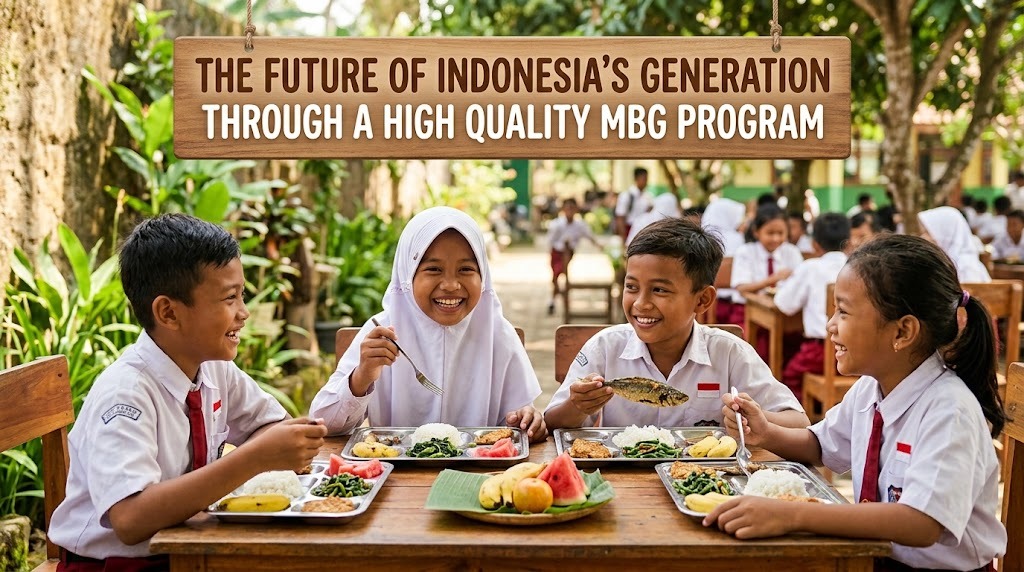
Makan Bergizi Gratis (MBG) is a government program designed to improve access to nutritious food for targeted beneficiaries, particularly children and students. Nutrition is an important foundation for healthy growth, learning readiness, and long term development. A high quality MBG program can provide more than meals because it can also introduce children to balanced nutrition and healthy eating habits. When implemented properly, the program can support the development of a healthier and more capable generation. This makes MBG relevant to Indonesia's efforts to strengthen its future human resources.
THE IMPORTANCE OF NUTRITION FOR INDONESIA'S FUTURE GENERATION
Childhood and adolescence are important periods of physical and cognitive development. During these stages, children require adequate energy, protein, vitamins, minerals, and other essential nutrients. Poor dietary intake can affect growth, health, and the ability to participate comfortably in daily activities. Therefore, improving children's access to nutritious food is an important part of supporting their future.
Nutrition should be viewed as a long term investment rather than simply an immediate need. Children who receive appropriate nutritional support have a stronger foundation for learning, developing skills, and maintaining good health. However, nutrition is only one part of human development and needs to be supported by quality education, healthcare, sanitation, and a safe environment. A comprehensive approach can produce greater benefits for the next generation.
HOW A HIGH QUALITY MBG PROGRAM SUPPORTS CHILDREN
A high quality MBG program should provide meals that contain a balanced combination of nutritious foods. Meals can include staple foods, protein sources, vegetables, fruits, and other ingredients according to nutritional needs and local availability. Menu planning should consider children's age and nutritional requirements. Variety is also important so that children are introduced to different nutritious foods.
The quality of meals can influence whether children actually consume the food provided. Nutritious meals should therefore also be safe, fresh, appealing, and appropriate for children's preferences. Feedback from students can help identify foods that are frequently consumed or wasted. This can support continuous improvement in menu quality and meal acceptance.
SUPPORTING PHYSICAL GROWTH AND DEVELOPMENT
Adequate nutrition provides children with nutrients needed for normal physical growth and development. Protein supports the growth and maintenance of body tissues, while carbohydrates provide energy for daily activities. Vitamins and minerals support various physiological processes. A balanced diet helps children obtain these nutrients from different food sources.
MBG can complement the food children receive at home by providing an additional nutritious meal during school activities. This is particularly relevant for children who may have differences in access to food because of household or geographical conditions. However, the program should not be considered a replacement for a balanced diet throughout the day. Healthy eating at home and at school should work together.
SUPPORTING LEARNING AND COGNITIVE DEVELOPMENT
Nutrition is closely related to children's ability to function during school activities. Hunger and inadequate dietary intake can make it more difficult for students to remain comfortable and engaged in learning. Providing a nutritious meal can help address immediate hunger and provide energy for school activities. This can create better conditions for learning readiness and classroom participation.
Academic performance itself is influenced by many factors, including teaching quality, learning environments, motivation, attendance, and family support. Therefore, MBG should be viewed as a supporting component rather than a direct guarantee of higher grades. When combined with effective education, nutrition can contribute to a stronger foundation for children's development. A healthy student is better positioned to take advantage of educational opportunities.
PROMOTING HEALTHY EATING HABITS
MBG can introduce children to balanced eating patterns through regular exposure to nutritious meals. Students may become more familiar with vegetables, fruits, fish, eggs, legumes, and other nutritious ingredients. Repeated positive experiences with different foods can support healthier food preferences. Nutrition education can strengthen this process by explaining why different foods are important.
Healthy eating habits should continue outside school. Parents can reinforce what children learn by offering varied and nutritious meals at home. Schools can also encourage children to drink enough water and understand the importance of dietary balance. Cooperation between families and schools can help turn temporary exposure into lasting healthy habits.
REDUCING NUTRITIONAL INEQUALITY
Children in Indonesia do not all have the same access to nutritious food. Differences in household resources, food prices, geography, and availability can influence dietary quality. MBG can provide additional nutritional support to children through an organized school meal system. This can contribute to more equal access to nutritious food.
Equal access does not mean that every community has identical food resources or menus. Regional conditions need to be considered when planning and distributing meals. Local ingredients can be used when they meet appropriate nutritional and food safety requirements. Adapting implementation to local conditions can make the program more effective while maintaining its core nutritional objectives.
ENSURING FOOD SAFETY AND QUALITY
A high quality MBG program must prioritize food safety from procurement to serving. Ingredients need to come from appropriate sources and be handled under suitable conditions. Food preparation areas and equipment should be maintained according to hygiene requirements. Safe transportation and storage are also important to protect meals before they reach students.
Food safety becomes especially important when meals are prepared and distributed on a large scale. Consistent standards, trained food handlers, monitoring, and clear procedures can reduce potential risks. Regular evaluation can identify weaknesses in the food supply chain. Maintaining safety is essential because nutritious food must also be safe to consume.
INVOLVING FAMILIES AND COMMUNITIES
The long term influence of MBG depends partly on what happens outside school. Families can support the program by providing nutritious food at home and encouraging healthy eating behavior. Parents can also discuss the meals children receive and help them understand the importance of different food groups. This creates a stronger connection between school nutrition and household habits.
Communities can also contribute to successful implementation. Local suppliers, community organizations, schools, and other stakeholders can support food preparation, distribution, education, and monitoring where appropriate. Community involvement can make programs more responsive to local conditions. Cooperation can also strengthen public awareness and accountability.
SUPPORTING LOCAL FOOD SYSTEMS
Indonesia has a wide variety of local food resources, including agricultural products, fisheries, livestock products, fruits, and vegetables. Using suitable local ingredients in MBG menus can support dietary diversity and local food systems. Local sourcing may also create opportunities for qualified farmers, fishers, and food producers. This can connect nutritional improvement with broader economic activity.
However, local sourcing must meet appropriate standards for safety, quality, and reliability. Suppliers need to provide ingredients consistently and according to program requirements. Effective coordination can help manage seasonal availability and regional differences. A strong local supply chain can support both food quality and program sustainability.
BUILDING FUTURE HUMAN RESOURCES
Today's children will become tomorrow's workers, professionals, entrepreneurs, leaders, and community members. Their health and development can influence their ability to contribute to society in the future. MBG can support this process by strengthening access to nutrition during important developmental periods. In this sense, nutrition can be considered part of human capital development.
However, producing high quality human resources requires more than nutritious meals. Children also need quality education, relevant skills, character development, digital literacy, and opportunities to develop their potential. MBG can provide one important foundation within this broader development strategy. When different sectors work together, Indonesia can create stronger conditions for a healthy, skilled, and productive generation.
CHALLENGES IN BUILDING A HIGH QUALITY MBG PROGRAM
Implementing a large nutrition program involves several challenges. These may include maintaining food safety, ensuring nutritional quality, managing distribution, reducing food waste, and reaching beneficiaries across different geographic areas. Differences in local infrastructure and food availability can require different implementation strategies. These challenges need to be addressed through careful planning and continuous improvement.
Monitoring and evaluation are essential for maintaining program quality. Information about meal acceptance, food waste, nutritional composition, distribution, and food safety can help identify areas that require improvement. Feedback from students, schools, families, and other stakeholders can also provide useful insights. Evidence based decision making can help ensure that resources are used effectively.
CONCLUSION
The future of Indonesia's generation is closely connected to the quality of investments made in children's health and development today. A high quality MBG program can contribute by improving access to nutritious meals, supporting healthy growth, encouraging better eating habits, and creating better conditions for learning. Its success depends on more than food distribution because nutrition, food safety, menu quality, education, family involvement, and continuous evaluation must work together. MBG should also complement other investments in education, healthcare, sanitation, and human development. With consistent and responsible implementation, MBG can become an important foundation for creating a healthier, more capable, and more productive Indonesian generation.
About the Author
Gusti Ayu Tita P
Author — STEKOM University
An active author focused on academic issues, educational technology, and human resource development in the campus environment.















