
The Future Of The Entertainment Content Industry In The Digital Era
Gusti Ayu Tita P
7 Agustus 2026
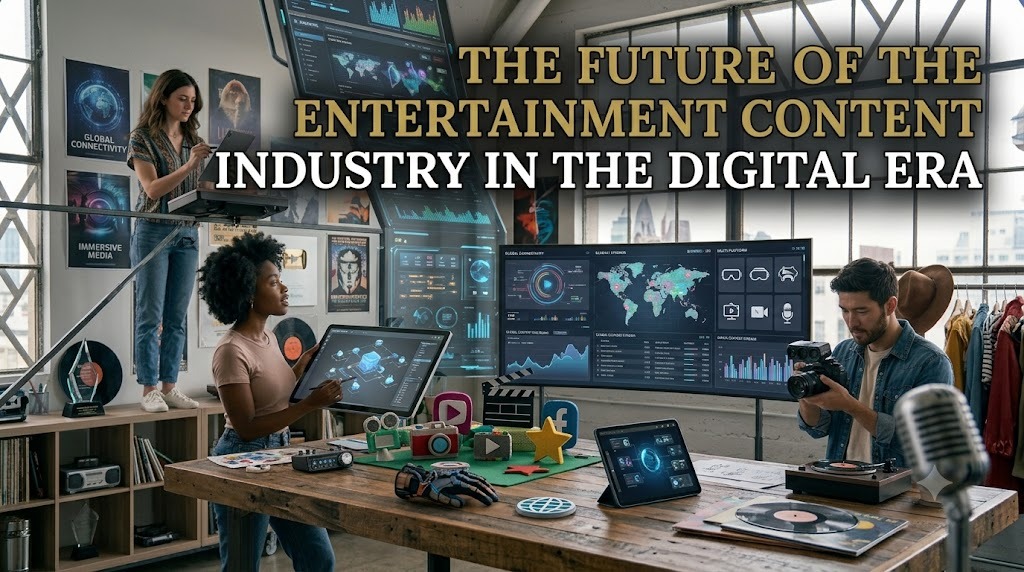
The entertainment content industry continues to change as technology and digital platforms become part of everyday life. Audiences can now access movies, music, games, podcasts, livestreams, and short videos through smartphones and other connected devices. This change has created new opportunities for creators, media companies, and digital platforms to reach wider audiences. At the same time, competition is becoming stronger because people have more content choices than ever before. Understanding these changes is important for anyone who wants to follow the future development of digital entertainment.
THE GROWTH OF DIGITAL ENTERTAINMENT
Digital platforms have changed how people discover and consume entertainment. Instead of depending mainly on television, radio, or physical media, audiences can choose content whenever and wherever they want. Streaming services, social media platforms, and digital applications provide flexible access to different forms of entertainment. This convenience has encouraged audiences to spend more time exploring personalized content. It has also created opportunities for smaller creators to reach audiences without relying entirely on traditional media companies.
The growth of digital entertainment is also supported by better internet access and increasingly capable mobile devices. High-quality video, interactive features, and real-time communication can now be accessed by many users. As technology develops further, entertainment experiences are likely to become more connected and personalized. However, creators must continue improving their content because audiences can easily switch between platforms.
PERSONALIZED CONTENT WILL BECOME MORE IMPORTANT
Personalization is expected to play an increasingly important role in the future of entertainment. Digital platforms can recommend content based on viewing behavior, interests, and previous interactions. This allows audiences to discover videos, music, films, or other entertainment that matches their preferences. Personalized entertainment can improve the user experience because people do not have to search through large amounts of unrelated content.
For creators, understanding audience preferences will become increasingly valuable. Data and audience feedback can help creators identify popular topics, formats, and presentation styles. However, personalization should still be balanced with originality and audience diversity. Content creators should avoid relying entirely on automated recommendations and continue developing creative ideas that can offer something different.
ARTIFICIAL INTELLIGENCE AND CREATIVE TECHNOLOGY
Artificial intelligence is becoming an important technology in many parts of the entertainment industry. It can support tasks such as content recommendations, editing assistance, translation, visual production, and audience analysis. These tools may help creators work more efficiently and experiment with new forms of digital creativity. AI can also help organizations manage large amounts of content and understand audience behavior.
However, technology does not completely replace human creativity. Original ideas, emotional understanding, cultural awareness, and storytelling still require meaningful human input. The future will likely involve collaboration between creators and digital tools rather than relying entirely on automation. Ethical use, transparency, copyright protection, and responsible content production will also remain important considerations.
THE RISE OF SHORT FORM AND INTERACTIVE CONTENT
Short-form videos have become an important part of digital entertainment because they are easy to access and consume. Audiences can watch short content during breaks, while traveling, or between daily activities. Platforms that support short videos have also made it easier for creators to experiment with trends and creative formats. This does not mean long-form content will disappear, but creators may increasingly combine different formats to reach different audiences.
Interactive entertainment is another area with strong potential. Livestreams, polls, comments, online games, and audience participation can make viewers feel more involved. Interactive content can create a stronger relationship between creators and audiences because communication happens in both directions. In the future, entertainment may become increasingly participatory rather than simply something audiences watch passively.
THE IMPORTANCE OF CREATOR ECONOMY
The creator economy is changing the structure of the entertainment industry. Independent creators can build audiences through social media, video platforms, podcasts, and other digital channels. They can also earn income through advertising, subscriptions, sponsorships, memberships, merchandise, and other business models. This creates opportunities for talented individuals who may not have access to traditional entertainment companies.
As competition increases, creators will need more than popularity to build sustainable careers. Personal branding, consistency, audience trust, and content quality can become important advantages. Creators may also need to understand basic business, marketing, copyright, and financial management. Those who combine creative skills with professional strategies may have better opportunities to grow in the long term.
IMMERSIVE ENTERTAINMENT EXPERIENCES
Emerging technologies can create new ways for audiences to experience entertainment. Virtual reality, augmented reality, and other immersive technologies can provide experiences that feel more interactive than traditional screens. These technologies can be used for gaming, live events, storytelling, virtual concerts, and educational entertainment. As devices become more accessible, immersive entertainment may gradually reach a wider audience.
The future of immersive content will depend on affordability, accessibility, and user experience. Technology alone is not enough to make an entertainment product successful. The experience must provide meaningful value and remain comfortable and easy to use. Immersive entertainment is therefore likely to develop alongside improvements in hardware, software, and creative storytelling.
CHALLENGES FACING THE ENTERTAINMENT INDUSTRY
Despite its opportunities, the digital entertainment industry faces several challenges. Content saturation makes it difficult for creators to attract and retain audience attention. Copyright issues, misinformation, online harassment, privacy concerns, and changing platform policies can also affect creators and companies. Audiences may become overwhelmed when they are presented with too many entertainment choices.
Another challenge is maintaining quality while producing content consistently. Creators may feel pressure to follow trends or publish frequently, which can reduce originality and production quality. The industry therefore needs a balance between speed, creativity, responsibility, and sustainability. Strong content standards and responsible digital practices will be increasingly important as the industry continues to expand.
WHAT THE FUTURE MAY LOOK LIKE
The future of entertainment will likely be more digital, personalized, interactive, and creator-driven. Audiences will have greater control over what they watch, listen to, and experience. At the same time, creators will have more opportunities to build direct relationships with their communities. New technologies may provide additional tools for storytelling and content production.
However, technology will only be one part of the transformation. Human creativity, originality, trust, and emotional connection will remain important factors in successful entertainment. Companies and creators that understand audience needs while adapting responsibly to technological changes can remain competitive. The most successful future entertainment experiences are likely to combine innovation with meaningful and enjoyable content.
CONCLUSION
The future of the entertainment content industry offers significant opportunities as digital technology continues to develop. Streaming, short-form videos, artificial intelligence, interactive platforms, and immersive experiences are changing how entertainment is created and consumed. At the same time, creators must deal with stronger competition, content saturation, copyright concerns, and changing audience expectations. Success will require a combination of creativity, technology, responsibility, and audience understanding. By adapting to change while maintaining quality and originality, the entertainment industry can continue to grow in the digital era.
About the Author
Gusti Ayu Tita P
Author — STEKOM University
An active author focused on academic issues, educational technology, and human resource development in the campus environment.















