
The Future of the Notary Profession in the Digital Era
Gusti Ayu Tita P
23 Juli 2026
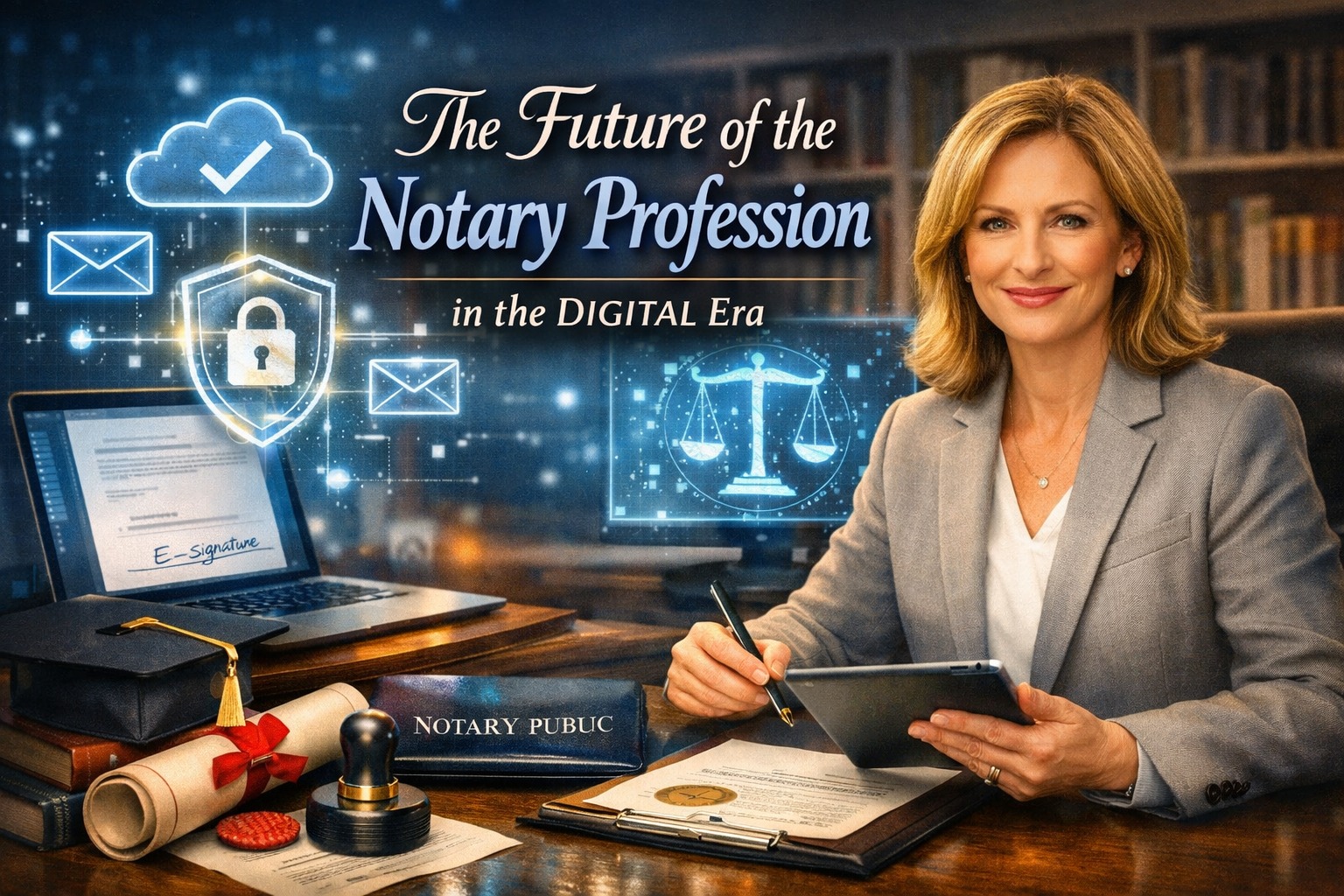
The notary profession has always played a critical role in ensuring the authenticity, legality, and security of important documents. As technology continues to reshape industries worldwide, the legal sector is also embracing digital transformation. Today, digital notary services, electronic signatures, and online verification systems are becoming increasingly common in many countries. These innovations are changing how notaries perform their duties while maintaining legal certainty and public trust.
The future of the notary profession is not about replacing human expertise with technology. Instead, it is about combining professional legal knowledge with digital innovation to provide faster, safer, and more efficient services. Notaries who adapt to technological developments will remain highly valuable in an increasingly connected world.
THE DIGITAL TRANSFORMATION OF NOTARY SERVICES
The rapid growth of digital technology has significantly changed the way legal services are delivered. Many governments and legal institutions have introduced electronic documentation, digital identity verification, and secure online platforms to simplify administrative processes. These innovations help reduce paperwork, improve efficiency, and make legal services more accessible to clients.
For the notary profession, digital transformation means integrating technology without compromising legal integrity. While physical meetings remain necessary in some jurisdictions, many preliminary processes such as document preparation, appointment scheduling, and identity verification can now be completed digitally. This creates a more convenient experience while preserving the reliability of notarized documents.
THE ROLE OF DIGITAL NOTARIZATION IN MODERN LEGAL SERVICES
One of the biggest innovations shaping the future is digital notarization. This process allows notaries to verify identities, witness signatures, and authenticate documents using secure electronic systems where legally permitted. Digital notarization reduces travel time, accelerates document processing, and improves accessibility for individuals and businesses.
However, digital notarization requires strong cybersecurity measures and compliance with legal regulations. Encryption technology, multi-factor authentication, and secure digital records help protect confidential information and prevent fraud. As technology advances, these security measures will continue to strengthen trust in digital legal services.
EMERGING TECHNOLOGIES SHAPING THE NOTARY PROFESSION
Several emerging technologies are expected to redefine the future of notarial work. Artificial Intelligence (AI) can assist in reviewing documents, detecting inconsistencies, and improving administrative efficiency. Although AI can support routine tasks, it cannot replace the legal judgment, ethical responsibility, and professional accountability of a qualified notary.
Another important technology is blockchain, which offers secure and tamper-resistant digital records. Blockchain can create permanent transaction histories that increase transparency and reduce the risk of document alteration. Combined with cloud-based systems, blockchain may become an essential tool for future notarial services.
CHALLENGES FACING NOTARIES IN THE DIGITAL ERA
Despite numerous opportunities, digital transformation also presents significant challenges. Cybersecurity threats, identity theft, and data breaches require notaries to implement advanced security protocols and continuously update their knowledge of digital risks. Protecting sensitive client information remains one of the highest priorities.
In addition, legal regulations vary across countries and jurisdictions. Some regions fully recognize electronic notarization, while others still require traditional face-to-face procedures. Notaries must stay informed about evolving laws and ensure every digital process complies with applicable legal standards.
ESSENTIAL SKILLS FOR FUTURE NOTARIES
The future notary will need more than legal expertise. Digital literacy, cybersecurity awareness, and the ability to operate secure electronic platforms will become essential professional skills. Continuous education will help notaries adapt to technological developments and maintain high-quality legal services.
Strong communication and ethical decision-making will remain equally important. Clients still rely on notaries for independent legal guidance, document authentication, and protection against fraud. Technology may improve efficiency, but professional integrity, accuracy, and public trust will always define the success of a notary.
WHY THE HUMAN ROLE OF A NOTARY WILL REMAIN ESSENTIAL
Although automation continues to evolve, many legal responsibilities require human judgment that technology cannot replicate. A notary carefully verifies identities, evaluates legal capacity, explains legal implications, and ensures that parties voluntarily enter into agreements. These responsibilities involve ethical considerations beyond the capabilities of automated systems.
The relationship between technology and notaries should therefore be viewed as a partnership rather than a replacement. Digital tools enhance productivity and reduce administrative burdens, allowing notaries to focus on delivering accurate legal advice, ensuring compliance, and protecting the rights of all parties involved.
CONCLUSION
The future of the notary profession will be shaped by the successful integration of digital technology and professional legal expertise. Innovations such as digital notarization, electronic signatures, Artificial Intelligence, blockchain, and secure identity verification will improve efficiency while maintaining legal certainty. Although technology will transform many administrative processes, the professional judgment, ethical responsibility, and public trust provided by qualified notaries will remain irreplaceable. By embracing continuous learning and technological innovation, notaries can continue to serve society with reliable, secure, and legally compliant services in the digital era.
About the Author
Gusti Ayu Tita P
Author — STEKOM University
An active author focused on academic issues, educational technology, and human resource development in the campus environment.















