The Future of Train Stations in the Era of Smart Transportation
Gusti Ayu Tita P
10 Agustus 2026
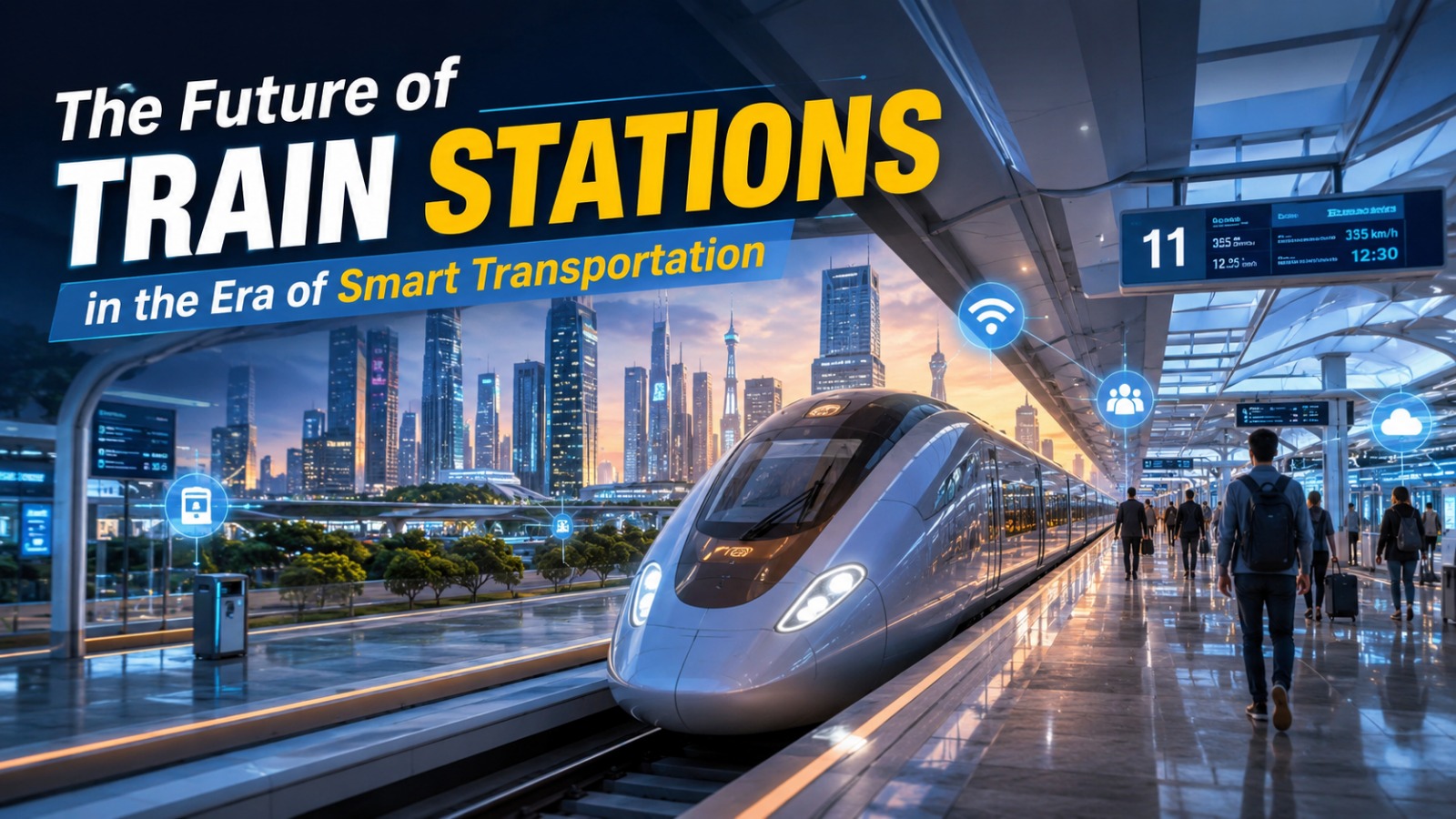
The development of transportation technology is changing the way people travel and interact with public transportation. Train stations are no longer designed only as places for passengers to wait and board trains. In the future, they are expected to become smart transportation hubs that connect railway services with digital technology, other mobility options, and community facilities. These changes can make transportation faster, safer, more accessible, and more sustainable. Understanding the future of train stations is important as cities continue to grow and mobility needs become more complex.
THE RISE OF SMART TRAIN STATIONS
A smart train station uses digital technology and connected systems to improve transportation services and station operations. Sensors, digital information displays, automated systems, and data platforms can help operators understand how passengers use station facilities. This information can be used to improve passenger flow, manage resources, and respond to operational problems. Smart systems can also provide travelers with more accurate and timely information.
The development of smart stations is closely connected to the broader concept of smart transportation. Instead of operating railway services independently, stations can connect trains with buses, bicycles, pedestrian networks, and other mobility services. This creates a more integrated transportation experience. The goal is to make different parts of a journey work together more efficiently.
ARTIFICIAL INTELLIGENCE IN STATION MANAGEMENT
Artificial intelligence may play a growing role in future railway operations. AI systems can analyze large amounts of information about passenger movement, train schedules, station conditions, and equipment performance. This information can help operators identify patterns and make better operational decisions. AI may also assist with predicting crowding or identifying potential maintenance problems.
For passengers, AI could support more personalized travel information. Systems may recommend alternative routes when disruptions occur or help passengers find the fastest connection between different transportation services. However, the use of AI should be managed responsibly. Data privacy, transparency, and security must remain important considerations as smart technologies become more common.
DIGITAL AND CONTACTLESS TRAVEL
Future train stations are likely to provide increasingly digital and contactless travel services. Passengers may purchase tickets through mobile applications and use electronic tickets or approved contactless systems to enter stations. Automated processes can reduce queues and make station access more efficient. Digital systems can also provide passengers with travel confirmations and real-time updates.
The expansion of digital services should not eliminate human assistance completely. Some passengers may have limited access to smartphones, digital payment methods, or online services. Stations should therefore maintain suitable alternatives for people who need assistance. Inclusive digital transformation means making technology convenient without making traditional support inaccessible.
REAL TIME INFORMATION SYSTEMS
Reliable information is essential for a smooth railway journey. Future stations will likely use more advanced real-time information systems to provide updates about train arrivals, departures, delays, platform changes, and transportation connections. Information can be displayed on digital screens, mobile applications, and other communication channels. This can help passengers make better decisions during their journeys.
Real-time information can become even more useful when different transportation systems are connected. A passenger could receive information about a train delay and immediately see alternative bus or rail connections. This type of integrated information can reduce uncertainty during disruptions. Connected travel information can make the entire transportation network more responsive.
SMART WAYFINDING AND ACCESSIBILITY
Large stations can be difficult to navigate, especially for tourists, elderly passengers, and first-time visitors. Future stations may use smart wayfinding systems to provide clearer directions to platforms, exits, ticket gates, restrooms, and other facilities. Mobile applications could potentially provide step-by-step directions based on a passenger's destination.
Accessibility should be included in the design of these systems. Future stations can provide elevators, ramps, tactile pathways, accessible signs, and digital information that is easier for different users to understand. Technology can support passengers with different mobility and communication needs. Universal accessibility should remain a central part of smart station development.
SUSTAINABLE AND ENERGY EFFICIENT STATIONS
The future of train stations will also be strongly connected with sustainability. Stations can use energy-efficient lighting, smart building management systems, renewable energy, efficient water systems, and environmentally responsible materials. Sensors can help adjust lighting, ventilation, and other systems according to actual station usage. This can reduce unnecessary resource consumption.
Sustainability should also extend beyond the station building. Stations can encourage walking, cycling, buses, and other forms of shared transportation. Bicycle parking and safe pedestrian connections can make it easier for passengers to reach stations without private vehicles. Green station design can therefore support both environmental goals and better mobility.
INTEGRATION WITH OTHER TRANSPORTATION MODES
Future train stations are likely to become important multimodal transportation hubs. Instead of focusing only on trains, stations can provide seamless connections with buses, urban rail, bicycles, taxis, ride-hailing services, and pedestrian networks. Passengers should be able to move between these services with minimal confusion and unnecessary waiting.
Integrated transportation can improve the efficiency of entire cities. When transfers are convenient, people may become more willing to use public transportation instead of private vehicles. Clear information, coordinated schedules, and well-designed transfer areas are essential for this approach. Seamless mobility will be an important goal for future station development.
IMPROVING PASSENGER COMFORT
Technology can make stations more comfortable as well as more efficient. Future facilities may include smart waiting areas, high-speed internet, charging stations, digital information services, improved climate control, and comfortable seating. Sensors can help operators monitor environmental conditions and respond when facilities require attention.
Passenger comfort should also include cleanliness, safety, and accessibility. A technologically advanced station will not be successful if passengers find it confusing or uncomfortable to use. Human-centered design should therefore guide technological development. Passenger experience should remain at the center of every major station improvement.
SMART SECURITY AND SAFETY
Security technology will likely become more sophisticated as train stations become more connected. Smart surveillance, access control, emergency communication systems, and automated monitoring can help station operators respond to potential risks. Data from different systems may provide a broader understanding of station conditions.
Technology should support trained personnel rather than replace human judgment completely. Emergencies often require decisions based on circumstances that automated systems may not fully understand. Clear emergency procedures and staff training will remain essential. Technology and human expertise must work together to create safe stations.
STATIONS AS COMMUNITY AND ECONOMIC CENTERS
Future train stations may become more than transportation facilities. They can combine commercial areas, public services, community spaces, offices, retail facilities, and green areas within or around station complexes. This can create active urban spaces that remain useful throughout the day.
Well-planned station development can also support regional economic activity. Businesses can benefit from passenger traffic, while communities can gain better access to employment, education, and services. However, development should be planned carefully to avoid excessive congestion or unequal benefits. Community-centered station planning can help ensure that smart transportation supports broader social and economic goals.
CHALLENGES OF SMART TRAIN STATION DEVELOPMENT
Despite its advantages, smart station development also creates challenges. Installing advanced technology can require significant investment, regular maintenance, and skilled personnel. Older stations may need major upgrades to support new digital systems. Cybersecurity and data protection are also important because connected systems may handle sensitive operational or passenger information.
Another challenge is the digital divide. Not every passenger has the same access to smartphones, internet services, or digital payment methods. Future stations must therefore provide multiple ways to access essential services. Smart transportation should improve convenience without excluding passengers who are less familiar with technology. Technology must remain accessible, reliable, and user-friendly.
THE FUTURE OF TRAIN STATIONS
The future train station will likely be a highly connected environment where railway transportation, digital technology, sustainability, and community services work together. Artificial intelligence, real-time information, smart energy systems, automated services, and integrated transportation networks can improve how stations operate. These technologies can also provide passengers with faster and more personalized travel experiences.
However, successful smart stations will not be defined by technology alone. The most effective stations will combine innovation with safety, accessibility, sustainability, affordability, and human support. Governments, railway operators, technology providers, businesses, and communities will need to work together to develop suitable solutions. Future-ready train stations should ultimately make transportation easier and better for a wide range of passengers.
CONCLUSION
The future of train stations in the era of smart transportation will be shaped by digital innovation, artificial intelligence, sustainability, accessibility, and integrated mobility. Smart systems can improve passenger information, station management, security, energy efficiency, and transportation connections. At the same time, future development must address privacy, cybersecurity, affordability, and the needs of passengers who may not use digital technology. A successful smart station should place people at the center of technological development. By combining innovation with sustainable and inclusive planning, train stations can become essential foundations of the transportation systems of the future.
About the Author
Gusti Ayu Tita P
Author — STEKOM University
An active author focused on academic issues, educational technology, and human resource development in the campus environment.