
The Growth Of Rental Houses Along With Urban Development
Gusti Ayu Tita P
21 Agustus 2026
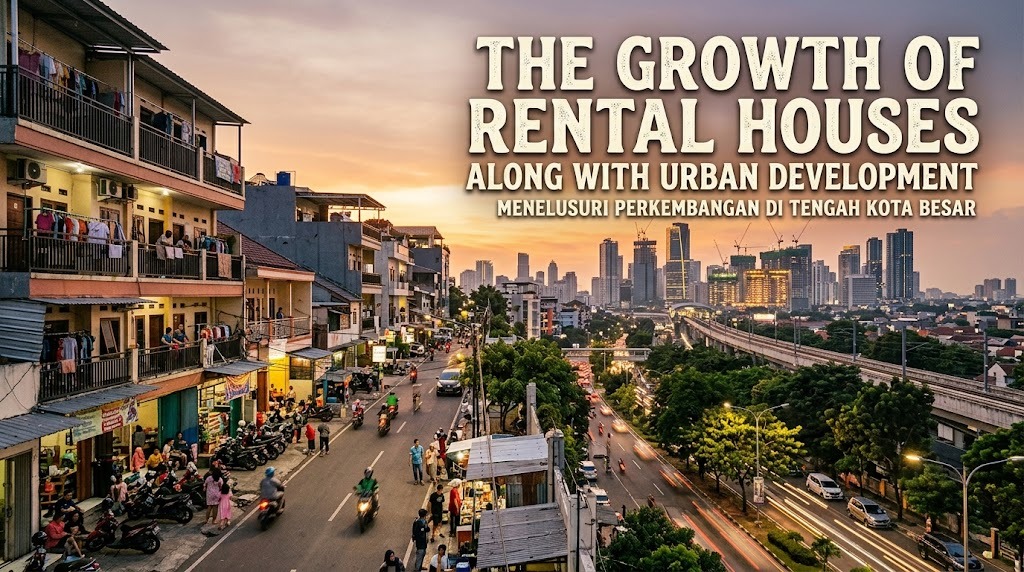
Urban development continues to change how people live, work, and choose housing. As cities expand, more people move toward urban areas to find jobs, education, business opportunities, and better access to public services. This population movement creates greater demand for different types of housing, including rental houses. Rental properties can provide a practical option for people who need accommodation without immediately purchasing a home. As a result, the growth of rental houses is closely connected to urban development and changing housing needs.
TRANSPORTATION SUPPORTS RENTAL HOUSING GROWTH
Transportation infrastructure plays an important role in determining where rental housing becomes attractive. Properties located near public transportation, major roads, train stations, and other important routes can provide easier access to workplaces and educational institutions. Convenient transportation can make a location more appealing even when it is outside the city center. This can encourage rental housing development in surrounding areas.
Improved transportation can also influence property demand over time. When commuting becomes easier, people may be willing to live farther from their workplace or campus. However, investors should examine actual travel times, transportation reliability, and accessibility rather than relying only on planned infrastructure. Connectivity is a key factor in the development of successful rental areas.
CHANGING LIFESTYLES INCREASE RENTAL DEMAND
Modern lifestyles are becoming more flexible, particularly among younger workers and professionals. Many people change jobs, move between cities, or work remotely at different stages of their careers. These changes can make long term home ownership less convenient for some individuals. Rental housing provides the flexibility needed by people whose personal and professional circumstances may change.
Students and young professionals also tend to prioritize convenient locations and manageable monthly costs. They may prefer housing close to workplaces, campuses, entertainment areas, and essential services. Rental properties can adapt to these preferences through different sizes, facilities, and rental arrangements. Changing lifestyle patterns are helping reshape urban housing demand.
TECHNOLOGY CHANGES THE RENTAL PROPERTY MARKET
Technology has made it easier for landlords and tenants to connect. Online property platforms allow people to compare rental prices, locations, facilities, photographs, and property conditions without visiting every property in person. Digital communication can also simplify inquiries, appointments, payment processes, and property management. These developments have made the rental market more accessible to both property owners and tenants.
Technology also affects what tenants expect from rental properties. Reliable internet access has become increasingly important for students, remote workers, and digital professionals. Smart security systems and digital property management tools may also improve convenience. Technology is becoming an important part of modern rental housing.
RENTAL HOUSES SUPPORT URBAN ECONOMIC ACTIVITY
The rental housing sector can contribute to economic activity in growing cities. Property construction, renovation, maintenance, cleaning, security, and management create demand for different services and workers. Tenants also spend money at nearby restaurants, markets, transportation services, shops, and other local businesses. As rental communities grow, they can contribute to the development of surrounding commercial areas.
A healthy rental market can therefore become part of a broader urban economy. However, rapid rental growth should be supported by appropriate infrastructure and responsible development. If housing supply does not keep pace with demand, rental prices may become difficult for lower income households. Balanced urban planning is necessary to ensure rental housing growth benefits the wider community.
CHALLENGES OF RAPID RENTAL HOUSING GROWTH
Although rental housing can provide many benefits, rapid growth also creates challenges. High demand may contribute to rising rental prices, limited affordable units, overcrowding, and unequal access to quality housing. Some developing areas may also experience pressure on roads, public transportation, water supplies, waste management, and other services. These problems require careful planning from property owners, developers, and authorities.
Housing quality is another important concern. Rental properties should meet appropriate standards for safety, sanitation, structural condition, and basic facilities. Tenants also need clear rental agreements that explain their rights and responsibilities. Responsible rental management can help ensure that housing growth does not come at the expense of tenant welfare.
THE FUTURE OF RENTAL HOUSES IN DEVELOPING CITIES
The demand for rental housing is likely to remain important as cities continue to attract residents and economic activity. Future rental properties may increasingly focus on efficient layouts, affordable facilities, digital services, energy efficiency, and convenient transportation access. Developers and property owners who understand changing tenant preferences may be better positioned to respond to market demand.
At the same time, urban development needs to consider housing affordability and social inclusion. Cities need a range of housing options for different income groups rather than focusing only on high-end properties. Cooperation between government, developers, investors, and communities can support more balanced housing development. Sustainable rental housing growth should combine economic opportunity with comfortable and accessible living conditions.
CONCLUSION
The growth of rental houses is strongly connected to urbanization, population movement, economic development, transportation improvements, changing lifestyles, and housing affordability. As cities expand, more people need flexible accommodation near jobs, education, and essential services. Rental houses can meet these needs while also supporting local economic activity and new residential development. However, rapid growth must be managed carefully to prevent affordability, infrastructure, and housing quality problems. With thoughtful planning and responsible management, rental housing can become an important part of sustainable urban development.
About the Author
Gusti Ayu Tita P
Author — STEKOM University
An active author focused on academic issues, educational technology, and human resource development in the campus environment.















