
The History of Black Magic Across Different Cultures
Gusti Ayu Tita P
10 September 2026
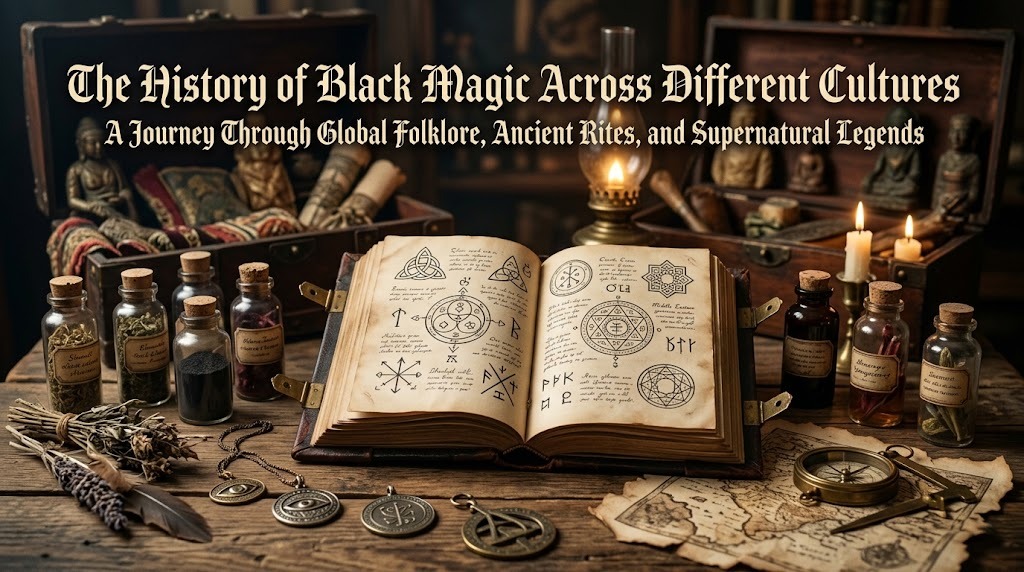
Black magic has been a fascinating and controversial subject throughout human history. Different societies have developed their own ideas about supernatural practices, mysterious forces, and rituals believed to influence events or people. Although the term black magic is often associated with harmful supernatural activities, its meaning has changed depending on cultural, religious, and historical contexts. Stories about these practices can be found in folklore, religious traditions, legends, and popular culture. Understanding this history can help people see black magic as a cultural and historical phenomenon rather than simply a supernatural fact.
THE EARLY ORIGINS OF BLACK MAGIC
The origins of ideas commonly associated with black magic can be traced to ancient societies that believed supernatural forces could affect everyday life. Ancient people often performed rituals to seek protection, healing, good fortune, or answers about the future. Practices considered acceptable in one community could be viewed as dangerous or forbidden in another. This difference shows that the concept of black magic was strongly influenced by local beliefs and social values. Therefore, there was no single definition of black magic that applied to every ancient civilization.
In many ancient cultures, supernatural practices were connected to religion, medicine, astrology, and spiritual traditions. Priests, healers, diviners, and other ritual specialists sometimes performed ceremonies that modern observers might describe as magical. However, these people did not necessarily consider their activities to be black magic. The distinction between accepted spiritual practices and forbidden magic often developed through religious and political changes. As societies became more organized, certain supernatural practices were increasingly labeled dangerous or unacceptable.
BLACK MAGIC IN ANCIENT CULTURES
Ancient Egypt is often mentioned in discussions about the history of magic because magical practices were closely connected with religion and daily life. Egyptians used written spells, protective objects, and rituals for purposes such as healing and protection. In the ancient Greek and Roman worlds, magical practices also appeared in literature, religious traditions, and private rituals. Some practices were accepted, while others were viewed with suspicion or associated with harmful intentions. These examples demonstrate that ancient magic was not automatically considered evil.
In other parts of the world, communities developed their own systems of spiritual beliefs and supernatural traditions. Across Asia, Africa, Europe, and the Americas, stories about spirits, curses, protective rituals, and supernatural beings became part of local traditions. These beliefs were often connected to explanations for illness, natural disasters, personal misfortune, or unusual events. Over time, certain practices became associated with fear and were described as dark practices. However, interpretations differed considerably from one culture to another.
BLACK MAGIC IN MEDIEVAL AND EARLY MODERN EUROPE
During the medieval period in Europe, ideas about magic were strongly influenced by Christianity and existing local traditions. Some forms of supernatural practice were considered acceptable when connected with religious or protective purposes, while other activities were condemned as dangerous or heretical. The idea of making agreements with evil supernatural forces became particularly important in European stories about forbidden magic. This contributed to the development of images of witches, sorcerers, and forbidden magic that remain familiar today. Such ideas were also influenced by social fears and religious conflicts.
During the early modern period, accusations of witchcraft became a serious social issue in parts of Europe and North America. People could be accused of causing illness, crop failure, bad weather, or other misfortunes through supernatural means. These accusations sometimes resulted in trials and executions, demonstrating how powerful supernatural beliefs could become within society. Historians now examine these events through social, religious, legal, and political perspectives rather than treating the accusations as evidence that supernatural powers actually existed. This period played an important role in shaping modern images of black magic.
BLACK MAGIC IN FOLKLORE AND POPULAR CULTURE
As societies changed, stories about black magic continued through folklore, literature, theater, films, television, and video games. Traditional stories often portray magical characters as witches, sorcerers, mysterious strangers, or supernatural beings. These characters can represent fear, temptation, forbidden knowledge, or conflict between good and evil. Modern entertainment frequently combines elements from different cultures to create dramatic stories about supernatural powers. As a result, contemporary representations of black magic may differ significantly from the original beliefs that inspired them.
Popular culture has also made black magic recognizable to audiences around the world. Movies and novels often use magical symbols, mysterious rituals, enchanted objects, and supernatural conflicts to create suspense. However, fictional representations should not automatically be treated as accurate descriptions of historical traditions. Many popular images are fictional interpretations created for entertainment rather than direct reflections of cultural practices. This distinction is important when learning about the real history behind supernatural stories.
THE CULTURAL MEANING AND LASTING INFLUENCE OF BLACK MAGIC
The long history of black magic shows how human societies have tried to understand events that seemed mysterious, frightening, or beyond ordinary explanation. Beliefs about supernatural forces could provide explanations for misfortune while also reinforcing cultural rules about acceptable and unacceptable behavior. In some traditions, stories about harmful magic warned people against violating social or religious expectations. In others, supernatural stories served as entertainment, moral lessons, or ways to preserve cultural memory. This makes the history of black magic closely connected with the development of human folklore and social beliefs.
Today, black magic remains a popular subject because it combines history, mystery, folklore, and imagination. Its continued presence in books, films, online discussions, and traditional stories demonstrates how older ideas can survive while taking new forms. Studying these beliefs does not require accepting supernatural claims as factual; instead, they can be examined as important parts of cultural history. By comparing different societies, people can better understand why similar supernatural themes appear in many parts of the world. Ultimately, the history of black magic reflects humanity's continuing interest in the unknown and the mysterious.
CONCLUSION
The history of black magic is closely connected with the cultural beliefs and social values of different societies. From ancient rituals to medieval witchcraft accusations and modern entertainment, its meaning has changed considerably over time. Different cultures developed their own interpretations of supernatural practices, meaning that black magic cannot be understood through a single cultural perspective. Folklore and historical traditions have played a major role in keeping these stories alive across generations. Learning about this subject from a historical and cultural perspective provides a more balanced understanding of why black magic continues to attract attention today.
About the Author
Gusti Ayu Tita P
Author — STEKOM University
An active author focused on academic issues, educational technology, and human resource development in the campus environment.















