
The History of MRT Jakarta from the Beginning Until Today
Gusti Ayu Tita P
11 Agustus 2026
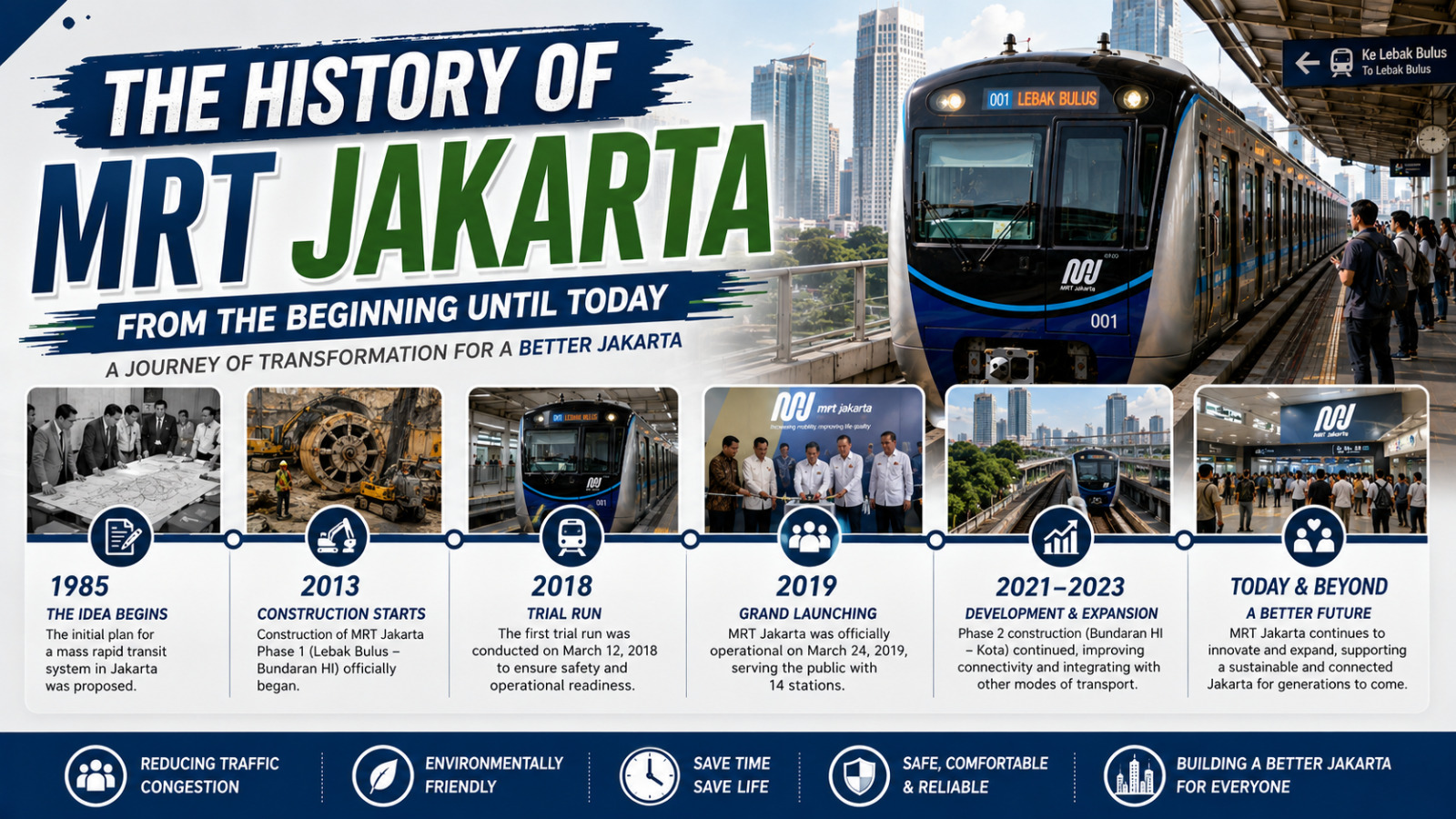
MRT Jakarta is one of the most important developments in Indonesia’s urban transportation system. Its arrival changed the way people could travel through Jakarta by introducing a modern rail-based mass transit service. However, the MRT did not appear suddenly. Its development involved years of studies, planning, international cooperation, construction, testing, and gradual network expansion.
The history of MRT Jakarta reflects Jakarta’s growing need for efficient public transportation. As the city experienced population growth, economic activity, and increasing traffic, the need for a high-capacity transportation system became more urgent. The MRT project was developed as part of a broader effort to improve urban mobility and provide an alternative to private vehicles.
THE EARLY IDEA OF MRT JAKARTA
The idea of developing a mass rapid transit system in Jakarta emerged from concerns about increasing traffic congestion and transportation demand. Government authorities and experts recognized that road-based transportation alone would not be sufficient to meet the long-term mobility needs of the capital. Various studies were conducted to examine possible mass transit solutions for Jakarta.
Planning continued through several stages before the project reached implementation. One important plan was the development of a North-South corridor connecting the southern and central parts of Jakarta. The proposed route was intended to provide a high-capacity transportation alternative for areas with significant travel activity. Extensive technical and financial preparations were required before construction could begin.
THE ESTABLISHMENT OF PT MRT JAKARTA
An important milestone came with the establishment of PT MRT Jakarta, which became responsible for developing and operating the MRT system. The company was established by the Government of Jakarta to manage the project and its transportation services. Its role included supporting infrastructure development, preparing operations, and eventually managing passenger services.
The project also received significant cooperation from Japan, including financing support and technical assistance. International cooperation was important because building an MRT system requires substantial investment and specialized railway expertise. Planning involved many aspects, including construction, railway technology, station design, safety systems, and operational preparation. These preparations created the foundation for the eventual construction of the first MRT corridor.
CONSTRUCTION AND THE START OF OPERATIONS
Construction of the first phase of the MRT Jakarta North-South Line became a major infrastructure project in Jakarta. Construction formally began in 2013 and involved both elevated and underground sections. The project included railway tracks, stations, tunnels, electrical systems, signaling equipment, and other supporting infrastructure. Because the project was built in a densely populated city, construction required careful planning and coordination.
After construction and testing were completed, MRT Jakarta officially began commercial passenger operations on March 24, 2019. The first operational section connected Lebak Bulus and Bundaran HI. This marked a major milestone because Jakarta had entered a new stage of modern rail-based public transportation. The service provided residents with an additional alternative for traveling through important parts of the city.
DEVELOPMENT AFTER 2019
After beginning operations, MRT Jakarta continued to improve its services and expand its network. One of the major developments has been the construction of MRT Jakarta Phase 2, which is intended to extend the North-South corridor from Bundaran HI toward the Kota area. The project is being developed in stages because underground railway construction in a dense urban environment requires complex engineering and planning.
MRT Jakarta has also continued working toward better transportation integration. Connections with other public transportation services make it easier for passengers to combine MRT with buses, commuter rail, and other modes. Station facilities, passenger information, payment systems, and service quality have also continued to receive attention. These developments are intended to make MRT a stronger part of Jakarta’s wider transportation network.
MRT JAKARTA TODAY AND ITS FUTURE
Today, MRT Jakarta is an established part of the capital’s public transportation system. The service provides a modern rail option for people traveling along its operational corridor. Its continued development reflects the city’s long-term effort to build a more integrated and efficient transportation network. The MRT also plays a role in encouraging greater use of public transportation.
The future of MRT Jakarta involves continued network development and integration with other modes. Expansion can give more residents access to rail-based transportation and create additional connections across Jakarta. Sustainable urban mobility will require cooperation between government, transportation operators, and the community. MRT Jakarta is therefore not only a transportation project from the past but also an important part of Jakarta’s future mobility plans.
CONCLUSION
The history of MRT Jakarta began with the need for a better response to Jakarta’s growing transportation challenges. After years of studies, planning, institutional preparation, international cooperation, and construction, the first MRT service officially opened to passengers on March 24, 2019, connecting Lebak Bulus and Bundaran HI.
Since then, MRT Jakarta has continued to develop through network expansion, service improvements, and transportation integration. The construction of subsequent phases demonstrates the long-term commitment to expanding mass transit in the capital. With continued development, MRT Jakarta can play an increasingly important role in creating efficient, modern, and sustainable urban transportation.
About the Author
Gusti Ayu Tita P
Author — STEKOM University
An active author focused on academic issues, educational technology, and human resource development in the campus environment.















