The History of Reincarnation From Ancient Times to the Modern Era
Gusti Ayu Tita P
9 September 2026
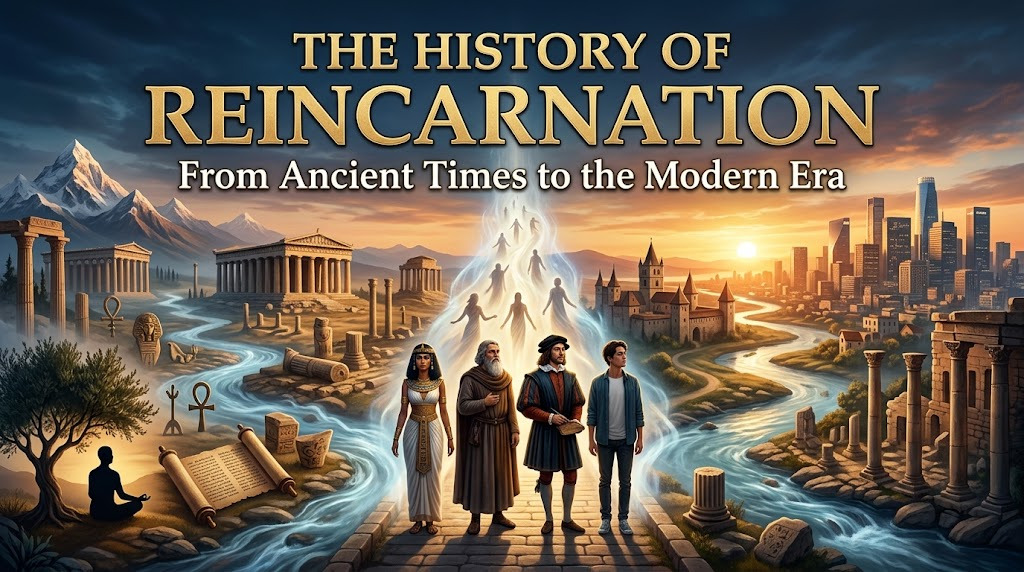
Reincarnation is an idea that has appeared in religious, philosophical, and cultural traditions for thousands of years. The concept generally refers to the belief that existence continues through another life after death. Although the meaning of Reincarnation has changed across different societies, the idea has remained an important part of discussions about life, death, and human existence.
The history of reincarnation is not connected to one single culture or period. Different civilizations developed their own explanations of Rebirth, the soul, morality, and what may happen after death. By examining its development from ancient traditions to modern discussions, it becomes easier to understand why reincarnation continues to attract interest today.
REINCARNATION IN ANCIENT TRADITIONS
Ideas related to rebirth can be found in several ancient religious and philosophical traditions. In ancient India, concepts concerning repeated birth and death gradually became important within religious and philosophical thought. These ideas later became closely connected with concepts such as Karma, Samsara, and spiritual liberation.
Ancient Greek philosophy also included discussions about the possibility of the soul existing through multiple lives. Certain philosophical traditions explored ideas about the soul, its journey, and the possibility of returning to another existence. These examples show that questions about repeated existence were considered long before reincarnation became a subject of modern popular culture.
THE DEVELOPMENT OF REINCARNATION IN HINDUISM
Within Hindu traditions, reincarnation became closely associated with the concept of Samsara, the cycle of birth, death, and rebirth. The idea of karma provided a framework for understanding how actions could influence future existence. Over time, different Hindu philosophical schools developed their own interpretations of the relationship between the self, karma, reincarnation, and liberation.
The concept of Moksha became important in many Hindu traditions as the goal of escaping the cycle of samsara. This meant that reincarnation was not simply viewed as an endless sequence of lives. Instead, it was connected with broader questions about knowledge, ethical behavior, spiritual practice, and liberation.
THE ROLE OF BUDDHISM AND ASIAN CULTURES
Buddhism also developed a significant teaching concerning rebirth. However, Buddhist explanations differ from Hindu ideas because Buddhism does not generally rely on the concept of a permanent, unchanging soul moving between bodies. Instead, rebirth is explained through a continuing process influenced by causes, conditions, and Karma.
As Buddhism spread across different parts of Asia, ideas about rebirth became connected with local customs and cultural traditions. Different communities developed stories, practices, and interpretations concerning previous lives, ancestors, and spiritual existence. As a result, the history of Rebirth became increasingly diverse across Asian cultures.
REINCARNATION IN MODERN THOUGHT
During the modern era, reincarnation became a subject of interest beyond traditional religious settings. Philosophers, writers, spiritual movements, and researchers began discussing ideas about Past Lives from different perspectives. Some people approached reincarnation as a spiritual belief, while others became interested in reported memories and unusual personal experiences.
Popular books, films, television programs, and online discussions have also increased public awareness of reincarnation. These modern representations sometimes combine traditional beliefs with fictional or speculative ideas. As a result, the contemporary understanding of reincarnation may differ considerably from the original religious concepts found in ancient traditions.
REINCARNATION IN CONTEMPORARY DISCUSSIONS
Today, reincarnation continues to be discussed in religious, cultural, philosophical, and scientific contexts. Some people accept it as part of their spiritual worldview, while others remain skeptical and look for psychological or other explanations for experiences associated with Past Lives. Scientific discussions generally focus on whether claims about reincarnation can be supported by reliable and independently evaluated evidence.
The modern debate demonstrates that reincarnation has continued to evolve as an idea. Its meaning can depend on whether it is viewed through religion, philosophy, culture, psychology, or popular media. Understanding its long history helps explain why Reincarnation remains a topic of interest even in the modern era.
CONCLUSION
The history of reincarnation stretches from ancient religious and philosophical traditions to modern discussions about spirituality and human experience. Concepts of Rebirth, Karma, and Samsara developed in different ways across cultures, particularly in South Asia and other parts of Asia.
Over time, reincarnation also became part of modern philosophical discussions, popular culture, and debates about Past Lives. Although interpretations continue to differ, its long history demonstrates the enduring human interest in understanding life, death, and what may exist beyond one lifetime.
About the Author
Gusti Ayu Tita P
Author — STEKOM University
An active author focused on academic issues, educational technology, and human resource development in the campus environment.