
The History of Scouting and Its Evolution in the Modern Digital Era
Gusti Ayu Tita P
31 Juli 2026
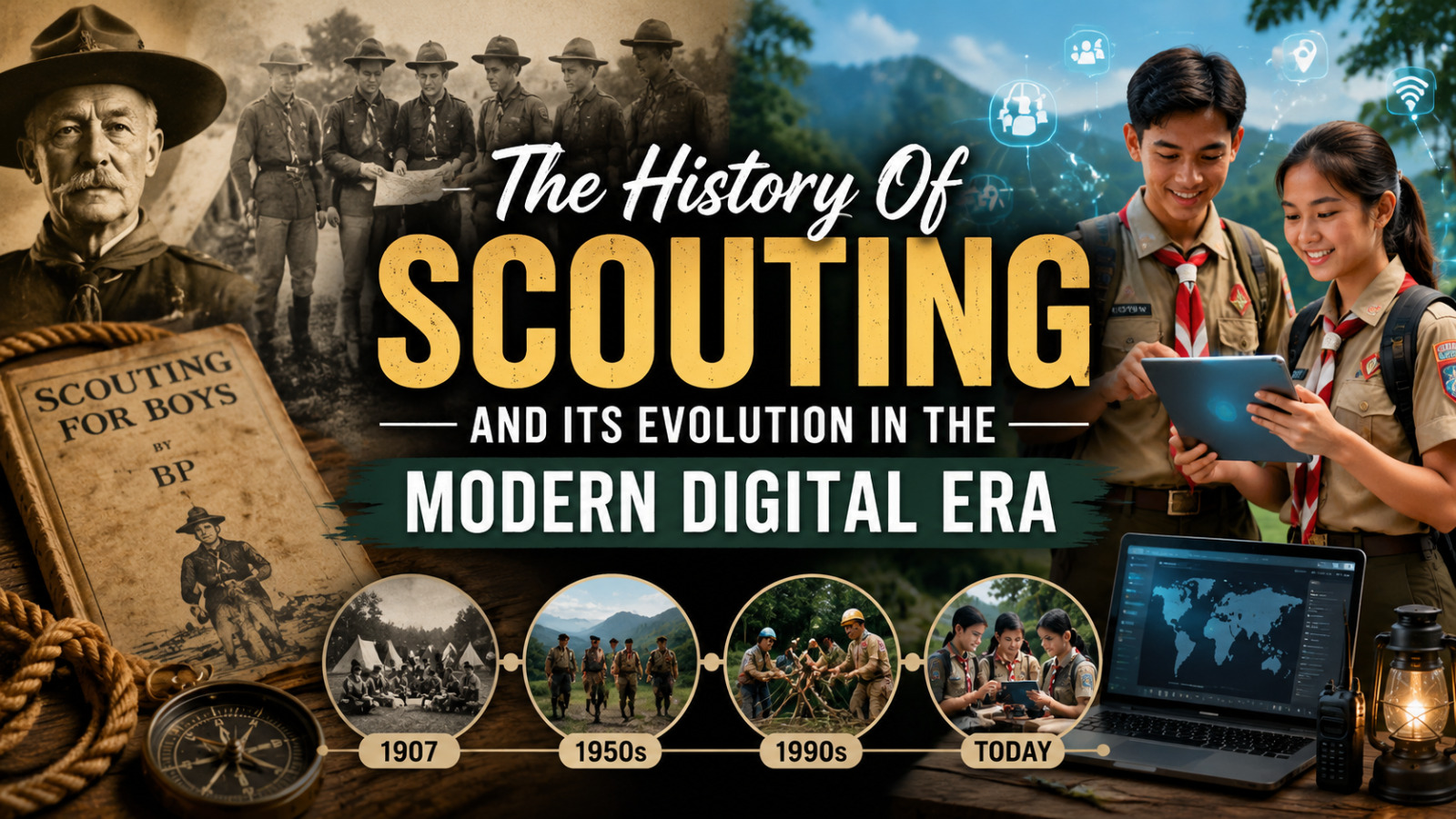
Scouting is one of the most influential youth movements in the world, helping millions of young people develop character, leadership skills, and practical abilities. Since its beginning in the early 20th century, scouting has continued to adapt to changes in society while maintaining its core values of service, discipline, and teamwork. The journey of scouting from traditional outdoor activities to modern digital learning shows how this movement remains relevant in today’s world.
The development of scouting history reflects the ability of this organization to evolve with time. Although technology has changed how young people learn and communicate, scouting continues to provide meaningful experiences that combine traditional skills with modern innovations.
THE BEGINNING AND HISTORY OF THE SCOUTING MOVEMENT
The history of scouting began in 1907 when Robert Baden Powell organized the first experimental scout camp on Brownsea Island in England. This event became the foundation of the worldwide scouting movement, which focused on teaching young people responsibility, self-reliance, and cooperation. Baden Powell believed that outdoor activities could help children build confidence and develop important life skills.
After the success of the first camp, scouting quickly expanded to different countries around the world. The movement introduced various activities such as camping, survival training, community service, and teamwork exercises. These activities were designed to prepare young people to become responsible members of society.
Over time, scouting organizations developed unique programs based on local cultures and community needs. However, the main principles of discipline, honesty, and helping others remained the same. The global expansion of scouting proved that its educational approach was valuable for young generations across different backgrounds.
THE DEVELOPMENT OF SCOUTING IN THE MODERN WORLD
As society changed, scouting also experienced significant transformation to remain attractive and useful for young people. Traditional activities such as camping and outdoor exploration are still important, but modern scouting now includes broader educational programs. These programs focus on communication, environmental awareness, technology skills, and global citizenship.
The modern scouting movement understands that young people face different challenges compared to previous generations. Digital communication, climate change, and rapid technological development require new approaches to youth education. Therefore, scouting organizations have created programs that combine traditional values with modern knowledge.
Today, scouts are encouraged to become creative problem solvers who can use their skills to contribute to society. Through various projects and activities, scouting continues to develop young people who are adaptable, confident, and prepared for future challenges.
THE ROLE OF DIGITAL TECHNOLOGY IN SCOUTING DEVELOPMENT
The rise of the digital era has changed how scouting activities are organized and delivered. Technology allows scouts to access educational materials, communicate with members worldwide, and participate in online training programs. Digital platforms have made scouting more accessible for young people in different locations.
Modern scouting organizations use technology to support learning while keeping traditional values alive. For example, scouts can learn navigation using digital maps, improve teamwork through online collaboration tools, and participate in virtual community projects. These innovations make scouting more connected to the interests of today’s youth.
However, technology does not replace the importance of direct experiences. Outdoor activities, face-to-face teamwork, and real community service remain essential parts of scouting. The combination of digital tools and traditional methods creates a balanced learning environment for young people.
HOW SCOUTING ADAPTS TO THE CHALLENGES OF THE DIGITAL GENERATION
The digital generation has different learning habits and expectations, requiring scouting to become more flexible and innovative. Young people today are familiar with smartphones, social media, and online platforms. To stay relevant, scouting organizations have developed programs that integrate technology with character education.
One important change is the use of digital skills as part of scouting education. Scouts are now encouraged to understand online safety, digital responsibility, and ethical technology use. These skills help young people become responsible digital citizens in a rapidly changing world.
Scouting also continues to promote important human values that technology cannot replace. Leadership, teamwork, and empathy remain central lessons that help young people build strong relationships and contribute positively to their communities.
THE IMPORTANCE OF SCOUTING FOR FUTURE GENERATIONS
Scouting remains important because it provides practical education that supports personal growth. Unlike traditional classroom learning, scouting allows young people to learn through experience, challenges, and teamwork. These experiences help develop confidence and independence.
In the future, scouting will continue to play a role in preparing young people for a changing world. The combination of traditional scouting principles and modern digital knowledge creates a strong foundation for future leaders. Young people can develop both technical abilities and social skills through scouting activities.
The evolution of scouting proves that this movement can adapt without losing its original purpose. By embracing innovation while maintaining its values, scouting remains a powerful educational platform for generations to come.
About the Author
Gusti Ayu Tita P
Author — STEKOM University
An active author focused on academic issues, educational technology, and human resource development in the campus environment.















