The History of Train Station Development in Indonesia
Gusti Ayu Tita P
10 Agustus 2026
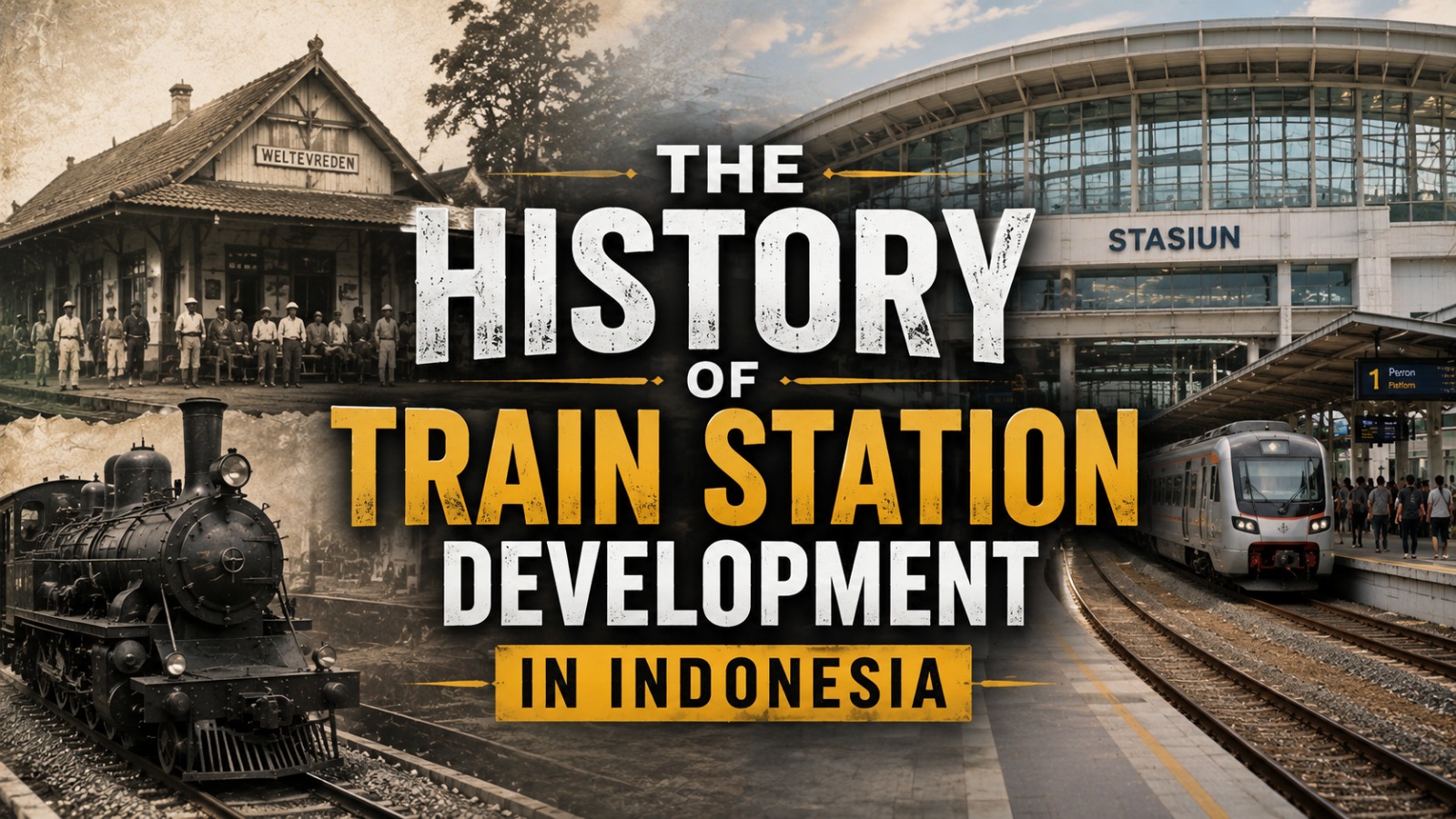
The development of train stations in Indonesia is closely connected to the history of the country's railway transportation. From simple facilities built during the colonial period to modern stations equipped with digital technology, train stations have experienced significant changes. They have supported the movement of passengers, goods, and economic activities across different regions. Railway development in Indonesia has also influenced the growth of cities and local communities. Understanding this history provides a clearer picture of how Indonesia's transportation system has evolved.
THE BEGINNING OF RAILWAYS IN INDONESIA
The history of railways in Indonesia began during the Dutch colonial period in the nineteenth century. One of the important early railway lines was opened in 1867, connecting Semarang and Tanggung in Central Java. The railway was developed to improve the transportation of agricultural products and support economic activities. As railway networks expanded, more stations were constructed along important routes. These early stations became important transportation points for both goods and passengers.
During the following decades, railway construction expanded to various parts of Java. Railway companies built tracks and stations to connect agricultural areas, cities, ports, and commercial centers. Train stations were often constructed near areas that had strategic economic or administrative importance. Their locations helped facilitate the movement of products such as sugar, coffee, and other agricultural commodities. This expansion gradually created a more organized railway network.
DEVELOPMENT DURING THE COLONIAL PERIOD
During the late nineteenth and early twentieth centuries, railway infrastructure continued to expand significantly. Different railway companies operated routes in Java, while railway development also took place in parts of Sumatra. Stations varied in size depending on the importance of the railway route and the surrounding area. Major stations generally had larger buildings, multiple platforms, and facilities for passengers and railway operations. Smaller stations served local communities and shorter routes.
The architectural style of many historic stations reflected the period in which they were built. Some stations featured Dutch colonial architectural elements, including large windows, high ceilings, covered platforms, and spacious waiting areas. Railway stations were not only transportation facilities but also became recognizable landmarks in many towns. Some historic buildings have survived and remain in use today. Their continued existence provides an important connection between Indonesia's transportation history and its architectural heritage.
RAILWAY STATIONS AFTER INDONESIAN INDEPENDENCE
After Indonesia declared independence in 1945, railway infrastructure became part of the newly independent country's transportation system. Railway operations gradually came under Indonesian management, and the national railway organization continued to develop passenger and freight services. Stations remained important for connecting cities and supporting economic activity. However, the railway system also faced various challenges, including aging infrastructure and changing transportation needs. Improvements were therefore necessary to maintain reliable railway services.
During the following decades, several stations were renovated or expanded to accommodate increasing passenger demand. New facilities were introduced to improve passenger safety and comfort. Railway services also gradually adopted new technologies and operational methods. As Indonesia's population and urban areas grew, stations became increasingly important in supporting daily mobility. The railway system eventually entered a period of major modernization.
MODERNIZATION OF TRAIN STATIONS
Modernization became more visible as Indonesia invested in improving railway infrastructure. Stations were renovated with better platforms, improved passenger areas, clearer information systems, and enhanced accessibility. Electronic ticketing and automated gates were introduced at many stations to make passenger processing more efficient. Digital information displays also became increasingly common. These changes helped transform the traditional station into a more modern transportation facility.
The development of commuter railway services also increased the importance of stations in large urban areas. In the Jakarta metropolitan region, for example, commuter stations support the daily movement of large numbers of passengers. Stations have become important links between residential areas and workplaces. Integrated public transportation has also encouraged connections between railways, buses, and other urban transport services. This integration has made stations more important in everyday urban mobility.
THE DEVELOPMENT OF MODERN RAILWAY FACILITIES
Indonesia's railway development has continued through improvements in intercity, commuter, and airport-related services. Modern stations increasingly provide facilities such as escalators, elevators, toilets, waiting areas, retail outlets, information systems, and accessibility features. Some major stations have also been redesigned to handle high passenger volumes more efficiently. These facilities are designed to improve both convenience and passenger safety.
Technology has become another major part of station development. Passengers can use digital platforms to purchase tickets, check schedules, and receive information about their journeys. Automated gates can help manage passenger flows, while electronic displays provide information about train arrivals and departures. These innovations reduce dependence on traditional manual processes. As technology continues to develop, Indonesian train stations are expected to become even more efficient.
THE ROLE OF TRAIN STATIONS IN INDONESIAN CITIES
Train stations have played an important role in the development of Indonesian cities. Areas surrounding major stations often become centers of commerce, employment, and public activity. Shops, hotels, restaurants, offices, and other businesses may develop around stations because of their accessibility and large passenger flows. In some cities, stations are also connected with local bus services and other forms of transportation. This makes them important nodes within wider urban transportation networks.
The influence of stations can also be seen in smaller towns and regional areas. Railway access can make it easier for residents to travel to larger cities for education, employment, healthcare, and business activities. Improved transportation connections can support regional economic development. Therefore, train stations have a role that extends beyond simply serving railway passengers. They can contribute to stronger connections between communities and economic centers.
PRESERVING HISTORIC TRAIN STATIONS
Some Indonesian train stations have significant historical and architectural value. These buildings can serve as reminders of the country's long railway history. Heritage station preservation is important because modernization does not necessarily require the complete removal of historic structures. Well-maintained heritage buildings can continue to serve passengers while also becoming cultural landmarks. They can even support tourism by attracting visitors interested in Indonesian history and architecture.
Preservation also helps younger generations understand how transportation has changed over time. Historic stations can show the development of railway technology, architecture, and urban planning. Combining heritage preservation with modern railway services can create a balance between history and contemporary transportation needs. This approach allows valuable historical buildings to remain relevant. As a result, train stations can function as both transportation facilities and cultural assets.
THE FUTURE OF TRAIN STATION DEVELOPMENT IN INDONESIA
The future of Indonesian train stations will likely focus on modern technology, connectivity, accessibility, and sustainability. New and renovated stations are expected to provide more efficient passenger services and better connections with other modes of transportation. Digital systems can make ticketing, navigation, and travel information easier to access. Sustainable building practices may also become increasingly important as Indonesia works toward more environmentally responsible transportation.
The continued development of railway infrastructure can support Indonesia's growing population and mobility needs. Better stations can encourage more people to use public transportation instead of relying entirely on private vehicles. This can help improve transportation efficiency and potentially reduce road congestion. At the same time, historic stations should continue to receive appropriate protection and maintenance. Combining innovation with heritage preservation can create a stronger railway system for the future.
CONCLUSION
The history of train station development in Indonesia reflects the broader transformation of the country's railway transportation system. From the first railway facilities built during the colonial era to today's modern and technology-based stations, significant changes have taken place. Train stations have supported passenger mobility, economic development, urban growth, and regional connectivity throughout this process. Their role continues to evolve as Indonesia invests in modern railway infrastructure. By combining technological innovation, better services, sustainability, and heritage preservation, Indonesian train stations can remain important transportation hubs for future generations.
About the Author
Gusti Ayu Tita P
Author — STEKOM University
An active author focused on academic issues, educational technology, and human resource development in the campus environment.