
The Impact of Corruption on Indonesia’s Economy
Gusti Ayu Tita P
24 Juli 2026
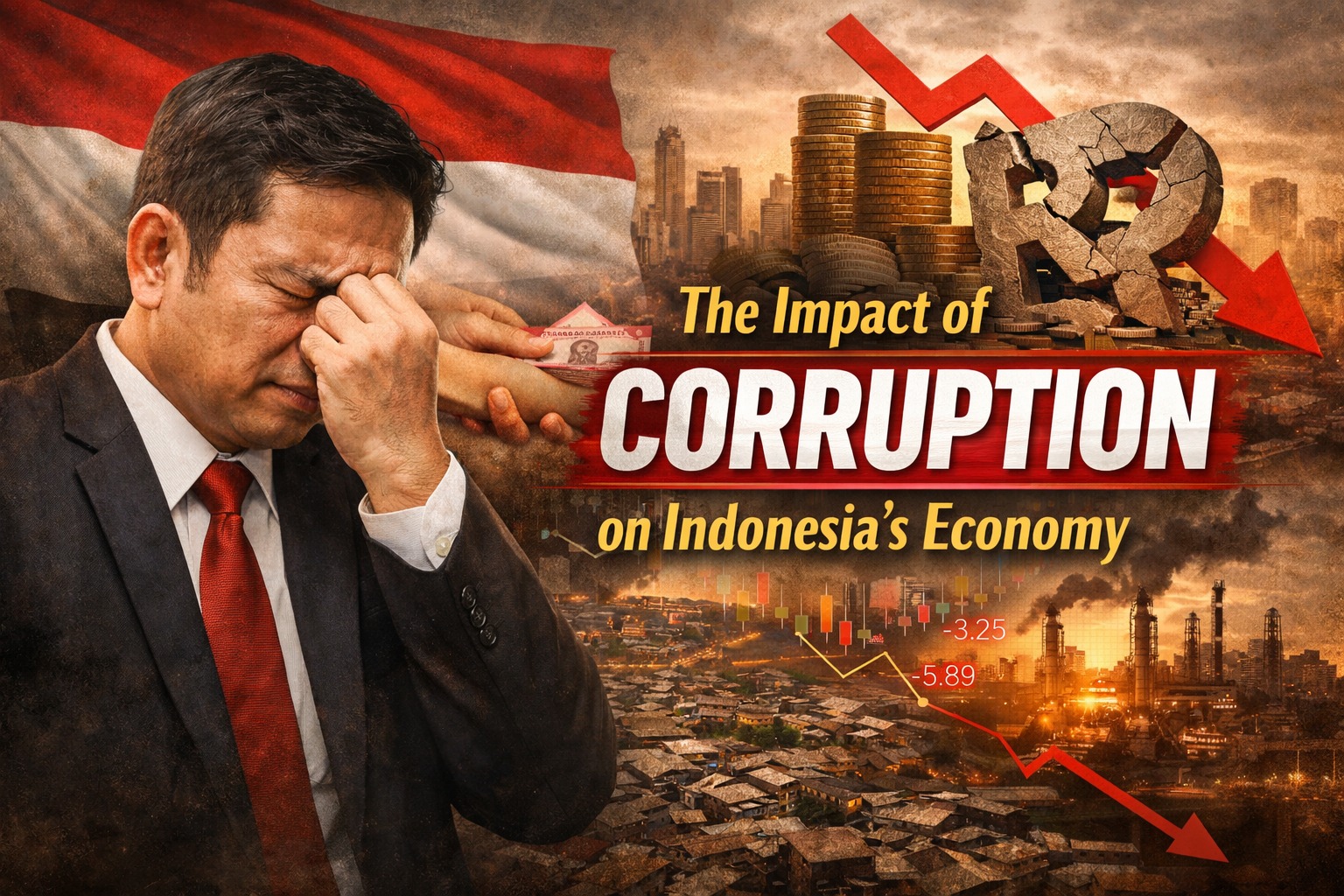
Corruption is one of the biggest challenges affecting economic development in many countries, including Indonesia. It not only causes financial losses for the government but also weakens public trust, slows investment growth, and reduces the quality of public services. When corruption becomes widespread, the economy struggles to grow fairly and sustainably.
Indonesia has significant economic potential because of its natural resources, young workforce, and strategic location. However, corruption continues to become a major obstacle to achieving stronger national progress and public welfare.
UNDERSTANDING CORRUPTION
Corruption refers to the misuse of power or authority for personal gain. It can happen in many forms, such as bribery, embezzlement, illegal fees, and abuse of public funds.
In economic systems, corruption often occurs in government projects, business permits, taxation, and public services. Even small dishonest actions can contribute to larger corruption problems that damage economic stability.
Understanding corruption is important because awareness is the first step toward preventing unethical practices in society.
ECONOMIC LOSSES CAUSED BY CORRUPTION
One of the most visible impacts of corruption is financial loss to the country. Government budgets that should be used for infrastructure, education, healthcare, and social programs are often misused by irresponsible individuals.
As a result, development projects may become delayed, incomplete, or poorly constructed. Public facilities that should improve people’s lives fail to function properly because funds are not managed transparently.
These losses reduce the effectiveness of national development programs and slow economic growth.
CORRUPTION REDUCES FOREIGN INVESTMENT
Foreign investors usually seek countries with transparent regulations, fair legal systems, and stable economic conditions. High levels of corruption can discourage investors from investing in Indonesia.
Bribery, complicated bureaucracy, and unfair business competition create uncertainty for companies. Investors may worry about hidden costs and lack of legal protection, causing them to move their investments to other countries.
Reduced investment means fewer job opportunities, slower industrial growth, and lower economic productivity.
THE EFFECT OF CORRUPTION ON POVERTY
Corruption often increases poverty and social inequality. Funds intended for public welfare programs may not reach communities that truly need assistance.
Poor infrastructure, limited healthcare access, and low-quality education become major problems for low-income families. In many cases, corruption causes public services to become expensive because of illegal fees and misuse of authority.
As a result, economic inequality between rich and poor communities continues to widen.
IMPACT ON EDUCATION AND HEALTHCARE
Education and healthcare are important sectors for national development. However, corruption can weaken both sectors by reducing the quality of services provided to the public.
Misused educational funds may lead to damaged school facilities, lack of learning resources, and limited scholarship opportunities. In healthcare, corruption may cause poor medical services and unequal access to treatment.
When these essential sectors are weakened, the quality of human resources also declines, affecting Indonesia’s future economic competitiveness.
THE ROLE OF TRANSPARENCY AND ACCOUNTABILITY
Transparency and accountability are essential in reducing corruption and improving economic performance. Governments need to provide open access to public financial information and strengthen monitoring systems.
Digital technology can help improve transparency through online public services, electronic procurement systems, and digital financial reporting. These systems reduce opportunities for bribery and illegal practices.
Strong law enforcement is also necessary to punish corrupt behavior fairly and maintain public trust in economic institutions.
THE IMPORTANCE OF YOUTH PARTICIPATION
Young people have an important role in building a corruption-free future. Students and young communities can promote anti-corruption values through education, social campaigns, and digital awareness programs.
By practicing honesty, responsibility, and ethical behavior, the younger generation can help create a culture of integrity in society. Social media can also be used as a tool to spread positive messages about transparency and accountability.
The active involvement of youth is essential for creating long-term economic improvement in Indonesia.
BUILDING A STRONGER ECONOMY WITHOUT CORRUPTION
Indonesia has great potential to become a stronger and more competitive economy if corruption can be reduced effectively. A transparent government system, fair business environment, and responsible leadership are key factors for sustainable development.
Economic progress requires cooperation between government institutions, businesses, communities, and young generations. By working together to fight corruption, Indonesia can improve public welfare and strengthen national growth.
A clean and honest economic system will create more opportunities for future generations.
CONCLUSION
Corruption has a serious impact on Indonesia’s economy by causing financial losses, reducing foreign investment, increasing poverty, and weakening public services. It also damages trust in government institutions and slows national development.
To overcome these challenges, Indonesia must strengthen transparency, accountability, and anti-corruption education. With strong cooperation from all sectors of society, Indonesia can build a healthier economy and achieve sustainable national progress.
About the Author
Gusti Ayu Tita P
Author — STEKOM University
An active author focused on academic issues, educational technology, and human resource development in the campus environment.















