The Impact of Digital Political Campaigns on Young Voter Participation
Gusti Ayu Tita P
20 Oktober 2026
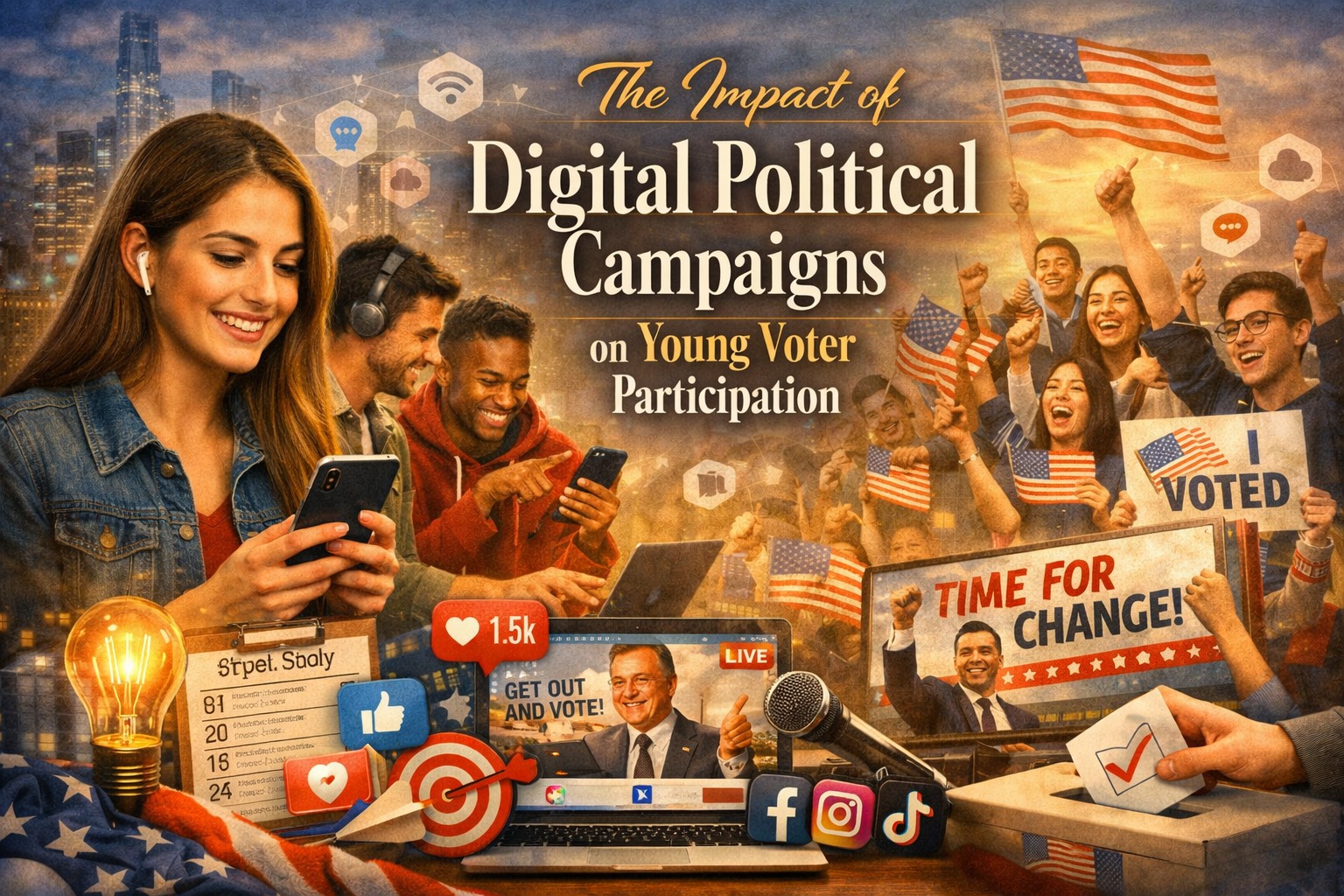
In today's digital era, digital political campaigns have transformed the way candidates, political parties, and governments communicate with the public. Instead of relying solely on television, newspapers, or public rallies, political campaigns now use social media platforms, websites, online advertisements, and video content to engage voters. This shift has significantly influenced young voter participation, as younger generations spend much of their time online. Digital platforms provide faster access to political information while allowing voters to interact directly with candidates. As a result, technology has become a powerful force in shaping modern democratic participation.
THE RISE OF DIGITAL POLITICAL CAMPAIGNS
Digital political campaigns have become increasingly popular because they are cost-effective, fast, and capable of reaching millions of people instantly. Political organizations can publish campaign messages through social media marketing, live streams, podcasts, and interactive online events. These methods allow candidates to communicate their ideas without depending entirely on traditional media outlets. As internet access continues to expand, digital campaigns are becoming an essential strategy in elections around the world.
Young people are among the most active internet users, making them a primary audience for online political campaigns. Platforms such as Instagram, TikTok, YouTube, Facebook, and X enable political content to spread rapidly through shares, comments, and recommendations. Interactive content encourages users to engage with political discussions rather than simply receiving information passively. This digital environment has changed how younger generations learn about political issues and election candidates.
HOW DIGITAL CAMPAIGNS INCREASE YOUNG VOTER PARTICIPATION
One of the greatest advantages of digital political campaigns is their ability to encourage young voter participation. Easy access to political information allows first-time voters to understand election processes, candidate profiles, and public policies more effectively. Educational videos, infographics, and live discussions simplify complex political topics into content that is easier to understand. As a result, young voters become more informed before making electoral decisions.
Digital platforms also create opportunities for direct interaction between candidates and citizens. Through question-and-answer sessions, comments, and online forums, voters can express opinions and receive immediate responses. This level of engagement helps build trust and strengthens the relationship between political leaders and the public. Feeling involved in political conversations often motivates young people to participate actively in elections.
THE ROLE OF SOCIAL MEDIA IN POLITICAL ENGAGEMENT
Social media platforms play a central role in shaping political awareness among young voters. Political campaigns use creative videos, graphics, and short messages to attract attention and communicate campaign promises effectively. Since social media content can quickly become viral, political messages often reach audiences far beyond their original followers. This broad exposure increases awareness of important political events and election schedules.
At the same time, social media allows users to discuss public issues with friends, influencers, and community groups. These conversations help young voters compare different viewpoints before making decisions. Interactive features such as polls, live broadcasts, and discussion threads encourage continuous engagement throughout the election period. Consequently, social media has become one of the strongest tools for expanding democratic participation.
CHALLENGES OF DIGITAL POLITICAL CAMPAIGNS
Although digital political campaigns offer many benefits, they also present significant challenges. One major concern is the spread of misinformation and false political content. Unverified news can spread rapidly across social media, influencing public opinion before accurate information becomes available. This situation highlights the importance of digital literacy and responsible information sharing.
Another challenge involves political polarization caused by personalized online algorithms. Users often receive content that matches their existing opinions, limiting exposure to different perspectives. This can create echo chambers where balanced political discussions become more difficult. Encouraging critical thinking and verifying information from reliable sources are essential steps in reducing these risks.
STRATEGIES FOR EFFECTIVE AND ETHICAL DIGITAL POLITICAL CAMPAIGNS
Successful digital political campaigns should focus on transparency, accuracy, and meaningful engagement. Political organizations should provide factual information supported by credible evidence instead of relying on misleading or emotionally manipulative content. Honest communication strengthens public trust and improves the overall quality of democratic participation. Ethical campaign practices also encourage respectful discussions among voters with different political views.
Campaign teams should also create educational content that helps young voters understand political systems, voting procedures, and public policy issues. Interactive webinars, online debates, and informative videos can improve political knowledge without overwhelming audiences. Combining technology with civic education creates a healthier democratic environment. In the long term, ethical digital campaigns contribute to stronger public confidence in elections.
THE FUTURE OF DIGITAL POLITICAL CAMPAIGNS
The future of digital political campaigns will continue to evolve alongside technological innovation. Emerging technologies such as artificial intelligence, data analytics, and personalized communication may further improve campaign efficiency while creating new ethical responsibilities. Political organizations must balance technological advancement with fairness, transparency, and voter privacy. Responsible innovation will determine the long-term success of digital campaigning.
Young voters are expected to remain a key driving force in digital democracy. As internet usage continues to grow, online political engagement will likely become even more influential in future elections. Governments, educators, and political leaders should work together to promote digital literacy and responsible civic participation. With informed citizens and ethical campaign practices, digital technology can strengthen democracy and encourage greater political participation among future generations.
CONCLUSION
Digital political campaigns have fundamentally changed the relationship between political leaders and young voters by making information more accessible, interactive, and engaging. While challenges such as misinformation and political polarization remain, responsible campaign strategies can minimize these risks and improve democratic participation. By combining social media platforms, digital education, and ethical communication, political campaigns can encourage more informed voting decisions. As technology continues to develop, young voter participation will play an increasingly important role in shaping democratic societies. Building trustworthy and inclusive digital political environments will benefit both current and future generations.
About the Author
Gusti Ayu Tita P
Author — STEKOM University
An active author focused on academic issues, educational technology, and human resource development in the campus environment.