
The Impact of Digital Transformation on Ministry Civil Servants' Performance
Gusti Ayu Tita P
27 Juli 2026
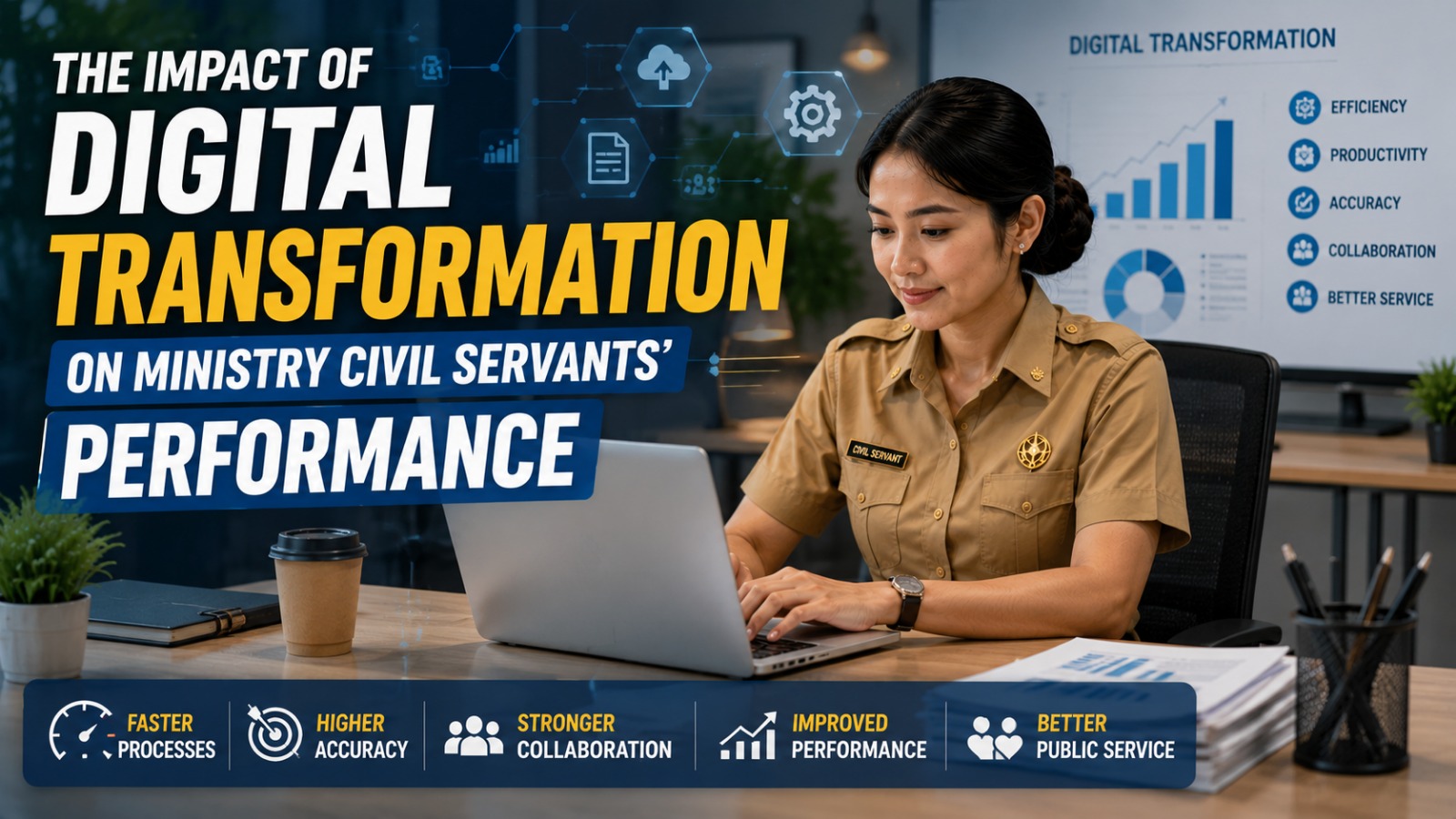
Digital transformation has become an important part of modern government administration. Ministries are increasingly adopting digital systems to manage documents, process information, communicate across departments, and deliver public services. This transformation is changing not only how government institutions operate but also how ministry civil servants perform their daily responsibilities.
For civil servants, digital transformation can create opportunities to work faster, more accurately, and more efficiently. At the same time, it requires employees to develop new skills and adapt to changing work processes. When implemented properly, digital transformation can improve individual performance, strengthen organizational effectiveness, and support better public services.
UNDERSTANDING DIGITAL TRANSFORMATION IN GOVERNMENT
Digital transformation is more than simply replacing paper-based processes with digital tools. It involves changing workflows, organizational practices, and service delivery through the strategic use of technology. In government institutions, transformation may include digital document management, integrated information systems, online public services, data analytics, and automated administrative processes.
Ministry civil servants are central to this transformation because they are the people who use and manage these systems in their daily work. Their ability to adapt determines whether digital initiatives can achieve their intended results. Therefore, successful digital transformation requires both appropriate technology and capable human resources.
IMPROVING WORK EFFICIENCY AND PRODUCTIVITY
One of the most visible impacts of digital transformation is improved efficiency. Digital systems can reduce repetitive manual tasks, simplify document processing, and make information easier to access. As a result, civil servants may spend less time on routine administrative activities and more time on tasks that require analysis, coordination, and decision making.
Digital tools can also support better time management and collaboration. Employees can share documents, communicate remotely, and monitor work progress through integrated platforms. When these systems are properly implemented, they can contribute to higher work productivity and more efficient use of organizational resources.
STRENGTHENING DIGITAL COMPETENCE
The adoption of new technologies requires ministry civil servants to develop relevant digital skills. Employees may need to learn how to use government applications, manage digital documents, analyze data, and communicate through online platforms. The level of digital competence required can vary depending on an employee's position and responsibilities.
Continuous training is therefore essential to ensure that employees can use technology effectively. Ministries should provide practical learning opportunities and technical support, while civil servants should remain willing to improve their skills. Strong digital competence can help employees adapt to new systems and perform their responsibilities with greater confidence.
SUPPORTING FASTER AND BETTER DECISION MAKING
Digital transformation can improve access to information and support evidence-based decision making. Digital systems allow relevant data to be collected, organized, and analyzed more efficiently. This can help civil servants and government leaders understand trends, identify problems, and evaluate program performance.
However, technology alone does not guarantee better decisions. Employees still need analytical skills and professional judgment to interpret information correctly. By combining reliable data with human expertise, ministries can make decisions that are more informed, timely, and aligned with actual public needs.
ENHANCING COLLABORATION AND COMMUNICATION
Government work often involves cooperation between different departments, institutions, and levels of administration. Digital collaboration tools can make it easier for employees to communicate, share information, and coordinate tasks. This is especially useful when teams work across different locations or organizational units.
Effective digital communication can reduce delays caused by limited access to information. However, employees still need clear communication practices and a shared understanding of responsibilities. When technology is combined with strong teamwork, digital collaboration can improve coordination and support more efficient government operations.
IMPROVING PUBLIC SERVICE DELIVERY
Digital transformation can change how citizens interact with government institutions. Online applications, digital information services, and electronic administrative systems can make certain public services more accessible and convenient. These improvements may reduce unnecessary visits to government offices and shorten processing times.
Ministry civil servants play an important role in ensuring that digital services remain responsive and user-friendly. They need to understand citizen needs and address problems that may occur during digital service delivery. A well-designed transformation can support better public services while improving the overall experience of service users.
CONCLUSION
Digital transformation has a significant impact on the performance of ministry civil servants. It can improve efficiency, productivity, collaboration, decision making, innovation, and public service delivery. However, achieving these benefits requires more than implementing new technology because employees must also develop the skills and adaptability needed to use digital systems effectively.
Ultimately, successful digital transformation depends on the ability of ministries and civil servants to adapt together. With continuous learning, strong digital competence, effective change management, and responsible data practices, ministry civil servants can maximize the benefits of technology. This can help create a modern government workforce that is more capable of meeting organizational objectives and responding to the evolving needs of society.
About the Author
Gusti Ayu Tita P
Author — STEKOM University
An active author focused on academic issues, educational technology, and human resource development in the campus environment.















