
The Impact of Globalization on Traditional Heritage
Gusti Ayu Tita P
19 Agustus 2026
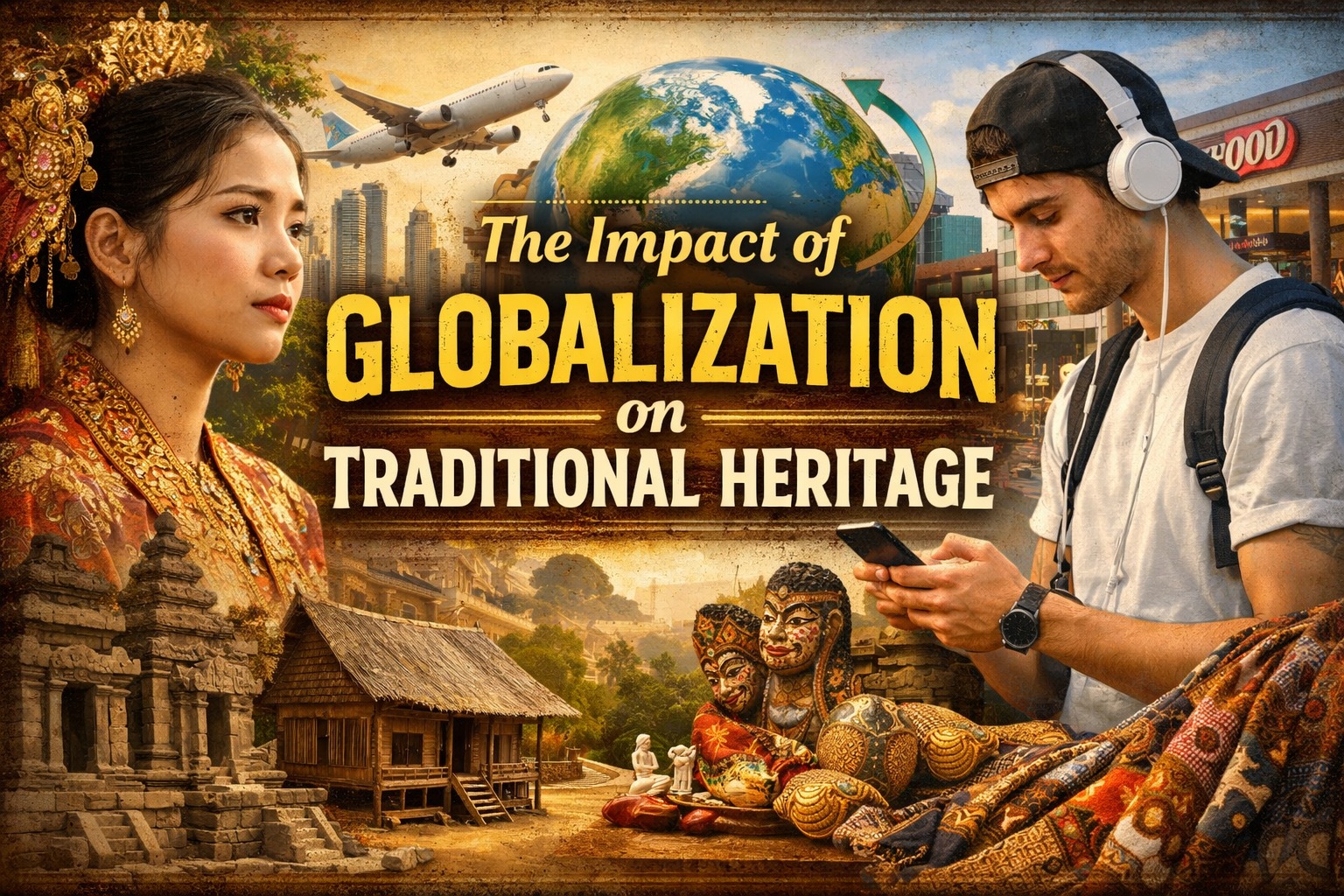
Globalization has transformed the way people live, communicate, and interact across the world. Through advances in technology, transportation, trade, and communication, cultures can now connect more easily than ever before. While globalization creates many opportunities for economic growth and cultural exchange, it also has significant effects on traditional heritage. Many communities face challenges in preserving their customs, languages, arts, and historical values in an increasingly interconnected world.
UNDERSTANDING GLOBALIZATION AND TRADITIONAL HERITAGE
Globalization refers to the growing connection between countries through trade, technology, media, and cultural exchanges. It allows ideas, products, and lifestyles to spread rapidly across borders. As a result, people gain access to new knowledge, entertainment, and opportunities from different parts of the world.
Traditional heritage includes cultural practices, languages, rituals, architecture, folklore, traditional crafts, and historical values passed down from generation to generation. These cultural elements help communities maintain their identity and preserve their unique history. Heritage serves as a bridge between the past and the present, ensuring that cultural knowledge remains alive.
POSITIVE EFFECTS OF GLOBALIZATION ON TRADITIONAL HERITAGE
One of the most significant benefits of globalization is the increased awareness of cultural diversity. Through digital platforms, documentaries, and international events, traditional cultures can reach a global audience. This exposure often encourages appreciation and support for cultural preservation efforts.
Globalization also creates opportunities for cultural tourism. Many communities benefit economically when visitors are interested in experiencing local traditions, festivals, and historical sites. The income generated from tourism can help fund restoration projects and promote the continuation of traditional practices.
THREATS TO CULTURAL IDENTITY
Despite its benefits, globalization can contribute to the decline of traditional heritage. The widespread influence of global media often promotes dominant cultures, making local customs appear less relevant to younger generations. As a result, traditional practices may gradually disappear.
Another concern is the loss of indigenous and regional languages. Many people choose to use internationally recognized languages for education, business, and communication. While this improves global connectivity, it can reduce the use of native languages and threaten their survival.
IMPACT ON TRADITIONAL ARTS AND CRAFTS
Traditional arts and crafts often struggle to compete with mass-produced products that are cheaper and more widely available. Skilled artisans may find it difficult to maintain their livelihoods when consumer preferences shift toward modern alternatives.
However, globalization can also provide new markets for traditional products. Through e-commerce and social media, artisans can showcase their work to international customers. This digital access helps preserve cultural craftsmanship while creating new economic opportunities.
THE ROLE OF TECHNOLOGY IN HERITAGE PRESERVATION
Modern technology plays an important role in protecting cultural heritage. Museums, researchers, and cultural organizations use digital archives to document historical artifacts, traditional music, and oral histories. These records help ensure valuable cultural knowledge is not lost over time.
Virtual reality, online exhibitions, and educational platforms also allow people to learn about heritage regardless of their location. Such innovations make cultural preservation more accessible and encourage younger generations to engage with their cultural roots.
STRATEGIES FOR PROTECTING TRADITIONAL HERITAGE
Governments, educational institutions, and local communities must work together to preserve traditional heritage. Policies that support cultural education and heritage conservation can strengthen awareness among future generations. Schools can teach local history, customs, and languages to ensure cultural continuity.
Communities should also encourage participation in traditional ceremonies, festivals, and artistic activities. By actively practicing cultural traditions, people can maintain a strong connection to their heritage while adapting to modern changes. Balancing progress and preservation is essential for long-term cultural sustainability.
CONCLUSION
Globalization has both positive and negative effects on traditional heritage. It promotes cultural exchange, tourism, and global awareness while also creating challenges such as cultural homogenization and language loss. The future of traditional heritage depends on the efforts of governments, organizations, and communities to preserve cultural identity in a rapidly changing world. By combining modern technology with cultural preservation initiatives, societies can protect their heritage while benefiting from global connections.
About the Author
Gusti Ayu Tita P
Author — STEKOM University
An active author focused on academic issues, educational technology, and human resource development in the campus environment.















