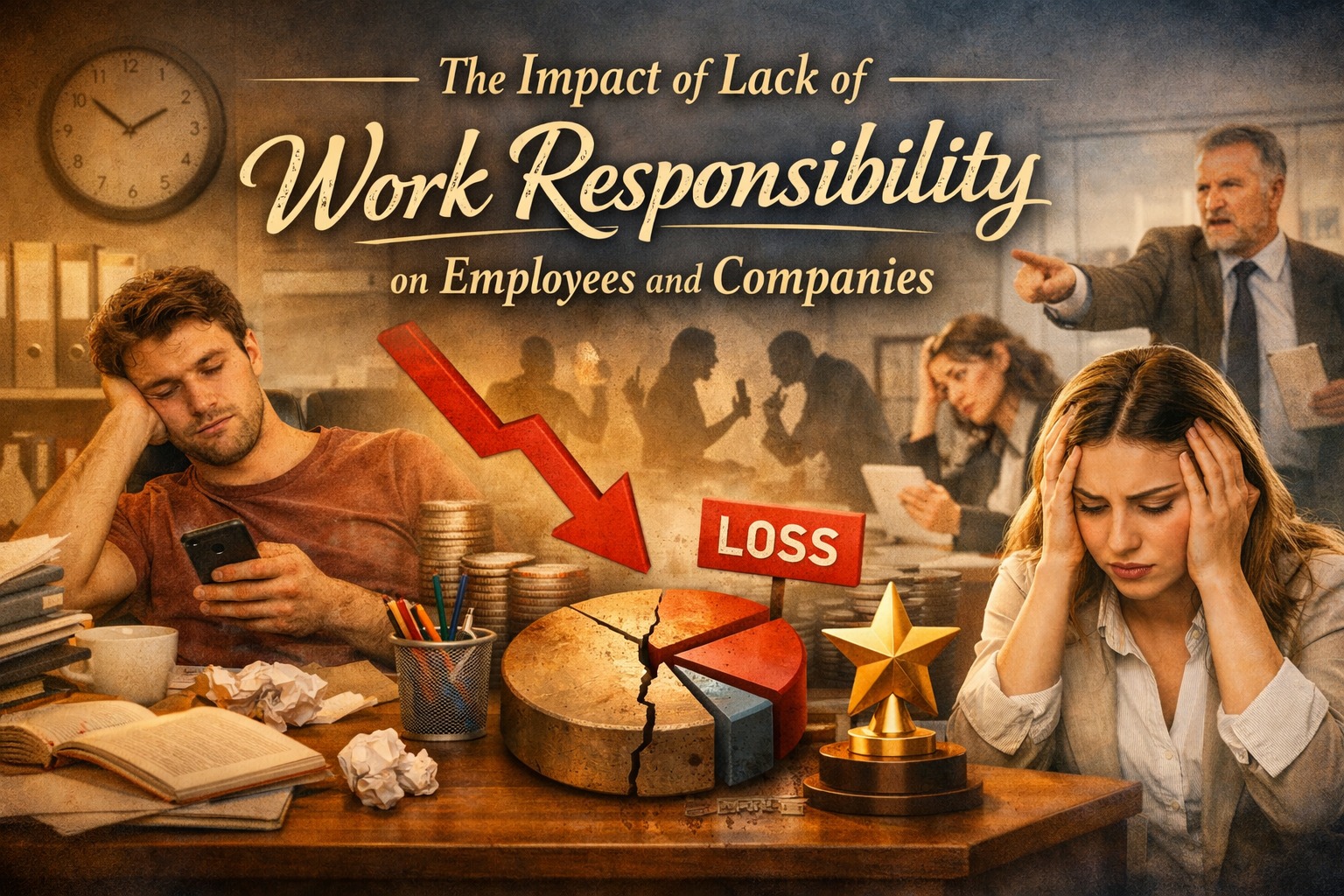
The Impact of Lack of Work Responsibility on Employees and Companies
Gusti Ayu Tita P
27 Juli 2026
INTRODUCTION
Work responsibility is a fundamental element of a productive and successful workplace. Employees are expected to complete their duties, meet deadlines, and be accountable for the results of their work. When responsibility is taken seriously, organizations can operate efficiently and achieve their goals more effectively.
However, a lack of responsibility can create significant challenges for both employees and companies. Poor accountability often leads to reduced productivity, damaged workplace relationships, and decreased business performance. Understanding the consequences of lacking responsibility can help individuals and organizations take steps to prevent these problems.
WHAT DOES A LACK OF WORK RESPONSIBILITY MEAN?
A lack of work responsibility occurs when employees fail to fulfill their duties properly or avoid accountability for their actions. This may include missing deadlines, neglecting assigned tasks, ignoring workplace rules, or blaming others for mistakes. Such behaviors can negatively affect both individual performance and organizational success.
Employees who do not demonstrate responsibility often struggle to gain the trust of managers and coworkers. Over time, these patterns can damage professional credibility and create obstacles to career development. Responsibility is not only about completing tasks but also about taking ownership of outcomes and maintaining professional standards.
NEGATIVE IMPACT ON EMPLOYEE PERFORMANCE
One of the most immediate effects of poor employee accountability is reduced job performance. Employees who fail to take responsibility often become less focused, less motivated, and less committed to achieving workplace objectives. This can result in lower productivity and an increase in work-related errors.
In addition, a lack of responsibility can limit opportunities for personal and professional growth. Employees who consistently avoid accountability may receive negative performance evaluations and struggle to earn promotions or additional responsibilities. Their professional reputation may also suffer over time.
DAMAGE TO PROFESSIONAL REPUTATION
A strong reputation is built on trust, reliability, and consistent performance. When employees demonstrate a lack of responsibility in the workplace, they may be viewed as unreliable or unprofessional by managers and colleagues. This can make it difficult for them to gain respect and recognition within the organization.
Professional reputation is an important factor in career advancement. Employees who fail to meet expectations or frequently avoid responsibility may find that managers are less willing to assign them important projects or leadership opportunities. As a result, career progression can become significantly more challenging.
INCREASED WORKPLACE CONFLICTS
Poor work accountability can create tension among team members. When some employees fail to fulfill their responsibilities, others may be forced to take on additional work to compensate. This imbalance can lead to frustration, resentment, and decreased team morale.
Workplace conflicts often increase when accountability is lacking because employees may blame one another for missed deadlines or project failures. A lack of responsibility can weaken trust within teams and make collaboration more difficult, ultimately affecting overall organizational performance.
REDUCED PRODUCTIVITY AND EFFICIENCY
Organizations depend on employees to perform their duties effectively. When responsibility is lacking, productivity often declines because tasks may be delayed, completed incorrectly, or left unfinished. These issues can disrupt workflows and reduce operational efficiency.
Managers may also need to spend more time supervising employees who fail to take responsibility for their work. This additional oversight can reduce managerial effectiveness and divert attention away from strategic business priorities. Consequently, overall company performance may suffer.
NEGATIVE EFFECTS ON COMPANY PERFORMANCE
The impact of poor work responsibility extends beyond individual employees and can affect the entire organization. Missed deadlines, poor customer service, and reduced work quality can damage a company's reputation and weaken customer trust. These issues may ultimately affect profitability and business growth.
Organizations with widespread accountability problems may also experience higher employee turnover rates. A workplace environment where responsibility is not valued can reduce employee engagement and job satisfaction, making it more difficult to attract and retain talented professionals.
HOW COMPANIES CAN ENCOURAGE RESPONSIBILITY
Employers can take several steps to promote employee responsibility in the workplace. Establishing clear expectations, providing regular feedback, and recognizing responsible behavior can encourage employees to take ownership of their duties. Effective leadership also plays an important role in creating a culture of accountability.
Training and professional development programs can further strengthen responsibility by helping employees understand workplace expectations and improve their performance. When accountability becomes part of the company culture, employees are more likely to demonstrate responsible behavior consistently.
CONCLUSION
A lack of work responsibility can have serious consequences for both employees and companies. It can reduce performance, damage professional reputations, increase workplace conflicts, and negatively affect organizational productivity. Over time, these issues can limit career growth and hinder business success.
By promoting work accountability and encouraging employees to take ownership of their duties, organizations can create a more productive and positive work environment. Responsibility remains a critical factor in achieving both individual career success and long-term organizational growth.
About the Author
Gusti Ayu Tita P
Author — STEKOM University
An active author focused on academic issues, educational technology, and human resource development in the campus environment.