
The Impact of Peaceful Protests on Public Policy
Gusti Ayu Tita P
29 Juli 2026
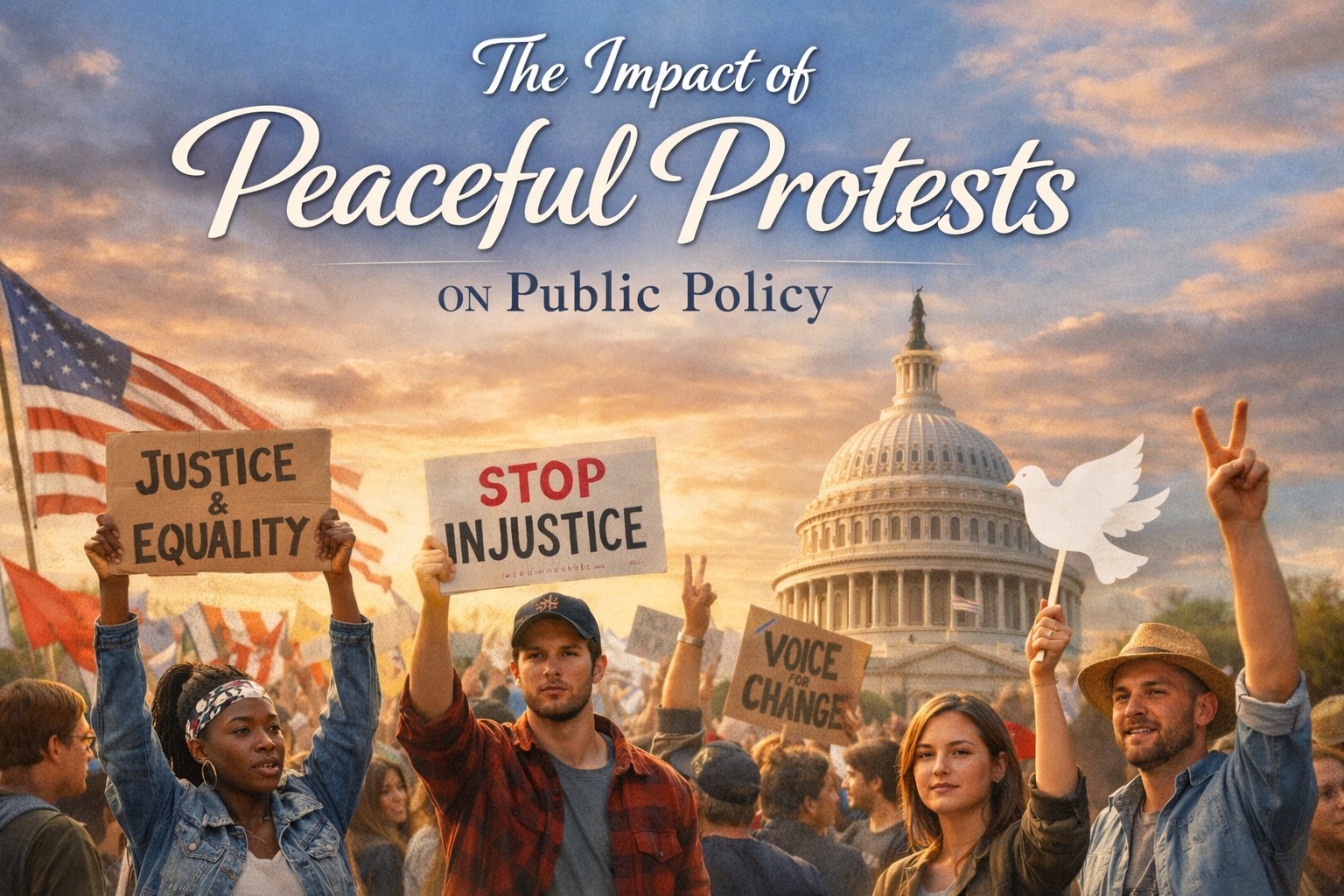
UNDERSTANDING PEACEFUL PROTESTS
Peaceful protests are a fundamental expression of democracy, allowing citizens to voice their concerns without violence. They represent unity, awareness, and civic responsibility, enabling people to demand justice and equality through nonviolent means. Historically, movements such as the Civil Rights Movement and Women’s Suffrage Campaigns have proven that peaceful demonstrations can lead to major policy reforms and social progress.
These actions encourage dialogue between citizens and governments, fostering mutual respect and understanding. When conducted ethically and peacefully, protests become a catalyst for change, inspiring communities to stand together for shared values and long-term improvement.
HOW PEACEFUL PROTESTS INFLUENCE POLICY
Governments often respond to peaceful protests by reassessing laws and regulations that no longer reflect public needs. Demonstrations can lead to policy revisions, budget adjustments, or even the creation of new programs addressing social issues. Policymakers view these movements as signals of public sentiment, helping them identify urgent matters that require attention.
Through consistent and organized activism, peaceful protests can reshape national priorities. They highlight the importance of listening to citizens’ voices and maintaining transparency in governance. This interaction ensures that democracy remains responsive, inclusive, and accountable.
THE ROLE OF MEDIA AND PUBLIC PERCEPTION
Media coverage amplifies the reach and impact of peaceful protests. Through television, social media, and news platforms, messages spread globally, turning local movements into international discussions. Positive representation of nonviolent activism enhances credibility and attracts support from diverse communities.
However, maintaining a peaceful image is crucial. Any act of aggression can distort public perception and weaken the movement’s legitimacy. Organizers must emphasize discipline, empathy, and respect to preserve the moral strength that defines peaceful activism.
LONG-TERM EFFECTS ON DEMOCRACY
Peaceful protests strengthen democratic institutions by promoting transparency and accountability. They remind leaders that authority originates from the people and must serve their interests. Over time, these movements cultivate a culture of civic engagement, encouraging citizens to participate actively in shaping policies beyond election periods.
The influence of peaceful protests extends to education, equality, and environmental protection. By nurturing cooperation and dialogue, they lay the foundation for sustainable development and inclusive governance that benefits future generations.
About the Author
Gusti Ayu Tita P
Author — STEKOM University
An active author focused on academic issues, educational technology, and human resource development in the campus environment.















