The Impact of Plastic Waste on Marine Life
Gusti Ayu Tita P
10 Juli 2026
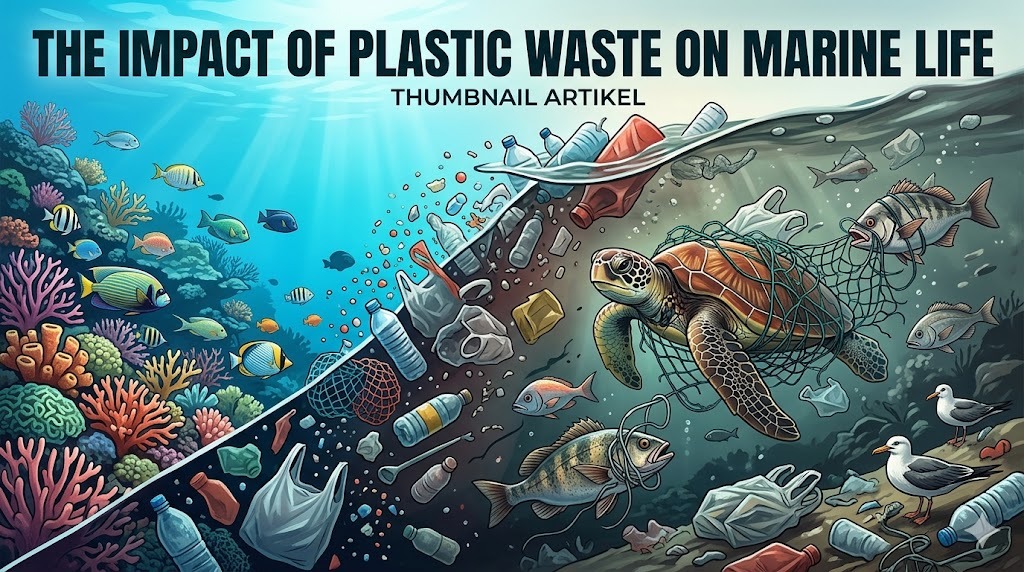
Plastic has become an essential part of modern life. It is used in packaging, transportation, healthcare, and countless everyday products. However, the same material that offers convenience also creates one of the biggest environmental threats of our time. Every year, millions of tons of plastic waste end up in the ocean, putting marine ecosystems and wildlife in serious danger.
WHY PLASTIC WASTE IS A GLOBAL OCEAN PROBLEM
Plastic is extremely durable and can take hundreds of years to decompose. Because of this, once plastic reaches the ocean, it does not simply disappear. Instead, it breaks down into smaller fragments known as microplastics that continue to pollute the water.
Rivers, improper waste management, and littering are the main pathways that carry plastic from land to sea. Many countries struggle to manage waste effectively, allowing plastic to flow directly into marine environments. Over time, this accumulation forms massive garbage patches in the ocean.
HOW MARINE ANIMALS ARE AFFECTED BY PLASTIC
Marine animals are among the most visible victims of plastic pollution. Sea turtles often mistake plastic bags for jellyfish, one of their primary food sources. Birds and fish may swallow tiny plastic fragments, believing they are food.
When animals ingest plastic, several harmful consequences can occur:
* Blocked digestive systems that lead to starvation
* Internal injuries and infections
* Reduced ability to swim or hunt
* Exposure to toxic chemicals attached to plastic
Entanglement is another major issue. Fishing nets, plastic rings, and discarded ropes can trap animals such as dolphins, whales, and seals. Many die from suffocation, drowning, or severe injuries.
THE HIDDEN THREAT OF MICROPLASTICS
Microplastics are small plastic particles less than five millimeters in size. They are created when larger plastics break down or when products like cosmetics and synthetic fabrics release tiny fibers.
These particles are nearly impossible to remove from the ocean and have been found in plankton, fish, and even deep-sea organisms. Because plankton sits at the bottom of the food chain, microplastics move upward through the entire marine ecosystem. Eventually, they can reach humans through seafood consumption.
IMPACT ON MARINE ECOSYSTEMS AND FOOD CHAINS
Plastic pollution does not only harm individual animals—it disrupts entire ecosystems. Coral reefs, often called the rainforests of the sea, are particularly vulnerable. Plastic debris can block sunlight and introduce harmful bacteria, weakening coral health.
When key species decline due to plastic pollution, the balance of the food chain shifts. This affects predator and prey relationships, leading to long-term ecological consequences that may take decades to reverse.
ECONOMIC AND HUMAN CONSEQUENCES
The impact of plastic waste extends beyond environmental damage. Fishing industries suffer when fish populations decline, while tourism decreases in areas affected by polluted beaches and waters. Cleaning up marine plastic also requires billions of dollars each year.
Human health is another growing concern. Microplastics have been detected in drinking water, sea salt, and seafood. Although research is ongoing, scientists warn that long-term exposure could pose risks to human health.
SOLUTIONS TO REDUCE PLASTIC POLLUTION
While the problem is massive, solutions are possible through collective action.
**Reduce single-use plastics**
Using reusable bags, bottles, and containers can significantly lower plastic waste.
**Improve recycling systems**
Better waste management infrastructure helps prevent plastic from reaching the ocean.
**Support eco-friendly alternatives**
Biodegradable materials and sustainable packaging are becoming more accessible.
**Participate in clean-up initiatives**
Community beach clean-ups and environmental campaigns raise awareness and remove waste.
CONCLUSION
Plastic waste has become one of the most serious threats to marine life and ocean ecosystems. From entangled sea animals to microplastics in the food chain, the damage is widespread and long-lasting. However, through responsible consumption, improved waste management, and global cooperation, it is possible to reduce plastic pollution and protect marine life for future generations.
About the Author
Gusti Ayu Tita P
Author — STEKOM University
An active author focused on academic issues, educational technology, and human resource development in the campus environment.