The Impact Of Sea Transportation On Regional Economic Growth
Gusti Ayu Tita P
11 Agustus 2026
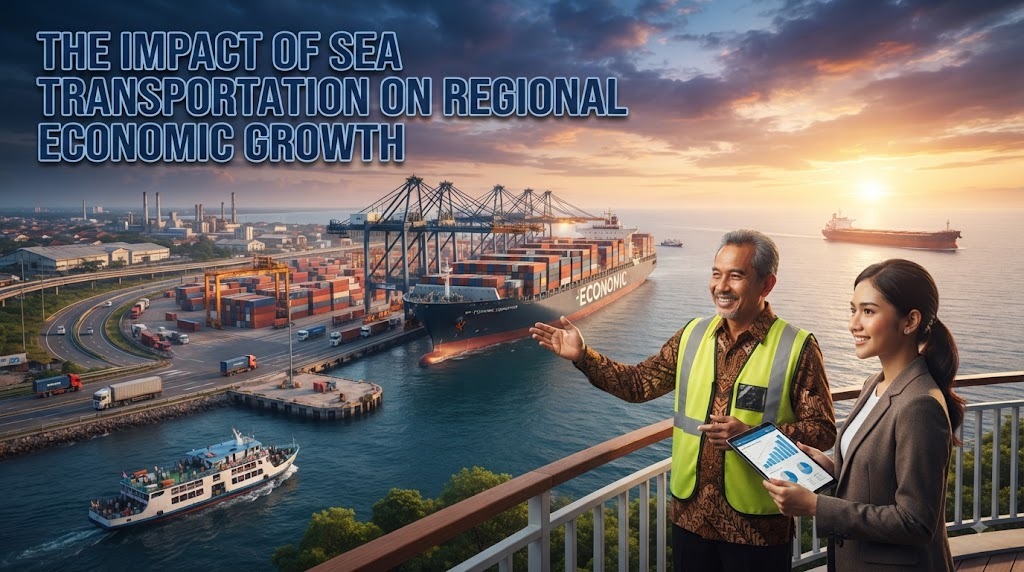
Sea transportation has an important influence on regional economic growth, especially in countries with large maritime territories such as Indonesia. It connects islands, coastal communities, production centers, and markets that may be separated by significant distances. Ships can transport large amounts of goods and passengers between regions efficiently. Sea transportation also supports trade, tourism, fisheries, agriculture, manufacturing, and other economic activities. Reliable maritime connections can therefore create better opportunities for regions to participate in the national economy.
The impact of sea transportation is not limited to the movement of goods. Ports and maritime activities can encourage investment, create employment, improve market access, and support the development of local businesses. Regions with reliable transportation links may find it easier to attract industries and distribute their products. However, the economic benefits depend on infrastructure quality, service reliability, logistics efficiency, and good management. Developing maritime transportation strategically can help strengthen regional economic growth and reduce geographical barriers.
THE ROLE OF SEA TRANSPORTATION IN REGIONAL ECONOMIES
Sea transportation provides an essential connection between regions with different economic resources. Areas that produce agricultural goods, fishery products, minerals, or manufactured products can use maritime routes to reach wider markets. At the same time, regions that depend on products from other areas can receive essential supplies through shipping services. Maritime connectivity allows economic activities to become more integrated.
Reliable transportation also helps businesses plan their operations more effectively. Companies can arrange production and inventory based on expected delivery schedules. When shipping services are regular, businesses face less uncertainty when sending or receiving goods. Better connectivity can encourage entrepreneurs to expand their market reach. As a result, maritime transportation can support stronger economic relationships between regions.
IMPROVING MARKET ACCESS
One of the most important economic effects of sea transportation is improved access to markets. Local producers can sell their products beyond their immediate geographical area when transportation services are available. Farmers, fishermen, manufacturers, and small businesses can reach consumers in other cities or islands. Market access can increase business opportunities and encourage local production.
Access to wider markets can also improve the competitiveness of regional products. Producers can compare prices and identify new customers outside their local communities. However, transportation must be reliable and affordable for these benefits to be sustainable. High logistics costs can reduce the advantages of wider market access. Efficient maritime networks can help businesses overcome some of these geographical limitations.
SUPPORTING LOCAL BUSINESSES
Sea transportation can create better conditions for local businesses to grow. Businesses need transportation to receive raw materials, distribute products, and reach customers. Local business growth can accelerate when shipping services are available at reasonable costs. Small businesses can also participate in wider supply chains when transportation barriers are reduced.
For example, fisheries and agricultural producers can distribute their products to larger urban markets. Retailers in remote areas can receive goods from major production centers. Manufacturing companies can obtain raw materials from other regions through maritime routes. These connections can create new commercial relationships between businesses. Strong transportation networks can therefore support a more active regional economy.
SUPPORTING TOURISM DEVELOPMENT
Maritime transportation can contribute to tourism in coastal and island regions. Ferries, passenger vessels, and other maritime services can make tourist destinations more accessible. Tourism development can create income for hotels, restaurants, transportation providers, guides, and local businesses. Improved accessibility can encourage more visitors to explore regional destinations.
Tourism can also create opportunities for communities to develop local products and services. However, tourism transportation should maintain high standards for safety and environmental protection. Overcrowding and uncontrolled development can place pressure on coastal ecosystems. Sustainable tourism planning is therefore important. Proper maritime connectivity can help tourism contribute to long-term regional development.
REDUCING REGIONAL ECONOMIC DISPARITIES
Differences in transportation access can contribute to economic disparities between regions. Remote areas may face higher costs and fewer opportunities because they are far from major markets. Regional equality can improve when reliable maritime connections are available. Sea transportation can provide remote communities with better access to goods, markets, services, and employment opportunities.
Regular shipping services can help prevent remote regions from becoming economically isolated. Local products can reach larger markets, while essential supplies can arrive more consistently. Government-supported maritime services may be important in areas where commercial demand is limited. Infrastructure development should also prioritize significant connectivity gaps. Better transportation access can support more balanced national development.
ATTRACTING INVESTMENT
Reliable transportation infrastructure can make a region more attractive to investors. Companies generally consider access to markets, raw materials, infrastructure, and logistics when choosing business locations. Investment opportunities can increase when ports and maritime routes provide efficient connections. Regions with strong transportation networks may have greater potential for industrial and commercial development.
Port areas can attract logistics companies, manufacturers, warehouses, and service providers. New investment can create employment and increase local economic activity. However, transportation infrastructure alone does not guarantee investment. Regions also need clear regulations, skilled workers, utilities, and a supportive business environment. A combination of good infrastructure and effective economic policies can strengthen investment potential.
SUPPORTING NATIONAL SUPPLY CHAINS
Regional economic growth depends partly on reliable supply chains. Businesses need regular access to materials and markets to maintain production and sales. Sea transportation connects different stages of these supply chains across islands. Supply chain efficiency can reduce delays and improve business reliability.
Digital tracking systems can help companies monitor cargo movements and estimated arrival times. Better coordination between ships, ports, warehouses, trucks, and distribution centers can further improve performance. When transportation systems are integrated, businesses can manage inventories more effectively. Strong supply chains can make regional economies more resilient to disruptions. Maritime connectivity is therefore an important part of national economic stability.
THE ROLE OF DIGITAL TECHNOLOGY
Technology is changing maritime transportation and its economic impact. Digital platforms can improve cargo booking, documentation, vessel tracking, and port coordination. Digital logistics can reduce administrative delays and provide businesses with more accurate information. Better information can help companies make faster and more effective decisions.
Smart port systems can also improve cargo handling and vessel scheduling. Data analysis can identify inefficient routes and help companies optimize transportation operations. However, digital transformation requires reliable infrastructure and skilled workers. Cybersecurity must also be considered to protect operational and commercial information. Effective digital adoption can increase the economic value of maritime transportation.
ENVIRONMENTAL IMPACT AND SUSTAINABILITY
Economic development through maritime transportation should be balanced with environmental protection. Shipping activities can produce emissions, waste, and pollution if they are not properly managed. Sustainable shipping can reduce these impacts through cleaner fuels, efficient vessels, optimized routes, and better waste management. Environmental responsibility is increasingly important for long-term maritime development.
Ports can also introduce cleaner technologies and improve environmental management systems. Companies can monitor fuel consumption and adopt practices that reduce unnecessary emissions. Sustainable transportation can help protect coastal and marine resources that support fisheries and tourism. Environmental regulations should be applied consistently. A sustainable maritime sector can support economic growth while protecting natural resources.
CHALLENGES TO REGIONAL ECONOMIC GROWTH
Although sea transportation offers many economic benefits, several challenges can limit its impact. Poor port infrastructure, high logistics costs, irregular shipping services, and difficult weather conditions can reduce transportation reliability. Remote areas may also have limited access to modern maritime facilities. Maritime challenges need to be addressed to maximize economic benefits.
Improving infrastructure and connectivity requires significant investment. Government agencies, private companies, and local authorities need to coordinate their development plans. Training programs can improve the availability of skilled maritime workers. Digital technology can also help improve transportation efficiency and transparency. Addressing these challenges can make maritime transportation more effective in supporting regional economies.
STRATEGIES FOR MAXIMIZING ECONOMIC IMPACT
The economic benefits of sea transportation can be increased through integrated planning. Ports, shipping routes, roads, warehouses, and distribution centers should operate as parts of one logistics system. Integrated transportation can reduce unnecessary delays and improve the movement of goods. Investment should focus on areas where transportation improvements can provide significant economic benefits.
Policies should also encourage innovation, safety, environmental sustainability, and workforce development. Smaller ports and remote regions should receive appropriate attention based on their economic and social needs. Cooperation between public and private sectors can increase investment capacity. Regular evaluation can help identify whether transportation projects are achieving their intended economic outcomes. Strategic development can ensure that maritime transportation creates lasting regional benefits.
THE FUTURE OF MARITIME ECONOMIC DEVELOPMENT
The future of regional economic growth will increasingly depend on efficient and sustainable maritime transportation. Smart ports, digital logistics, modern vessels, and improved connectivity can strengthen economic links between regions. Maritime innovation can improve transportation performance while reducing unnecessary costs and environmental impacts. These developments can create new opportunities for businesses and communities.
Indonesia has significant potential to develop its maritime economy because of its geographical position and extensive sea routes. Continued infrastructure investment can improve connections between major cities and remote islands. Education and training can prepare workers for a more technologically advanced maritime sector. Sustainable policies can protect marine resources while supporting economic activity. With coordinated development, sea transportation can remain a major driver of regional economic growth.
CONCLUSION
Sea transportation has a significant impact on regional economic growth because it connects markets, businesses, communities, and resources across different areas. It can improve market access, reduce logistics barriers, create employment, support tourism, strengthen agriculture and fisheries, and attract investment. Efficient maritime connectivity can also help remote regions participate more actively in the national economy.
To maximize these benefits, Indonesia needs modern port infrastructure, reliable shipping services, efficient logistics, digital technology, skilled workers, and sustainable maritime policies. Cooperation between government, industry, and local communities is essential for long-term success. Improving transportation connections can reduce geographical barriers and encourage more balanced regional development. A safe, efficient, and sustainable maritime transportation system can become an important foundation for stronger and more inclusive regional economic growth.
About the Author
Gusti Ayu Tita P
Author — STEKOM University
An active author focused on academic issues, educational technology, and human resource development in the campus environment.