The Impact of Social Media Addiction on Teen Academic Performance
Gusti Ayu Tita P
26 Juni 2026
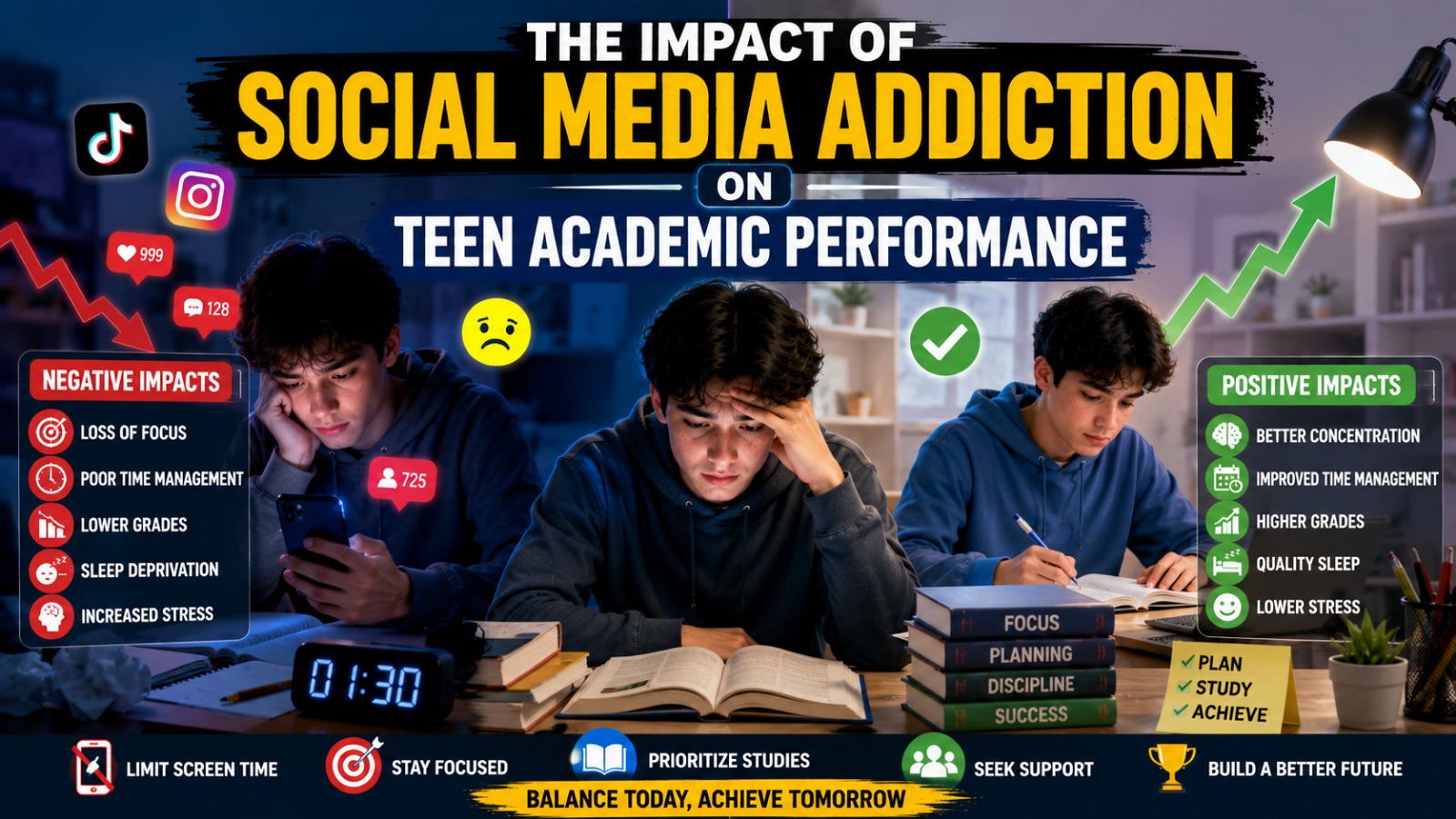
Social media has become an important part of daily life for teenagers. Platforms such as Instagram, TikTok, Facebook, and X allow young people to communicate, share experiences, and access information instantly. While these platforms offer many benefits, excessive use can lead to social media addiction, a growing concern among parents, teachers, and researchers. This habit can significantly affect a teenager’s ability to focus on education and achieve academic success.
UNDERSTANDING SOCIAL MEDIA ADDICTION
Social media addiction refers to an excessive and uncontrollable urge to spend time on social networking platforms. Teenagers who experience this condition often feel the need to check notifications constantly, scroll through content for long periods, and stay connected online throughout the day. Over time, this behavior can become difficult to manage and may interfere with daily responsibilities.
Many teenagers do not realize how much time they spend online because social media platforms are designed to keep users engaged. Features such as endless scrolling, personalized content, and instant feedback encourage repeated use. As a result, academic tasks may receive less attention than social media activities.
HOW SOCIAL MEDIA AFFECTS STUDY HABITS?
One of the most noticeable effects of social media addiction is the disruption of healthy study habits. Students may become distracted while doing homework, preparing for exams, or participating in online learning activities. Frequent interruptions from notifications make it harder to maintain concentration and complete assignments efficiently.
In addition, many teenagers develop a habit of multitasking between studying and browsing social media. Research shows that multitasking often reduces learning effectiveness because the brain constantly shifts attention between tasks. This can lead to lower comprehension, reduced retention of information, and decreased academic performance.
IMPACT ON GRADES AND ACADEMIC ACHIEVEMENT
Excessive use of social media can contribute to declining grades. When students spend several hours each day on entertainment content, they often have less time available for studying, reading, and completing school projects. Missed deadlines and incomplete assignments can negatively affect overall academic results.
Furthermore, social media addiction may reduce motivation to engage in educational activities. Some teenagers prioritize online interactions over academic responsibilities, leading to poor classroom participation and weaker learning outcomes. Over time, these behaviors can limit educational opportunities and future career prospects.
EFFECTS ON SLEEP AND CONCENTRATION
Adequate sleep is essential for learning, memory, and cognitive development. However, many teenagers use social media late at night, sacrificing valuable sleeping hours. Exposure to screens before bedtime can make it more difficult to fall asleep and maintain a healthy sleep schedule.
Lack of sleep often results in poor concentration, fatigue, and reduced productivity during school hours. Students who are tired may struggle to pay attention in class, process information effectively, and perform well on tests. Consequently, sleep deprivation caused by excessive social media use can indirectly harm academic achievement.
EMOTIONAL AND PSYCHOLOGICAL CONSEQUENCES
Social media addiction can also affect a teenager’s emotional well-being. Constant exposure to idealized images and lifestyles may lead to feelings of inadequacy, stress, or low self-esteem. These emotional challenges can make it harder for students to stay motivated and focused on their studies.
In some cases, excessive social media use may increase anxiety levels, especially when teenagers become overly concerned with likes, comments, and online validation. Emotional distress can reduce academic engagement and make learning more difficult. Maintaining a healthy balance between online and offline activities is therefore essential.
STRATEGIES TO REDUCE SOCIAL MEDIA ADDICTION
Parents, teachers, and teenagers can work together to reduce the negative effects of social media addiction. Setting daily screen-time limits, turning off unnecessary notifications, and creating dedicated study periods can help students stay focused on their academic goals. Developing self-discipline is an important step toward healthier digital habits.
Teenagers should also be encouraged to participate in offline activities such as sports, reading, hobbies, and social interactions with family and friends. These activities provide meaningful alternatives to excessive screen time and contribute to personal growth. A balanced lifestyle supports both academic success and overall well-being.
CONCLUSION
The impact of social media addiction on teen academic performance is a significant issue in today’s digital world. Excessive social media use can disrupt study habits, lower grades, reduce concentration, affect sleep quality, and create emotional challenges. Although social media offers valuable opportunities for communication and learning, it should be used responsibly. By developing healthy digital habits and maintaining a balance between online activities and academic responsibilities, teenagers can achieve better educational outcomes and long-term success.
About the Author
Gusti Ayu Tita P
Author — STEKOM University
An active author focused on academic issues, educational technology, and human resource development in the campus environment.